Finding Electrical Leakage on a Boat and Grounding It Correctly
A flat battery in the morning, anodes that vanish too fast or an RCD that keeps tripping can all point to the same fault. Here is how to track down AC and DC leakage step by step, and how grounding should be done.
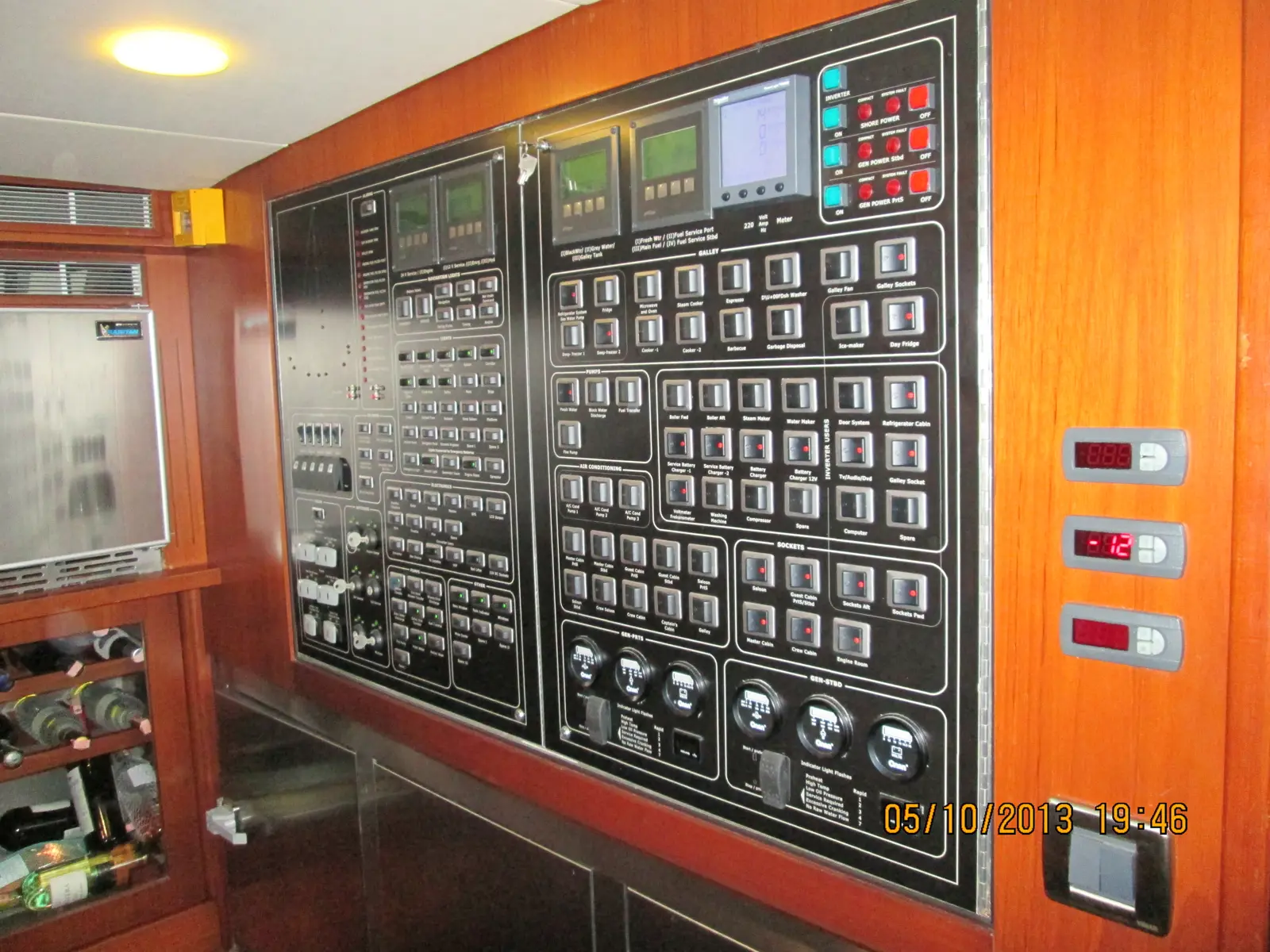
Electrical leakage on a boat rarely announces itself clearly. A house battery that is flat one morning, anodes that erode much faster than they should, or an RCD that trips for no obvious reason in the marina can all be different faces of the same problem. In this article we explain how we find leakage on the AC and DC side, how correct grounding is set up and which faults are genuinely dangerous, based on what we see in the field.
What is leakage current and why does it matter on a boat?
Leakage current is current that flows somewhere other than its intended conductor: into the hull, the water, the bonding system or a damp surface. Ashore this usually just blows a fuse. On a boat the picture is more complex, because we are surrounded by a conductive medium: seawater.
Leakage on board has three main consequences:
- Personal safety: an insulation fault on the AC side can put voltage on a metal hull or into the water. For someone swimming in the marina, that is a serious electric shock risk.
- Corrosion: on the DC side, even a small current escaping into the water through the hull, shaft or a thru-hull can destroy metal fittings through stray-current corrosion within weeks. This is a different problem from galvanic corrosion and anode selection, although the two are often confused.
- Lost energy: a continuous leak of a few hundred milliamps will noticeably drain the battery bank of a sailing yacht left at anchor for a few days.
Grounding and leakage protection on the AC side
Protective conductor (PE) and the shore connection
The protective conductor (green/yellow) that arrives with shore power must be carried to every metal AC appliance case on board. ISO 13297 and the ABYC E-11 standard require that, on boats without an isolation transformer, this conductor is connected to the boat's DC negative system, usually at the engine negative terminal or the main negative busbar. The goal is that a short circuit on the AC side trips the protective device quickly instead of leaving voltage on the hull.
This connection also creates a galvanic path to the other boats in the marina. Removing the protective conductor to break that path is never the answer; a galvanic isolator or an isolation transformer is. For safe connection practice, see also our shore power connection guide.
Where is the neutral–earth link made?
One of the most common faults we find is a permanent neutral–earth link on board. While connected to shore power, this link exists only at the shore-side source. When a generator, inverter or isolation transformer takes over, it becomes the new source, so the neutral–earth link is made there. Modern inverter/chargers do this changeover automatically with an internal ground relay; in the Victron Energy MultiPlus and Quattro series, for example, this relay is standard.
RCD / ELCI
A residual current device with a 30 mA threshold at the shore power inlet (RCD, or ELCI in ABYC terms) is the basis of good practice today. An RCD that trips repeatedly is not necessarily faulty; more often there really is a leak. Press the test button at the start of every season and whenever you reconnect after a long break. The test button only proves the device can open mechanically; confirming its trip threshold and time requires a measurement with a proper RCD tester. On older boats we often find this protection missing altogether or covering only some sockets.
Finding DC leakage: step by step
DC leakage usually shows up as a battery that drains unexpectedly. With a systematic approach the source can be found:
- Set the baseline. Disconnect shore power, chargers and the solar controller. Switch off every circuit on the panel and note the loads that must stay connected (bilge pump float switch, alarm).
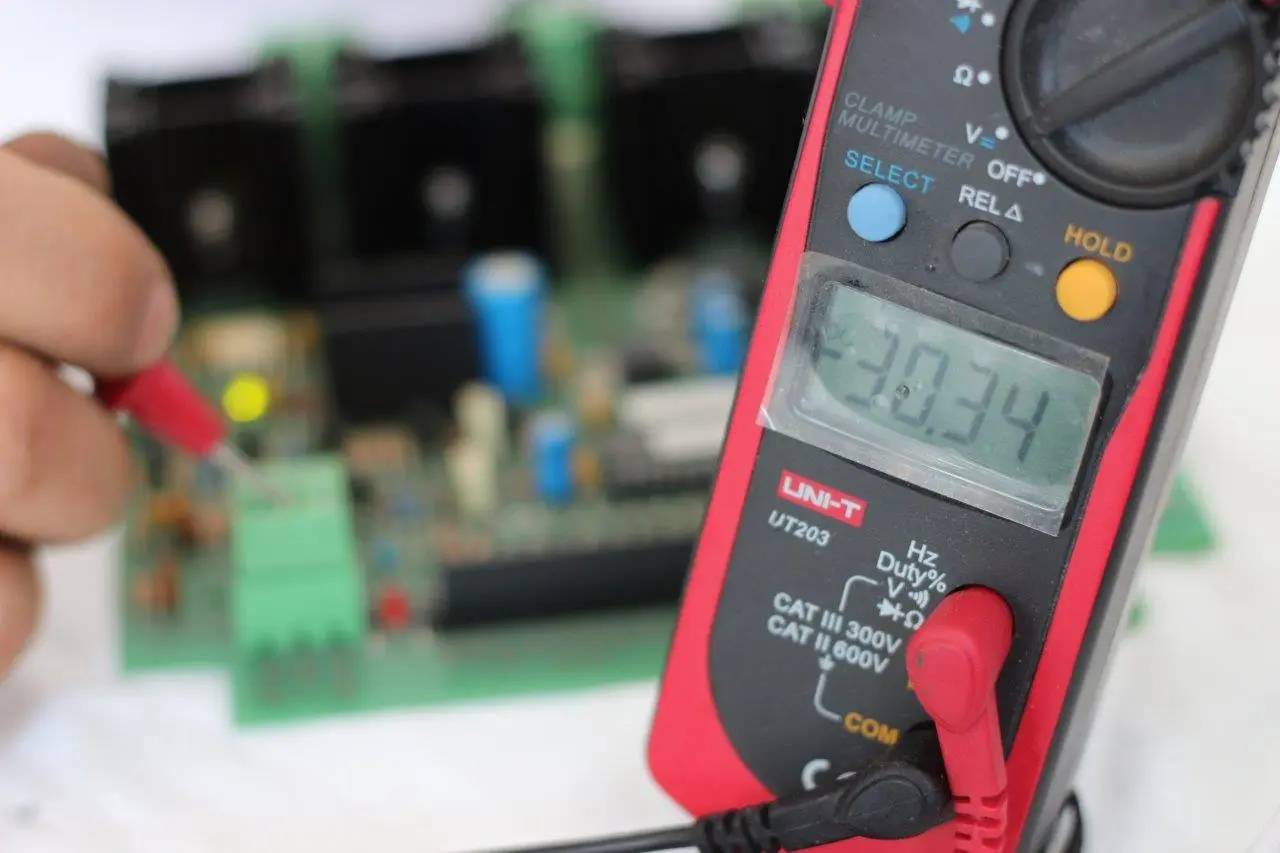
- Measure total current. Disconnect the battery negative cable and connect a multimeter in series on the amps range, or use a DC clamp meter with milliamp resolution. The reading of a battery monitor (shunt), if fitted, is also a good starting point.
- Isolate circuits one by one. While measuring, remove the panel fuses and the fuses connected directly to the battery one at a time. The circuit where the current drops is the one you are looking for.
- Check for hull leakage. Measure the hull or bonding potential with a reference electrode (silver/silver chloride). If the potential shifts noticeably when you switch a circuit on and off, that circuit may be leaking into the water.
- Check negative to bonding. The DC negative must be connected to the hull or bonding system at one point only. Multiple connection points let current circulate through the bonding system.
- Test insulation resistance. Once all electronics are disconnected, an insulation (megger) test can be carried out on the AC circuits. Never apply this test with electronic equipment connected.
Symptoms and likely causes
| Symptom | Likely cause | First check |
|---|---|---|
| House battery flat within a few days | Load running continuously, damp connection, faulty relay | Series current measurement and circuit isolation |
| Anodes gone within a few weeks | DC leakage or a galvanic path | Hull potential with a reference electrode |
| RCD trips | Heating element, water heater, damp socket, neutral–earth fault | Disconnect loads one at a time |
| "Tingling" on metal parts | Broken protective conductor, insulation fault | Switch off immediately and test PE continuity |
| Panel voltmeter fluctuates | Loose negative or main connection | Voltage drop test, torque check |
The last two symptoms must be treated as urgent safety issues. If you can feel voltage on a metal part, disconnect shore power and do not re-energise the system until the fault has been fixed.
Bonding, grounding and common mistakes
The bonding system connects underwater metal parts (shaft, thru-hulls, rudder bearing) to each other and to the anodes, keeping them at the same potential. Grounding makes sure the electrical system has a safe path in the event of a fault. The two are connected, but they are not the same thing.
The mistakes we meet most often in the field are:
- Loads whose DC negative has been connected to a nearby metal part as a "chassis" ground.
- AC sockets added later without a protective conductor.
- Old extension leads or adapters in which neutral and earth are linked.
- Connection points with damaged insulation that touch bilge water.
- Oxidised negative busbars with more than four terminals stacked on one stud.
Checklist
- The shore inlet panel has a 30 mA RCD/ELCI and its test button works.
- The protective conductor is continuous from the shore socket to every AC appliance case.
- The neutral–earth link is made only at the active source.
- DC negative and the bonding system meet at a single point.
- The current drawn from the battery with everything off is known and explained.
- Anode consumption is consistent with previous seasons.
- All connections in the bilge are above water level and insulated.
Work with Aslan Yacht
Most leakage problems can be diagnosed with measurements taken in the right order and a little patience; the hard part is separating the real cause from the symptoms and fixing it for good. From our base in Turgutreis, Aslan Yacht carries out AC/DC leakage testing, grounding and bonding work in the marinas and boatyards of the Bodrum peninsula. Learn more about our yacht electrical service or get in touch with us directly.
Frequently asked questions
How much DC leakage is normal on a boat?
With everything switched off, a few tens of milliamps can come from permanently connected devices such as alarms, battery monitors and radio memory. Anything above that without a clear source should be investigated.
The RCD keeps tripping on shore power in the marina. What should I do?
Never bypass it. Disconnect loads one at a time to find the faulty circuit; heating elements, water heaters and damp sockets are the most common causes.
Should neutral and earth be linked on board?
Not while on shore power. The neutral–earth link is made only at the source: the generator, the inverter or the secondary of an isolation transformer. Getting this changeover wrong causes nuisance RCD trips and can create dangerous conditions.