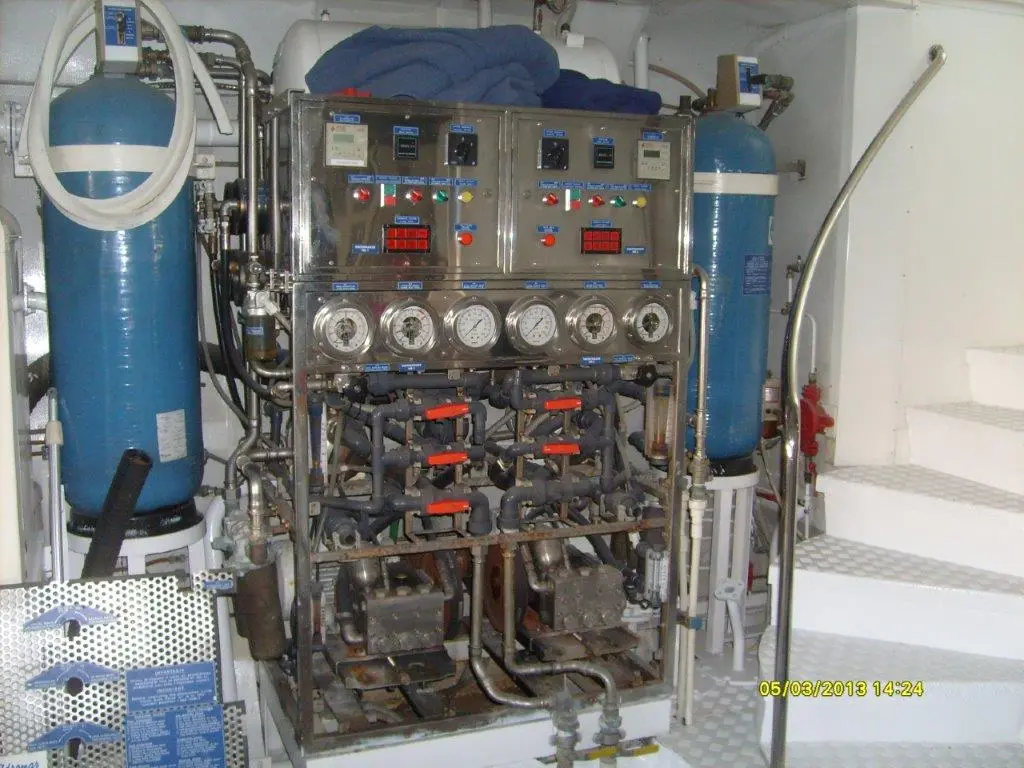
On a yacht, a watermaker produces fresh water from seawater and reduces dependence on marina water, but it also needs regular maintenance to keep working reliably. From our workshop in Turgutreis, Aslan Yacht services, diagnoses and repairs the electrical/control systems of watermakers of any brand across the Bodrum peninsula, and we also design, build and install our own Leo Mare Watermakers product line.
How a watermaker works
A watermaker draws seawater through pre-filters and then a high-pressure pump forces it into the membrane housing. The membrane's semi-permeable structure lets water through while blocking salt and minerals — this process is called reverse osmosis. The product water passes a salinity sensor for approval before it is directed to the tank; out-of-spec water is automatically dumped overboard. The pressure-regulating valve, the heart of the system, maintains the correct pressure for efficient membrane operation, typically in the 55-70 bar range depending on brand and seawater temperature. We explain the working principle step by step in how a watermaker works and choosing capacity.
What we do
- Routine maintenance: pre-filter replacement, membrane flushing, pressure and flow measurement.
- Membrane service: chemical cleaning (CIP), pickling, and membrane replacement when needed.
- High-pressure pump: pump seal, gasket and valve maintenance, pressure testing.
- Electrical and PLC control: diagnosing and repairing control panel, sensor, contactor and PLC/HMI faults.
- Winterizing and season commissioning: preparing the system for winter with a preservation solution, then flushing with clean water and commissioning in spring.
- Installation: new watermaker installation, relocating an existing system, or increasing capacity.
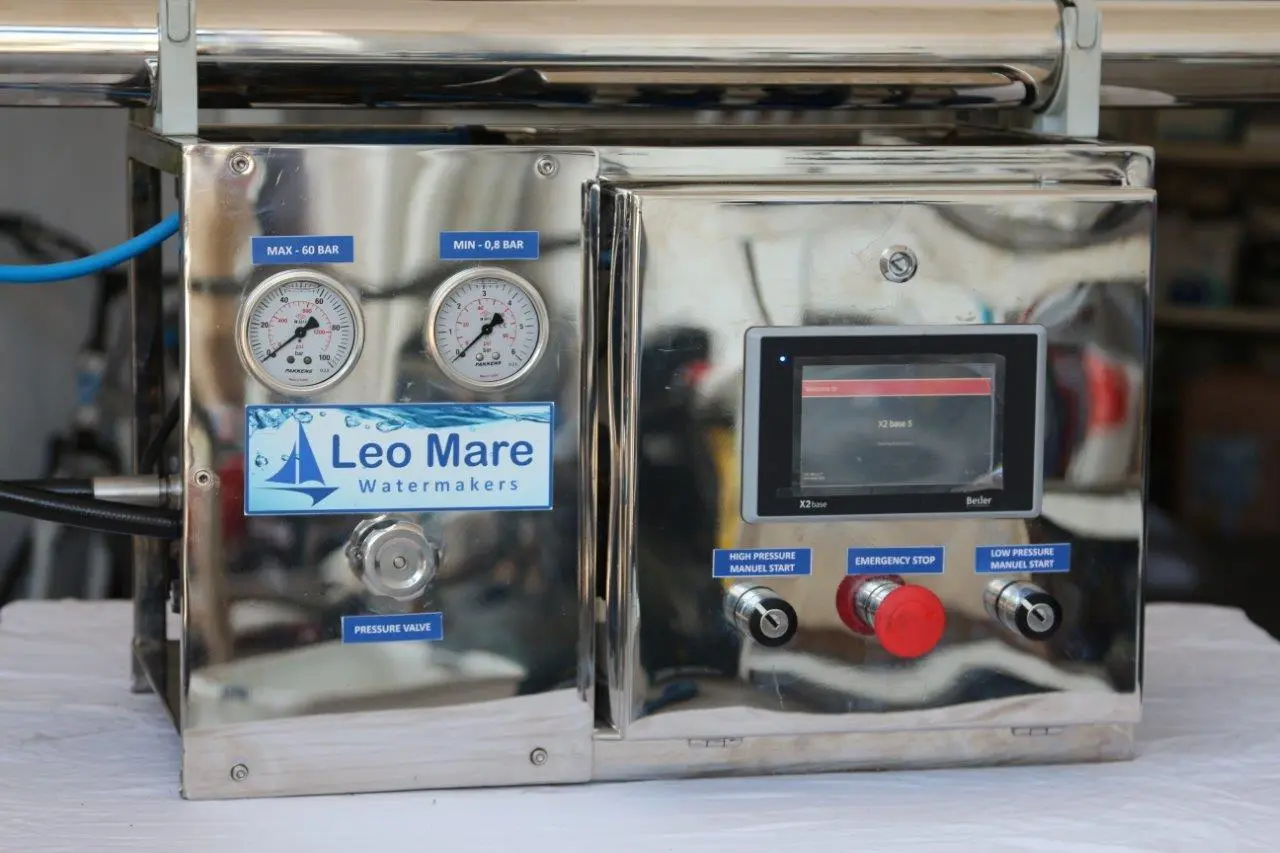
- Leo Mare production: assembly, commissioning and servicing of our own PLC-automated, stainless-steel-framed watermakers.
Typical faults we solve
- Rising salinity in the product water (membrane, o-ring or sensor related).
- The high-pressure pump failing to reach the expected pressure.
- Pre-filters clogging quickly, often related to marina water turbidity or algae.
- Alarm messages on the PLC screen or the system shutting down automatically.
- A membrane drying out or smelling of bacteria after long periods unused.
- The pressure-regulating valve leaking or drifting out of adjustment.
Membrane maintenance, flushing frequency and winterizing steps are covered in detail in watermaker membrane maintenance.
The electrical and PLC side
On modern watermakers, the pump motor, solenoid valves, and pressure and salinity sensors are managed through a PLC; on some systems a touch-screen HMI panel shows production figures and pump status. When this automation layer fails, the cause is usually electrical rather than mechanical: a loose connector, a sensor affected by moisture, or a contactor. We handle this electrical infrastructure with the same rigour described on our Yacht Electrical page, checking fuses and cable sizing.
Winterizing and pickling
If the boat won't be used for more than a few weeks, pickling should be applied to prevent the membrane from growing bacteria or drying out: the system is filled with a preservation chemical and sealed. At season start the system is flushed with clean water, filters are renewed and production is tested under pressure. Skipping this step can permanently reduce membrane performance; planning winterizing early saves time at the start of the season.
Leo Mare: our own production line
Designed and assembled in our Turgutreis workshop, the Leo Mare Watermakers line can be configured to your boat with a stainless-steel frame, PLC automation and a touch-screen control panel. Being built locally means spare parts and service are readily available in Bodrum. We also work with owners who want to replace an existing watermaker with Leo Mare; as part of our authorized service, we maintain third-party brands and our own product to the same standard.
Equipment and brands we work with
We are the authorized Idromar watermaker service in Bodrum and Turgutreis: installation, membrane replacement, high-pressure pump and control panel repair following the manufacturer's procedures. For membrane, pump and valve service we work with the major brands on the market; for electrical and control integration we can incorporate Victron Energy monitoring and power products into the watermaker system. For membrane technology and operating parameters we reference the technical documentation of manufacturers such as DOW/FilmTec (DuPont Water Solutions).
Installation and sizing
For a new installation, capacity is always the first question. We size it around the boat's dimensions, number of people aboard, cruising pattern (mostly in marinas or island-hopping) and available electrical power, proposing a balanced solution rather than oversizing a system for an undersized generator. In layout planning, our priorities are easy access to pre-filters, a membrane housing that can be removed and refitted, and short, clean seawater intake and discharge runs; a watermaker squeezed into a hard-to-reach spot is neglected in the long run.
Water quality and marina conditions
Marina water turbidity around the Bodrum peninsula varies by season and location; algae and organic load increase in summer. We size the pre-filtration stages (typically 20 and 5 micron) to local conditions and clearly tell owners how often to change them. A watermaker run in turbid water clogs filters quickly and unnecessarily strains the high-pressure pump, which shortens membrane life — this is also why we recommend avoiding production inside marinas and favouring open water or clean bays instead.
Service area
From our Turgutreis workshop we serve Turgutreis D-Marin, Yalıkavak Palmarina, Milta Bodrum Marina, Gümüşlük and the boatyards on the peninsula. For a new watermaker installation, servicing an existing system, or switching to Leo Mare, reach us through our contact page and we can assess capacity and layout together.