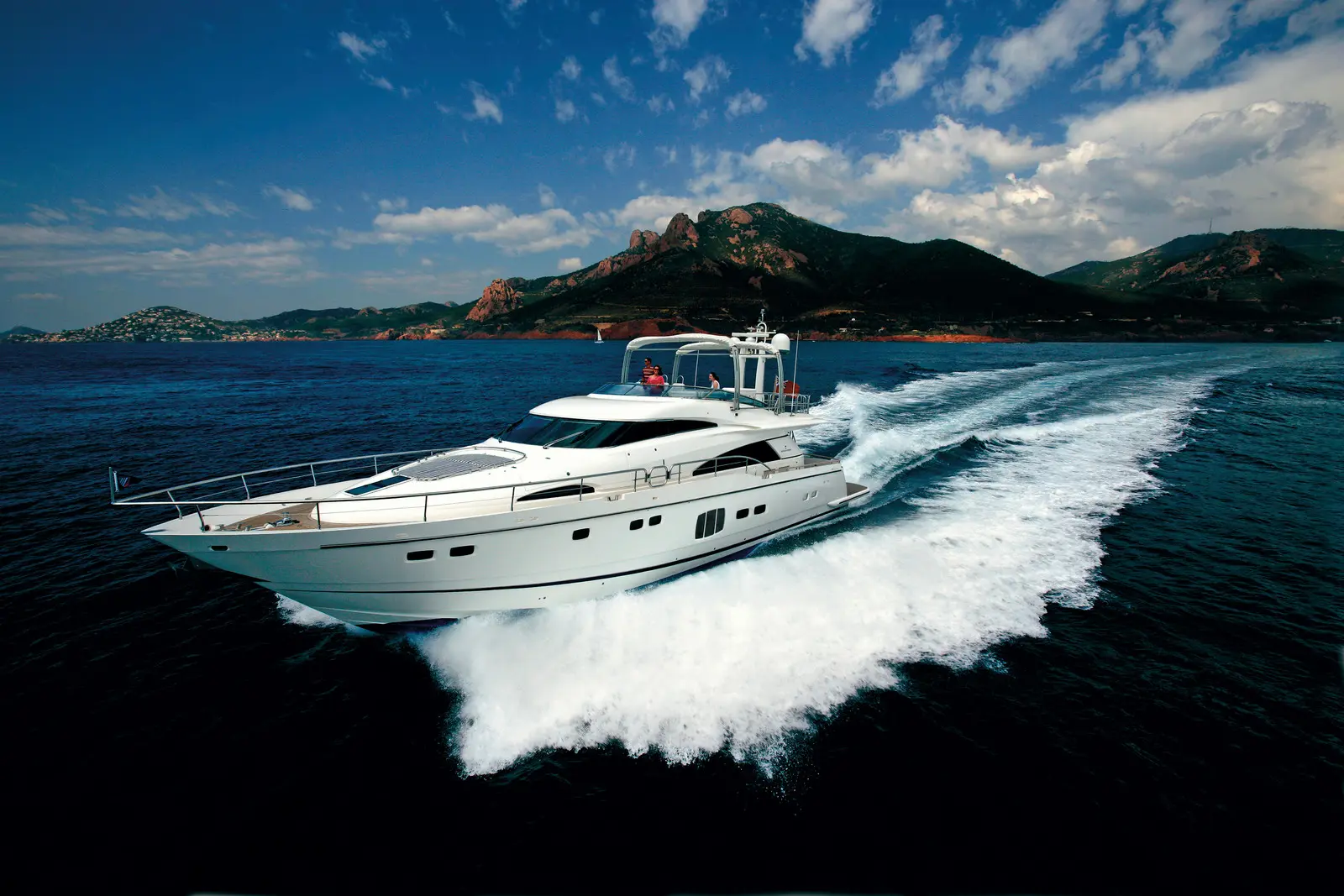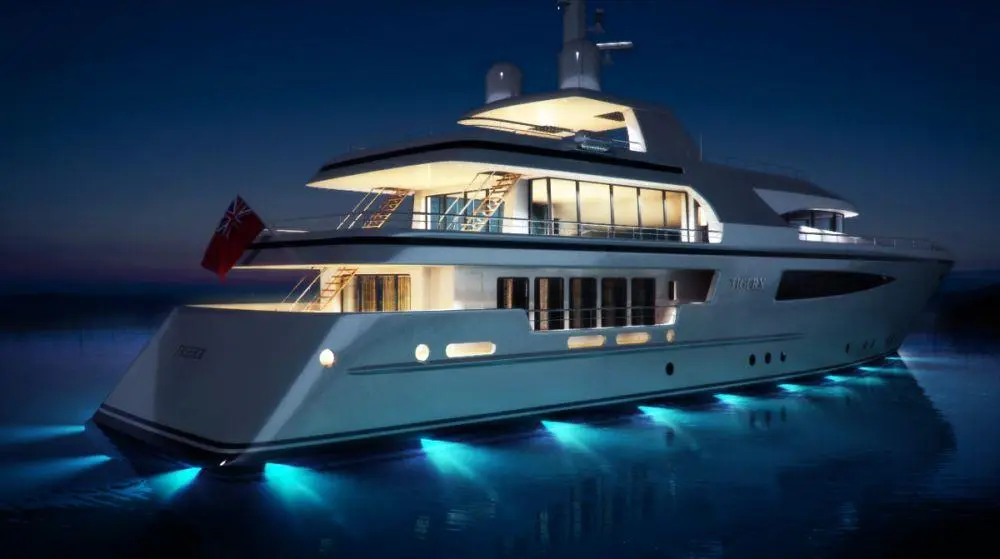
A yacht's lighting is both an aesthetic and a safety matter: it covers everything from how the boat looks at anchor at night, to the navigation light obligations underway, to saloon comfort and safe deck work. From our workshop in Turgutreis, Aslan Yacht provides underwater, navigation and interior LED lighting services for motor yachts, sailing yachts, gulets and catamarans across the Bodrum peninsula. The right fitting and a good-quality LED driver both cut energy consumption and prevent recurring faults over the years.
What we do
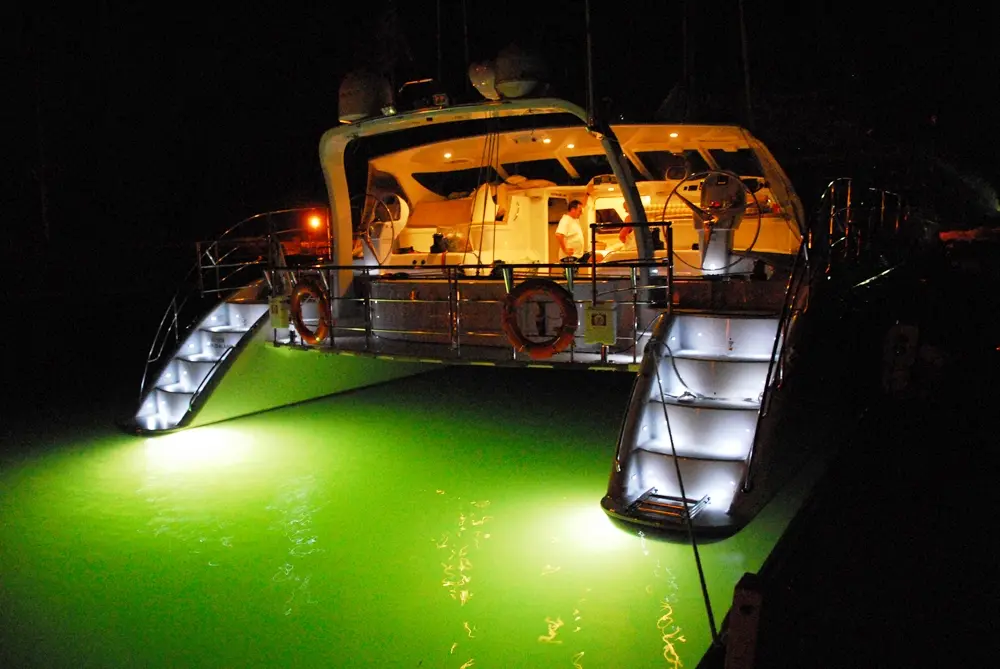
- Underwater LED lighting: transom or through-hull mounting, choosing blue, white or RGB fittings and wiring. We cover selection criteria in our underwater LED lighting article.
- Navigation lights: COLREG-compliant installation of Lopolight LED fittings, converting old halogen/incandescent lights to LED. We cover the rules in navigation light rules and LED conversion.
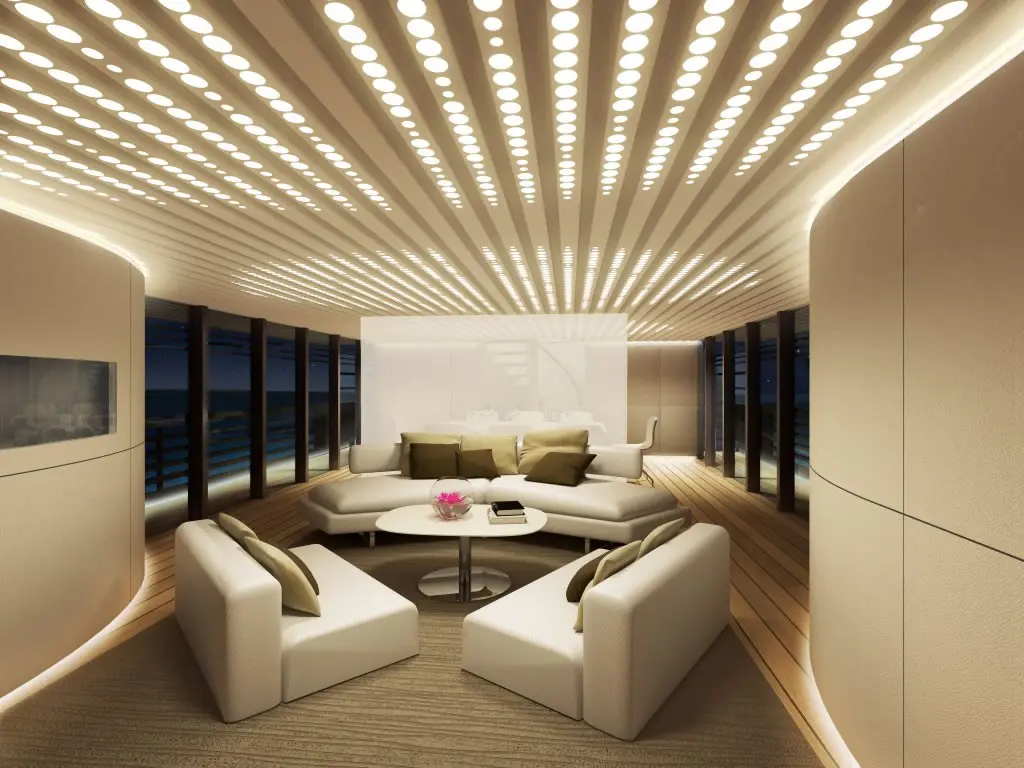
- Interior and ambient lighting: concealed ceiling LED strip, spot fittings, RGB corridor and saloon lighting, dimmer and scene control. Details are in interior LED and ambient lighting.
- Deck and exterior: deck, companionway, cockpit and mast/spreader floodlights.
- Conversion projects: converting halogen and incandescent fittings to LED to cut energy consumption.
- Control systems: switching panels, dimmers, timer relays and lighting scenes integrated with digital switching.
We calculate cable sizing and voltage drop for lighting circuits too; on long runs (for example the light cable running to the masthead), low voltage can keep an LED from reaching its expected brightness or make its colour temperature look shifted. We also make sure LED drivers can handle fluctuations on the battery bank and the voltage sag during engine start, since cheap drivers fail early under those conditions.
Typical faults we solve
- Underwater LEDs dimming or changing colour over time (a seal failure or moisture ingress).
- A navigation light's indicator lamp on the bridge failing to light, or staying lit continuously.
- A section of interior LED strip going dark (a connection point or driver fault).
- RGB lighting losing colour control or flickering at random.
- Deck floodlights short-circuiting due to moisture ingress.
- The old switching circuit being incompatible with a new driver after an LED conversion.
- Flicker, or dropout at minimum brightness, on dimmer-controlled LEDs.
- Colour temperature and current mismatches when mixing LED strips from different manufacturers.
Protection, wiring and installation principles
Lighting circuits may look minor, but a poorly executed one carries a real risk of short circuits and early failure. We apply these principles on every project:
- Every LED circuit is protected by its own fuse sized to its current draw; on long cable runs the cable is sized for voltage drop as well as ampacity.
- Exterior and underwater fittings must be rated at least IP67, and IP68 where they're constantly submerged.
- On through-hull underwater light installations, sealing, correct-torque fastening and electrical isolation are separately checked against galvanic corrosion risk.
- Connectors must be marine-grade, waterproof and supported with strain relief; this matters especially for light cables running through the mast.
- Navigation light indicator lamps are wired so they're visible from the helm, making a lamp failure noticeable immediately.
Our process on board
- Survey and needs analysis: existing fittings, the desired look and the purpose (functional, ambient, safety) are assessed together.
- Measurement: the voltage, fuse rating and cable condition of the existing circuits are checked.
- Selection and recommendation: we present options for fitting type, colour temperature, IP rating and control method.
- Installation: waterproof connections, correct fuse protection and neatly routed cable.
- Test and hand over: every circuit is verified with a night test, and the visibility angle of the navigation lights is checked.
Brands we work with
We are an authorised installer for Lopolight LED products for navigation lights; their low power consumption and long-lived LED technology make the brand a common choice on both motor and sailing yachts. For the supply side of lighting circuits we take Victron Energy distribution products and the battery system into account, calculating the total LED load against battery bank capacity using the method described on our Energy and Battery Systems page. For navigation lights we reference the COLREG Annex I requirements.
Motor yachts vs sailing yachts
Motor yachts typically have larger underwater LED fittings, several deck floodlights and extensive interior ambient lighting; the total LED load needs to be planned alongside battery bank and inverter capacity.
Sailing yachts have more limited power, so low-current fittings and dimmer control matter more; the cable routing and connector quality for the masthead navigation light are critical, since a fault there may mean going up the mast — work that's usually far safer and quicker done ashore with the mast unstepped. General electrical needs for both boat types are compared in motor yacht vs sailing yacht electrical needs.
Service area
Our workshop is in Turgutreis. We work on board at Turgutreis D-Marin, Yalıkavak Palmarina, Milta Bodrum Marina, Gümüşlük bay and the boatyards around the peninsula. Checking navigation lights and underwater lighting at season opening improves safety on night passages and at anchor; our season commissioning checklist helps with that planning. Winter lay-up suits jobs that need the boat ashore, such as through-hull underwater light installation. For a lighting project or fault diagnosis, reach us through our contact page.