Connecting to Shore Power at the Marina: Safe 16A/32A/63A Use
Shore power seems to offer near-unlimited electricity to a yacht, but the wrong plug, cable or connection sequence can put the boat and the marina grid at risk.
Connecting to shore power at the marina frees the yacht's energy supply from generator and battery limits: air conditioning can run for hours, batteries reach full charge, and generator hours drop. But the shore power connection is the single most critical point where the boat's electrical system meets an outside source; the wrong plug, a damaged cable or missing earth protection can harm both your yacht and neighbouring boats.
16A, 32A and 63A: which plug for which boat?
The CEE-type plugs used at the vast majority of European marinas are built to IEC 60309, with standard colours and sizes tied to current capacity. A blue body indicates single-phase (220–240V) power, a red body indicates three-phase (380–400V), and pin count and diameter also vary by current class. This standardisation makes it physically almost impossible to plug into the wrong voltage rating, while letting the same plug type work across all European marinas.
| Plug type | Typical capacity | Typical use |
|---|---|---|
| Blue 16A (single-phase) | ~3.6 kW | Small sailboats, mid-size motor yachts |
| Blue 32A (single-phase) | ~7.4 kW | Larger boats with air conditioning |
| Red 32A / 63A (three-phase) | ~22–43 kW | Large motor yachts, multiple AC units and high-power systems |
If the boat's panel is single-phase but the marina only offers a three-phase 32A/63A socket, you need either an adapter that distributes load evenly across the correct phases or guidance from marina staff; picking phases at random can cause unbalanced loading.
Connection sequence: why order matters
Following the right sequence when connecting shore power protects both people and equipment:
- Turn the yacht's main shore power switch OFF.
- Plug the cable into the boat first, then into the marina socket.
- Turn on the marina-side switch, then the yacht panel's main switch.
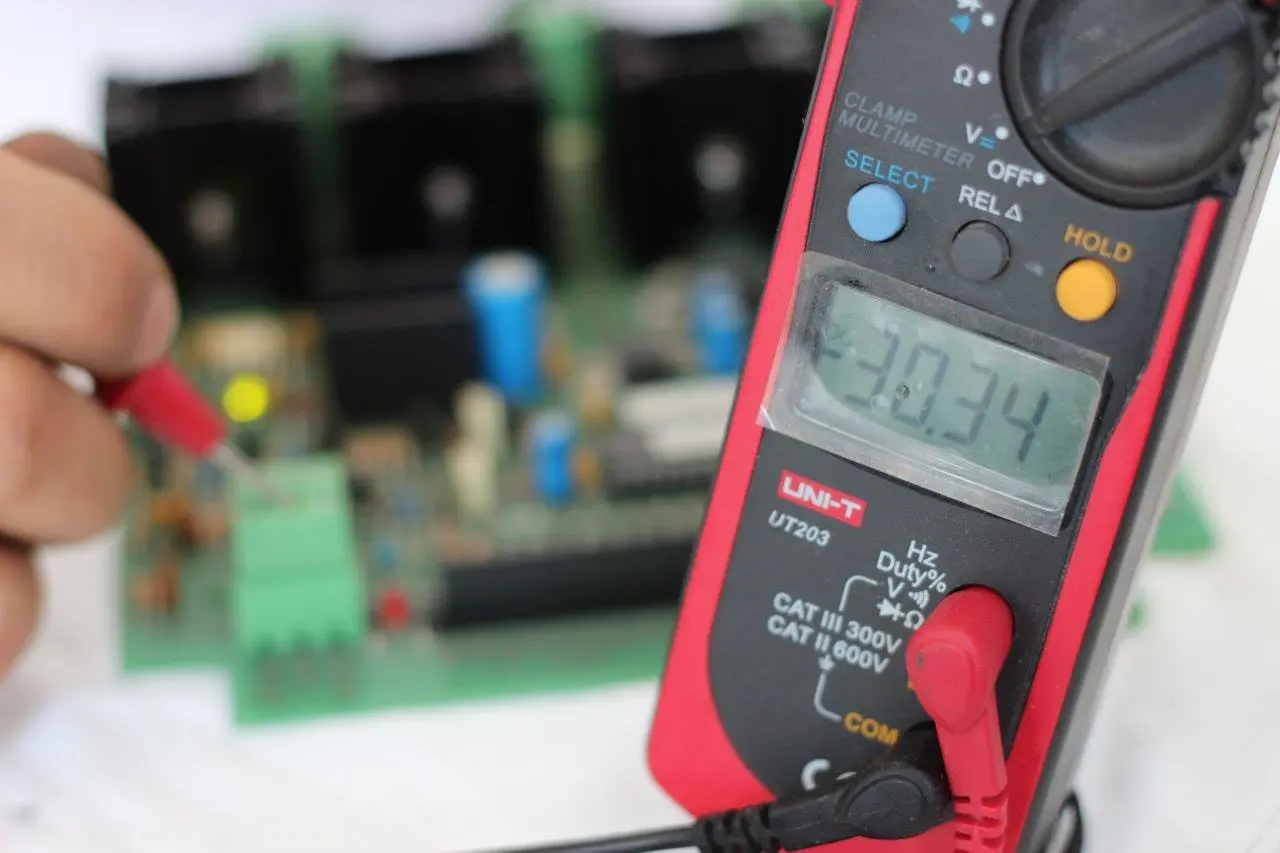
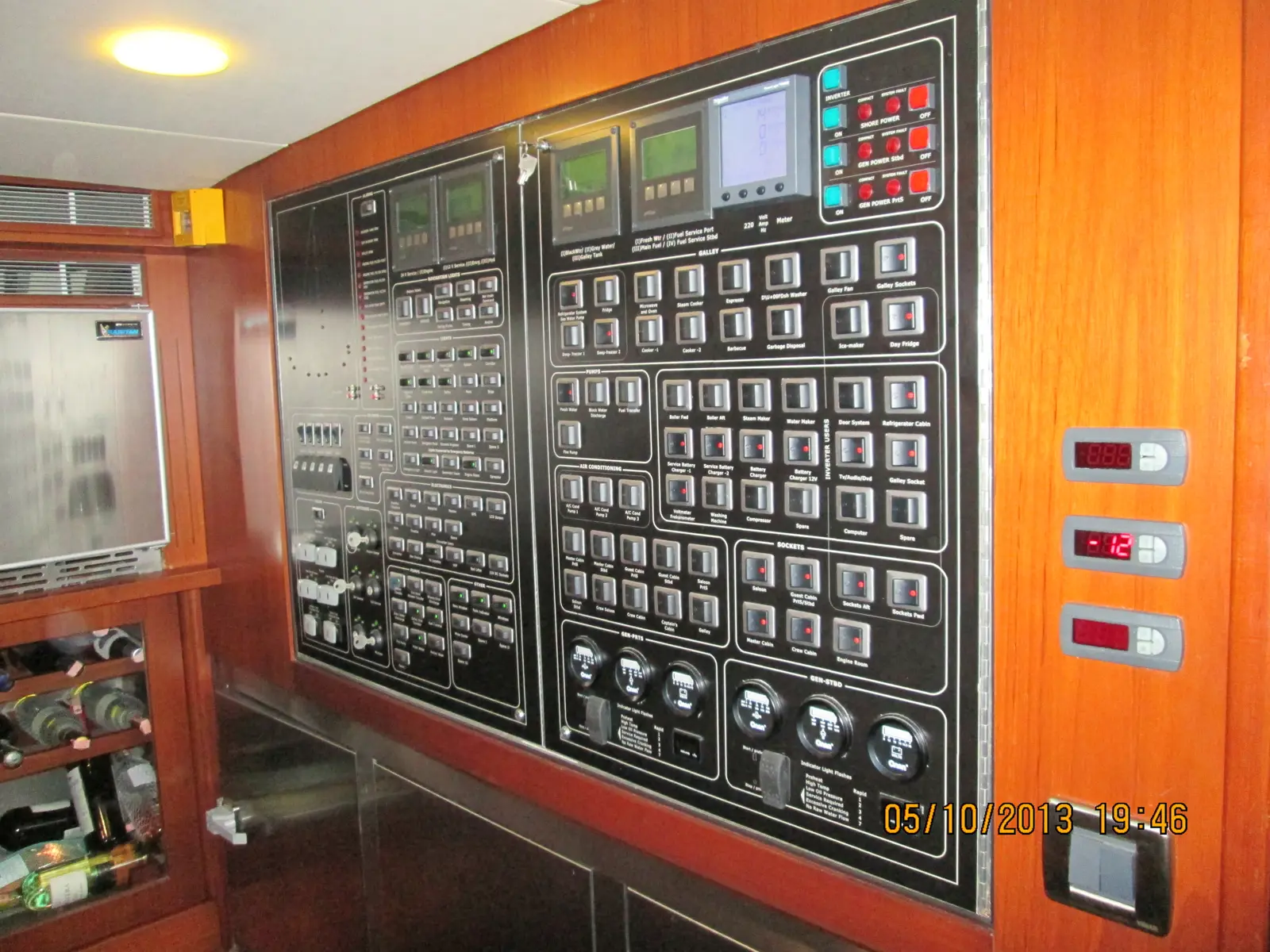
- Verify voltage and phase rotation are correct using the panel's indicator or a voltmeter.
- Reverse the order when disconnecting: switch off the yacht side first, then the marina side, and remove the cable last.
This sequence prevents cable ends from being connected or disconnected while live, reducing both spark risk and gradual burning of the connectors.
Cable and connector maintenance
Shore power cables spend their life on deck, on the pontoon and sometimes near water, exposing them to more wear than typical interior wiring. Points to check regularly:
- Discoloration, heat marks or melting on plug and socket pins?
- Cracks, cuts or UV-related stiffening in the cable insulation?
- Are connectors seating fully? A loose contact causes sparking and overheating.
- Is the cable reel fully uncoiled? A long cable left coiled can overheat inductively (the "coil effect") under high current.
A warming plug should never be ignored — report it to marina staff if possible and replace the yacht-side cable.
Earth leakage and ground monitoring
The connection between the yacht and marina links the hull's earth bond to the shore grounding system. ABYC standards recommend fitting a residual current / earth leakage device (RCD/ELCI) on the yacht's AC panel and testing it regularly. This protection reduces both the risk to people and the risk of underwater electrolysis; we cover this in depth in detecting stray current and grounding on a yacht.
Why galvanic isolation matters
Boats that move between different marinas, each with different grounding quality, can be exposed to a small but continuous galvanic current through the shore power earth line. That current makes underwater metal parts and sacrificial anodes erode much faster than expected. A galvanic isolation transformer or isolator blocks this unwanted DC current path while still passing AC power. We cover this in depth, in the context of anode selection and hull protection, in galvanic corrosion, anodes and isolation transformers.
Cable sizing and voltage drop
Long shore power cables, especially on 32A/63A lines, can cause voltage drop if undersized, leading motorised equipment like the AC compressor to run hot and inefficiently. Marinas usually provide a standard-length cable, but if you're using your own, cross-section must be sized for the distance and current involved; we show this calculation in marine cable selection and voltage drop calculation.
Adapters and step-down converters
When the boat's plug and the marina socket don't match in current class (say, a 16A boat with only a 32A socket available), use a certified CEE adapter rated for wet environments (IP44/IP67). Never use uncertified, "home-made" adapters built from domestic-grade parts. Adapters that step a 63A three-phase feed down to a 16A single-phase boat only use one phase internally — the total power available is limited by the boat's panel and cable, not by the marina socket's rating. On boats fitted with an isolation transformer, the transformer's primary and secondary winding current ratings must also match the plug used; make sure its rated current isn't exceeded when air conditioning and the battery charger run together at high load.
Shore power and the battery charger
A yacht connected to shore power usually distributes AC and charges its battery bank through an inverter/charger. The charger's input current limit must be set to match the marina socket's capacity, otherwise the marina-side breaker can trip repeatedly while the boat's equipment is running. You'll find more on charger selection and input current limiting in our guide to choosing an inverter/charger for a yacht.
Practical checklist
- Select the correct plug type and current capacity (16A/32A/63A) for the marina.
- Follow the connection sequence: OFF first, then connect, then ON.
- Route the cable so it can't touch water and doesn't sag.
- Check plugs and sockets regularly for signs of heating.
- Confirm the RCD/ELCI protection on the panel is functioning.
- Keep a galvanic isolation transformer aboard on metal-hulled boats or yachts that change marinas often.
With the right equipment and habits, shore power becomes one of a yacht's most reliable sources of energy.
We go through the most common marina issues, from RCD trips to low voltage and hot plugs, by symptom in shore power problems in Yalıkavak and Turgutreis.
Shore power checks with Aslan Yacht
At Turgutreis D-Marin, Yalıkavak Palmarina and other marinas across the Bodrum peninsula, we inspect your yacht's shore power inlet, cables and connectors, earth leakage protection and galvanic isolation on site. Learn more about our yacht electrical service, or get in touch to have your shore power system checked.
Frequently asked questions
What is the difference between 16A, 32A and 63A shore power plugs?
These values indicate current capacity in amperes. 16A suits small single-phase boats, 32A fits mid-size motor yachts and sailboats, and 63A covers yachts with high energy demand or three-phase systems. The plugs are also physically different sizes, so using the wrong adapter can exceed the cable's rated current-carrying capacity.
Is it a problem to leave the shore power cable where it can touch water?
Yes — a shore power connection that's wet or touching water carries a serious electric shock risk. Route the cable so it and its connectors stay dry, avoid letting it sag as it crosses the pontoon, and follow the safe routing the marina designates.
Does every yacht need a galvanic isolation transformer?
It isn't mandatory, but it's strongly recommended on metal-hulled boats and yachts that move between marinas frequently. An isolation transformer breaks the path for galvanic current that can otherwise travel through the shore power earth connection, preventing accelerated corrosion of the hull and anodes.