Galvanic Corrosion, Anodes and Isolation Transformers: Protecting the Hull
When an underwater metal part erodes faster than expected, the cause is usually not poor material quality but galvanic corrosion — and the right anodes and isolation control it well.
When an owner finds a propeller, shaft or trim tabs eroded far more than expected at the end of a season, the first instinct is often to question material quality or a manufacturing defect. In most cases, the real cause is galvanic corrosion: a quiet but persistent erosion process that occurs when different metals are electrically connected in a conductive medium like seawater. The right anode selection, and isolation where needed, keeps this process largely under control.
How does galvanic corrosion occur?
Seawater acts as an electrolyte — a conductive medium. When two different metals (say, a bronze propeller and a stainless steel shaft) are electrically connected in this medium, a small galvanic cell forms between them. The metal that's more "active" in the galvanic series (acting as the anode) slowly dissolves, giving up electrons, while the more "noble" metal (acting as the cathode) is protected. This is essentially how a battery works — the difference here is that it happens unwanted and uncontrolled.
Several factors accelerate this process on a boat:
- Direct contact between dissimilar metals, or an electrical connection between them via the bonding system.
- Warm, salty, well-oxygenated water (conductivity increases and corrosion speeds up).
- Different boats, or shore power earthing, being electrically linked together at a marina.
- Stray currents from faulty wiring or defective equipment (a related but distinct process called electrolysis).
Sacrificial anodes: the first line of defence
Sacrificial anodes are made from a metal more electrically active than the valuable metal parts on the boat (propeller, shaft, trim tabs, thru-hull fittings) and connect to them via the bonding system. Galvanic current flows from the anode instead of the parts that need protection; the anode erodes over time while the protected parts stay intact.
| Anode type | Water environment | Note |
|---|---|---|
| Zinc | Salt water | The most common, a standard for decades |
| Aluminium | Salt water + brackish/fresh water | Lighter, effective across a broader salinity range |
| Magnesium | Fresh water only | Erodes far too fast in salt water — don't use it there |
Sizing and placement matter as much as anode type. Too small or too few anodes won't adequately cover the metal mass they need to protect; oversized anodes create unnecessary drag and can look out of place. The anode size and count recommended by the boat manufacturer or an authorised service should be your reference point.
Simple steps for anode inspection
- Visually inspect all anodes whenever the boat is hauled out.
- Estimate how much of the anode's mass has eroded; plan a replacement once it reaches roughly 50%.
- If a white, crusty layer (passivation) has formed on the anode surface, brush it off — this layer can reduce the anode's effectiveness.
- Confirm the bonding cable from anode to hull is solid and low-resistance; a loose connection renders the anode useless.
- When replacing an anode, use the same type and similar size — mixing different metal alloys can create new imbalances.
Accelerated corrosion from stray current
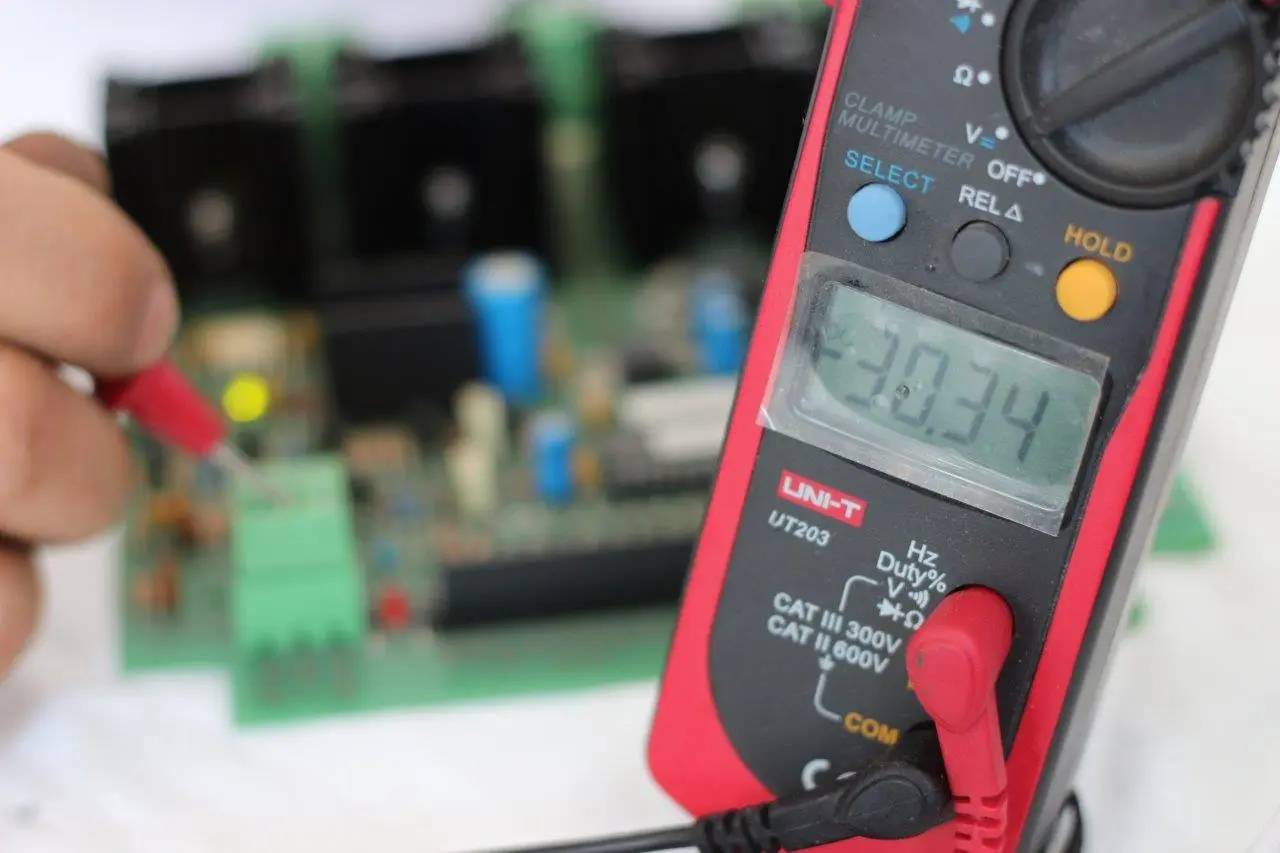
In some cases anodes erode far faster than normal — this usually points to stray DC current somewhere on the boat or at the marina. An incorrectly grounded appliance, damaged cable insulation or a neighbouring boat's faulty electrical system can feed this current. When anode life is noticeably shorter than expected, the first step is checking the boat's own grounding and stray current; we cover this in detecting stray current and grounding on a yacht.
Galvanic isolation transformers and isolators
A yacht connected to marina shore power is electrically linked, via the earth line, to neighbouring boats and the marina grid. Other boats' more corroded anodes, or their stray currents, can be transferred to your own yacht through this shared earth connection. Two common ways to prevent this:
- Galvanic isolator: A diode-based device wired in series on the earth line that blocks low-value DC currents while keeping the AC safety earth path intact. Manufacturers such as Victron Energy offer these in 16A, 32A and 64A classes.
- Isolation transformer: Transfers shore power magnetically from one winding to another, fully separating the yacht's electrical system from the marina grid galvanically. It also has the added benefit of matching voltage (for example 230V/230V or 230V/110V).
On metal-hulled boats and yachts that change marinas often, an isolation transformer doesn't just extend anode life — it also provides the extra layer of safety recommended by ABYC standards. We cover the general rules of shore power connection in connecting to shore power at the marina.
Which solution to choose depends on hull material (steel, aluminium, fibreglass, wood), usage pattern and budget. On aluminium-hulled boats, corrosion risk is especially high, so an isolation transformer is nearly standard practice; on fibreglass boats that stay fixed at a single marina, correctly sized anodes and regular inspection are usually sufficient.
The bonding system and its relationship to electrical wiring
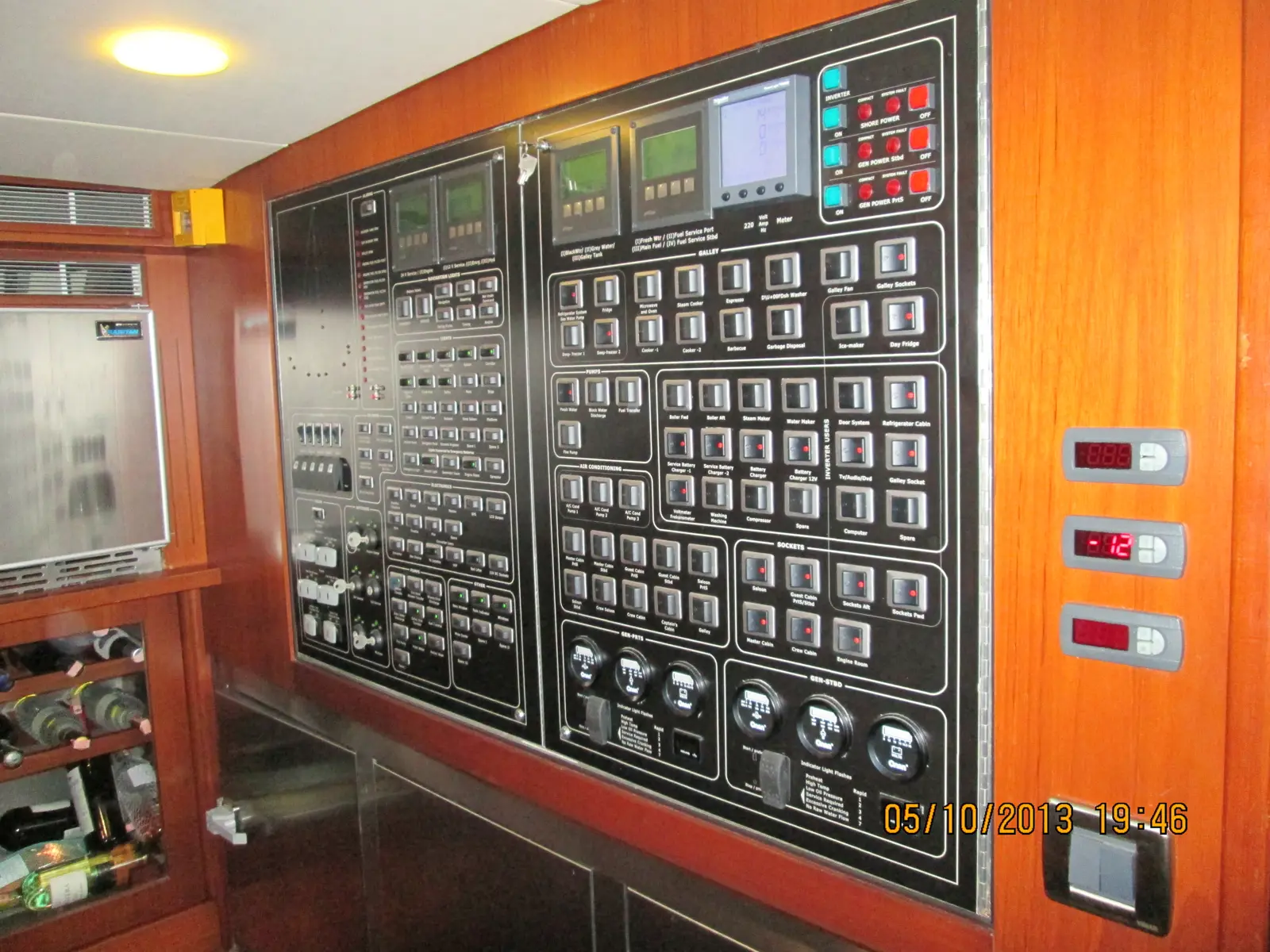
Anodes and isolation work together with the boat's overall bonding (equipotential grounding) system. The engine block, shaft, propeller, trim tabs and metal thru-hull fittings are usually connected to a single bonding line; the integrity of this system is critical for both galvanic corrosion protection and electrical safety. The general condition of the electrical panel and grounding wiring also directly affects corrosion resistance; on older boats, reviewing this wiring can be part of a broader electrical panel refit.
Common mistakes
- Not replacing anodes until they're "practically gone."
- Using an anode unsuited to the water type (fresh vs. salt).
- Painting over the bonding cable between anode and hull — this renders the anode completely non-functional.
- Forgetting to bond newly added metal parts (a new trim tab or sensor, for example) into the system.
- Moving between marinas with different earthing quality repeatedly without an isolation transformer or galvanic isolator.
Underwater electrical equipment and corrosion
Underwater LED lighting, trim tab actuators, bow thrusters and similar underwater electrical equipment can themselves become sources of accelerated galvanic corrosion if not correctly integrated into the bonding system. Mounting aluminium-bodied underwater fixtures with the wrong metal screws or fasteners, in particular, can cause fast, localised corrosion in that area. Following the manufacturer's recommended fasteners and bonding instructions when installing new equipment protects both the equipment and the surrounding hull.
Corrosion checks with Aslan Yacht
Across marinas and boatyards on the Bodrum peninsula, we assess your yacht's anode condition, bonding system and galvanic isolation needs on site. Learn more about our yacht electrical service, or get in touch to have your hull protection system checked.
Frequently asked questions
What is the difference between zinc, aluminium and magnesium anodes?
Zinc anodes are used in salt water, aluminium anodes work in both salt and brackish/fresh water, and magnesium anodes are used only in fresh water. Using the wrong anode for the water type (for example, zinc in fresh water) means it either erodes too slowly or fails to provide adequate protection.
How often should anodes be inspected and replaced?
Anodes should be checked at least once a season, and more often on heavily used boats that move between marinas. Replacement is recommended once roughly 50% of the anode's mass has eroded; letting it fully deplete removes the protection and corrosion shifts directly to the propeller, shaft and other metal parts.
What's the difference between an isolation transformer and a galvanic isolator?
A galvanic isolator is a relatively small device that uses diodes to block small DC currents travelling along the shore power earth line. An isolation transformer transfers AC power magnetically from one winding to another, fully separating the yacht's electrical system from the marina grid galvanically — a more comprehensive but larger and costlier solution.