Hydraulic Trim Tabs or Interceptors? Choosing the Right Trim
Hinged plate or vertical blade? We compare the two trim solutions on operating principle, response speed, maintenance and typical faults.
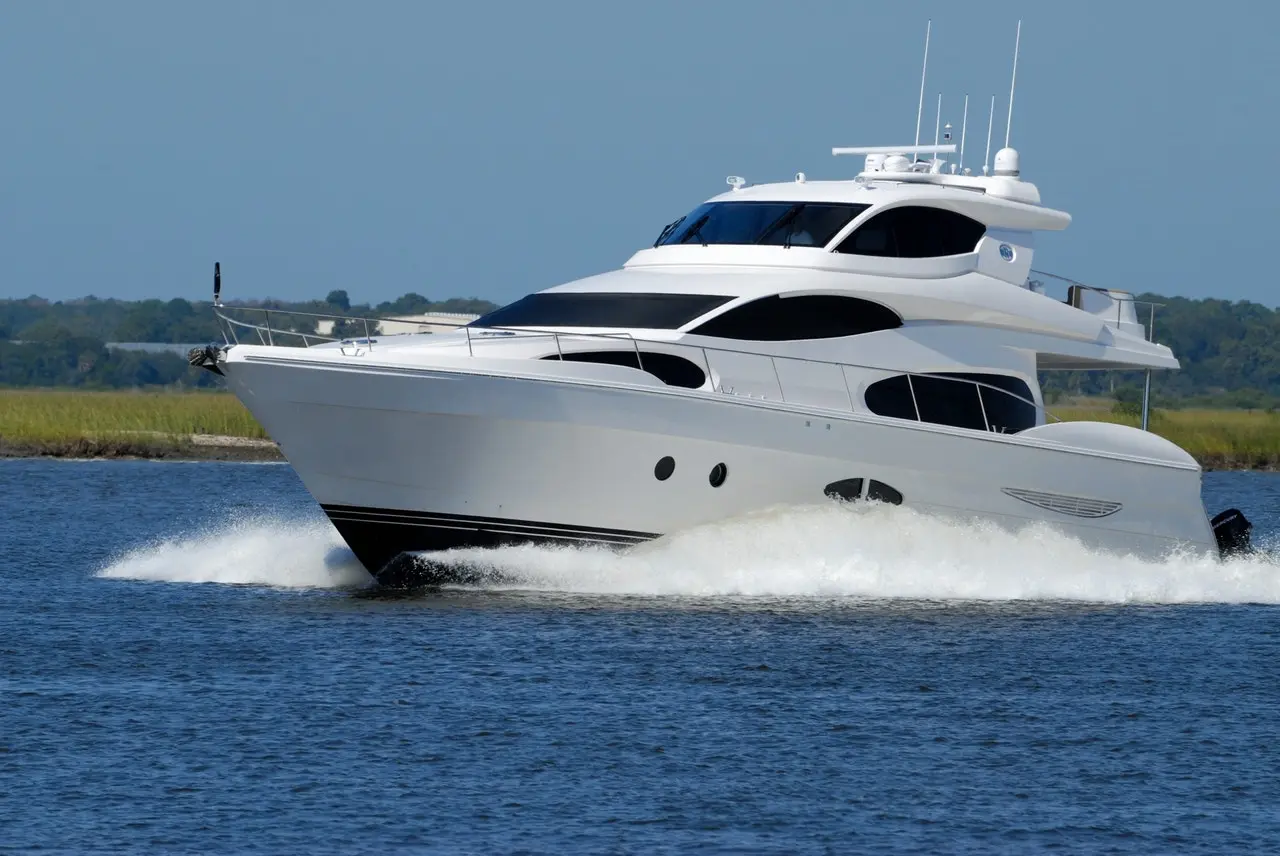
Hydraulic trim tabs or interceptors? The answer directly affects the ride comfort and maintenance burden of a planing motor yacht. Both solutions correct running pitch and list by generating lift at the stern, but they do it with different mechanisms, different response speeds and different maintenance needs.
In this article we compare the two systems based on our field experience and summarize the typical faults and the points to weigh when deciding on a refit.
Why do you need a trim system?
As a planing boat accelerates, its bow rises. With the bow too high, forward visibility suffers, getting on the plane takes longer and the hull slams harder into the waves. Load distribution, the state of fuel and water tanks or a beam wind will make the boat list to one side.
Trim systems correct this by generating controlled lift at the lower edge of the transom. The stern rises and the bow comes down; setting the two sides differently removes a list.
A common mistake with manually operated systems is leaving the tabs too far down for the whole passage. Drag increases, fuel consumption rises and the bow becomes prone to burying in a following sea. Trim also needs resetting whenever speed changes; taking that workload off the captain is one of the main gains of automatic systems.
Roll at anchor is a completely separate matter: without water flow, trim systems have no effect, and that is where gyro stabilizers such as Seakeeper come in.
Hydraulic trim tabs: the hinged plate
A trim tab is a stainless steel or aluminium plate hinged to the lower edge of the transom. As a hydraulic cylinder pushes the plate down, the water flow beneath it is deflected and lift is generated at the stern.
A typical hydraulic trim tab system consists of:
- Hydraulic power unit (HPU): a 12 V or 24 V DC electric motor, pump, oil reservoir and directional valves
- Cylinders: one or more hydraulic cylinders per tab
- Hoses: hydraulic lines from the power unit to the cylinders
- Controls: switches at the helm, with a position indicator on some systems
Hydraulic tabs are a robust solution proven over many years. Their large plate area can deliver strong correction, especially on heavy, medium-speed boats. As an example of a manufacturer's approach, see Bennett Marine's classic hydraulic trim tab systems.
The drawbacks are response speed and maintenance. Full deployment of a tab can take several seconds, which is too slow to correct a list that changes wave by wave automatically. They also need hydraulic oil, seal, hose and hinge maintenance. Because on most boats the power unit sits in the damp lazarette, motor terminals and relays are exposed to corrosion; the oil must be the type specified by the manufacturer, and different oils must not be mixed.
Interceptors: the vertical blade
An interceptor is a thin, vertically moving blade mounted on the lower edge of the transom. When the blade drops a few millimetres to a few centimetres below the hull bottom, it interrupts the flow and creates a high-pressure zone ahead of it. The effect is similar to a trim tab, but because the movement is short, the response is very fast.
Most modern interceptor systems are electric, with no hydraulic oil, pump or hoses. Thanks to their fast response, when combined with motion sensors and software they can correct list and pitch continuously and automatically under way. One of the best-known examples of this approach is Zipwake; for details see our article on the Zipwake automatic trim system.
Interceptors protrude very little aft of the transom. That makes them easier to fit on boats with a swim platform, sterndrives or outboards.
Comparison table
| Criterion | Hydraulic trim tabs | Electric interceptors |
|---|---|---|
| Operating principle | Angle of a hinged plate | Vertical blade interrupting the flow |
| Response speed | Slow (seconds) | Fast |
| Automatic roll control | Limited | Well suited |
| Protrusion aft of transom | Significant | Minimal |
| Hydraulic oil and hoses | Yes | No (on electric systems) |
| Typical maintenance | Oil, seals, hoses, hinges, anodes | Blade cleaning, cable glands, connectors |
| Effect at low speed | Weak | Weak |
| Effect at anchor | None | None |
The last two rows correct a common misconception: no trim system reduces roll at anchor. Both work only when there is sufficient water flow.
Common faults and checks
On hydraulic trim tabs
The symptoms we meet most often in the field, with the order of first checks:
- No movement at all: check the fuse or breaker, the helm switch, the relay and the voltage reaching the pump motor.
- Pump runs but the tab does not move: check oil level, valve solenoids and hoses for leaks.
- One side slow or asymmetric: look for leaking cylinder seals, air in the line or a kinked hose.
- Tab creeps down on its own: an internal leak or a leaking valve is likely; the cylinder and valve should be tested.
- Squeaking or stiffness: check for hinge corrosion and barnacle growth.
Because the pump motor draws high current, voltage drop is also a frequent cause. On long cable runs, check whether the conductor size is adequate using the method in our article on marine cable and voltage drop. For power unit, hose and cylinder work, our hydraulic systems service also comes into play.
On interceptors
- Blade jamming due to barnacles and weed
- Loss of watertightness at the transom cable glands
- Oxidised connectors in the lazarette
- Loose connection or low voltage on the supply line
Which system for which boat?
There is no single "right answer"; the decision depends on the boat's character and how it is used. Our general guidance:
- A boat with healthy existing hydraulic tabs: a well-maintained hydraulic system can run trouble-free for many years. That alone is no reason to replace it.
- If automatic roll and pitch control is wanted: thanks to their fast response, interceptors are the more suitable basis.
- If transom space is limited: where a swim platform or engine layout leaves no room for tabs, interceptors usually fit more easily.
- If hydraulic faults are frequent: recurring leaks and cylinder problems may put interceptors on the table when deciding on a refit.
Before deciding, the boat's speed range, displacement and transom dimensions should be assessed together. For brand options, you can also visit our Zipwake brand page.
What to watch in a conversion
In a switch from hydraulic tabs to interceptors, the most critical work is the transom itself. Holes left by the old tab hinges and cylinder mounts must be filled appropriately for the hull material and sealed. A layout plan is drawn up in advance so that these holes do not clash with the new interceptor mounting points.
Inside, the hydraulic power unit, hoses and old helm switches are removed; the old circuit on the panel is either cleared or rearranged with suitable cable size and protection to feed the new system. Leaving redundant cables on board only causes confusion during future fault-finding. Finally, a sea trial at different speeds and loads confirms that the new system behaves as expected.
Work with Aslan Yacht on trim systems
Our team in Turgutreis carries out hydraulic trim tab repairs, interceptor installations and trim system refits in marinas and boatyards around the Bodrum peninsula. Learn more about our stabilizer and trim service, or contact us to arrange an assessment of your boat.
Frequently asked questions
Why are my trim tabs moving slowly?
The most common causes are low hydraulic oil level, air in the lines, leaking cylinder seals and low voltage reaching the pump motor. Check the oil level and supply voltage first.
Can I switch from trim tabs to interceptors?
On most planing boats, yes. The transom dimensions, old tab mounting holes and cable entries are assessed, the old holes are properly filled and sealed, and the interceptors are fitted to a new layout plan.
What should I do if a tab sticks down while under way?
Reduce speed, keep the boat balanced and bring the other tab to a similar position to reduce the asymmetry. Back in port, have the hydraulic leaks, valves and electrical connections checked.