Solar Panels and MPPT Installation on Sailboats: A Complete Guide
A correctly sized solar and MPPT system dramatically cuts generator or engine dependence on the days spent at anchor.
On sailboats, solar panels are a quiet, low-maintenance source of energy that meaningfully cuts generator and engine hours, especially on days spent at anchor or away from a marina. But getting real-world efficiency and protecting the battery bank depends as much on correctly sizing the MPPT charge controller and matching the charge profile to battery chemistry as it does on panel choice. This guide walks through the steps to installing a solar system on a sailboat.
Panel types: monocrystalline, flexible and semi-flexible
- Rigid monocrystalline panels: Offer the highest efficiency and longest life; usually mounted fixed on a bimini top or arch/frame structure.
- Semi-flexible panels: Conform to curved surfaces (coachroof, dodger), but are more sensitive to heat and mechanical stress; models bonded without an air gap for ventilation can have a shorter service life.
- Portable/folding panels: Can be aimed at the sun and stowed when not needed at anchor, offering more flexibility than a fixed install but requiring daily setup and stowage effort.
The most common approach on sailboats is fixed monocrystalline panels mounted on the bimini or arch, supplemented as needed by an additional portable panel. Arch mounting keeps panels independent of the sail and rigging, at a fixed and generally better-ventilated angle, reducing both shading risk and heat-related efficiency loss. With bimini-top mounting, panel weight and wind load must be compatible with the existing bimini frame's capacity; reinforce the frame if needed.
Capacity calculation: how much panel is enough?
Correct sizing starts with knowing your daily energy consumption in Ah. If you haven't measured your daily use yet, start with the method in our daily energy consumption (Ah) calculation guide. As a rough rule of thumb, under typical sun conditions around Bodrum and the Aegean, a panel's average daily output can be estimated at roughly 3–4 times its nominal wattage in Wh (accounting for shading, angle and temperature losses).
| Daily consumption | Approx. required panel power (12 V system) |
|---|---|
| 40–60 Ah/day | 100–150 W |
| 80–120 Ah/day | 200–300 W |
| 150–200 Ah/day | 350–500 W |
| 250 Ah/day and up | 600 W and up, usually multiple MPPTs |
These figures are only a starting point; actual output varies significantly with panel angle, shading (mast, sails, dodger) and season.
Choosing an MPPT charge controller
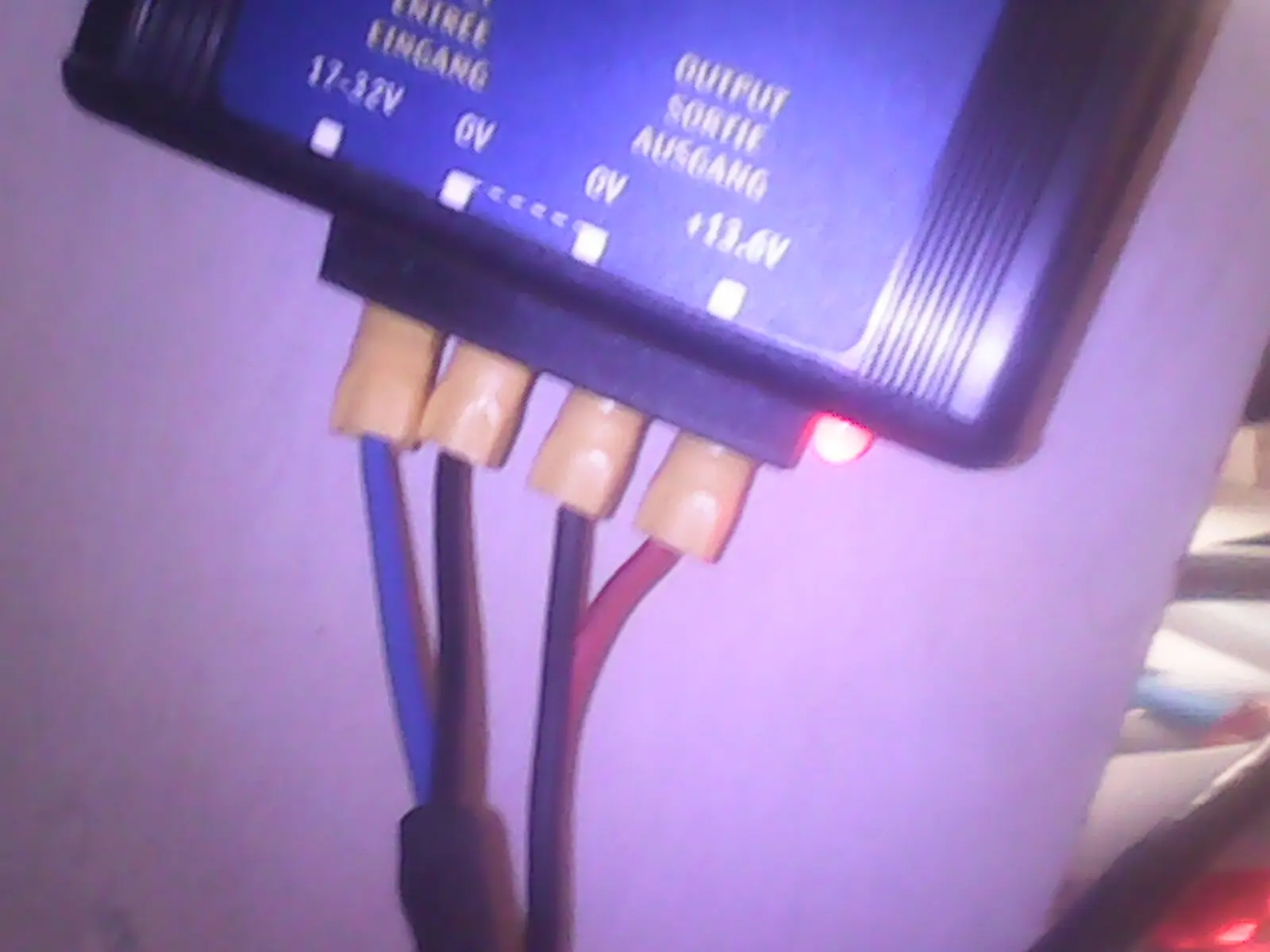
MPPT (Maximum Power Point Tracking) controllers continuously optimise panel output voltage, delivering a clear efficiency gain over PWM, especially in partly cloudy weather and on arrays where panel voltage exceeds battery voltage. Devices such as Victron Energy's SmartSolar MPPT series are selected by current and voltage rating; the panel array's total open-circuit voltage (Voc), particularly in cold weather, must stay below the controller's maximum input voltage.
Points to check when choosing an MPPT controller:
- Maximum input voltage: Allow margin above the array's Voc at its coldest expected temperature.
- Maximum output current: Choose with some margin for the battery bank and any planned future panel expansion.
- Battery profile support: Confirm it supports the correct absorption/float settings for your battery chemistry (AGM, gel, flooded or LiFePO4). We cover the correct maintenance approach by battery type in boat battery maintenance and lifespan guide.
- Monitoring: Bluetooth or GX-device connectivity makes it easy to track production and charging data remotely.
Wiring, fusing and mounting
DC cable size between panel and MPPT should be calculated for current and run length, since voltage drop directly affects efficiency. Fit appropriately rated fuses at the panel output and MPPT input, and use UV-resistant, marine-grade connectors throughout. Wiring and grounding practices should follow the DC system principles in ABYC E-11. Leaving an air gap under the panels for circulation limits temperature-related efficiency loss, especially in high deck temperatures during Bodrum summers.
With series-connected panels, partial shading (from the mast, an antenna or sails) can limit the whole array's current; when planning panel placement, account for how the sun's angle shifts through the day and where shade is likely to fall. Using a separate MPPT input or optimiser per panel is an alternative that reduces the impact of partial shading.
Working alongside the alternator and charger
A solar system should be designed to work alongside the alternator and shore/inverter charger for days when solar alone isn't enough. All charge sources need to be set to the same battery chemistry profile; otherwise the batteries end up being charged toward conflicting voltage targets. For planning your charge sources as a whole, see our choosing an inverter/charger for your yacht guide too.
Battery monitoring and using surplus production
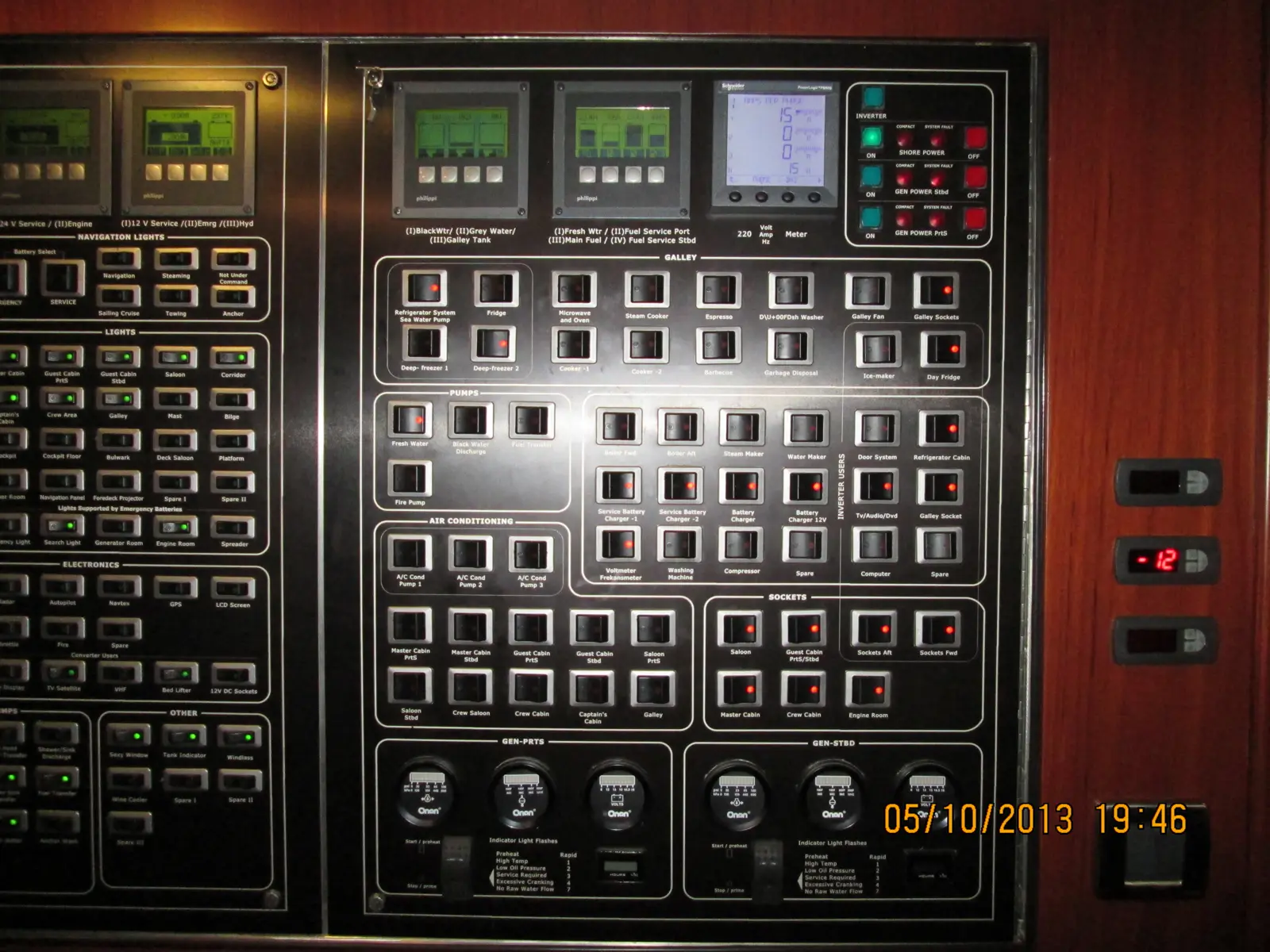
Once the solar system is commissioned, it's worth seeing where the energy actually goes. A shunt-based battery monitor gives a clear picture of the daily production/consumption balance, so you can measure — rather than guess — whether the array is actually meeting your needs. Once the battery bank reaches full charge, surplus solar energy usually goes to waste; in some systems this surplus can be diverted to a secondary load such as a water heater. If you're setting up remote-monitoring infrastructure, panel production and battery status can be tracked from the same VRM dashboard; see remote yacht monitoring: sensors, GSM and Victron VRM.
Solar and lithium battery integration
If the service bank has been converted to LiFePO4, the MPPT controller needs to support a lithium profile and, ideally, communicate with the BMS. Thanks to lithium's flat discharge curve and high acceptance current, solar production is used far more efficiently, but when the BMS cuts charging, the MPPT must detect this and safely stop production too. We cover how a lithium conversion affects charge sources in detail in our guide to switching to lithium LiFePO4 batteries.
Post-installation checklist
- Does panel output voltage and current match expected values under clear sky?
- Does MPPT input voltage stay below the array's maximum Voc?
- Is the charge profile correctly set for your battery chemistry?
- Are all connections tight and fuses correctly rated?
- Is under-panel ventilation adequate?
- Are cable deck penetrations sealed against water ingress?
A correctly sized solar and MPPT system gives a sailboat a quiet, low-maintenance and sustainable energy source, sharply cutting generator dependence, especially on long days at anchor.
Solar panel installation with Aslan Yacht
From our workshop in Turgutreis we travel to marinas and anchorages around the Bodrum peninsula, designing a solar panel and MPPT system to match your boat type and usage pattern, and handling the wiring and commissioning. Learn more about our energy and battery systems service, or get in touch with us for your yacht's solar project.
Frequently asked questions
Should I choose MPPT or PWM?
MPPT delivers noticeably higher efficiency, especially when panel voltage sits well above battery voltage and in cloudy or partially shaded conditions. A small, single-panel system with panel voltage close to battery voltage may get by with PWM, but MPPT is the preferred choice on most sailboat installs today.
How many years does it take for solar panels to pay for themselves?
This depends on the reduction in generator/engine hours, fuel prices and your usage pattern, so it varies from boat to boat; rather than a fixed payback period, we recommend evaluating your daily energy needs and typical time spent at anchor.
Does the whole system stop producing when the panels are shaded?
Partial shading can significantly reduce the output of a series-connected panel array, since the string is limited by the weakest panel's current. Bypass diodes and a well-planned array layout reduce this effect, and a separate MPPT input per panel can be considered where shading is a persistent issue.