Boat Battery Maintenance: Extending the Life of AGM, Gel and Flooded Batteries
Most lead-acid batteries die early not from age but from the wrong charge profile and neglected maintenance; a few regular habits can easily double battery life.
The vast majority of boat batteries die before reaching their chemical end of life, not from age but from the wrong charge profile and neglected maintenance. Whether AGM, gel or flooded, a battery bank's life can easily double with the correct charge voltage, regular inspection and proper storage. In this guide we cover the maintenance differences between the three battery types and a checklist you can apply on board.
Three battery types, three maintenance regimes
All three lead-acid types share the same basic chemistry, but construction differences change what maintenance they need.
- Flooded battery: The cheapest and most rugged option, but the electrolyte level must be checked regularly. It requires ventilation and carries acid-spill risk at extreme angles.
- AGM battery: Electrolyte is absorbed in glass-fibre mats, so it is maintenance-free (no water to add) and safer against spills. It tolerates sudden load currents well, which is why it's also favoured as a starter battery. Victron Energy's Gel and AGM battery range shows the technical differences between the two types in detail.
- Gel battery: Electrolyte is gelled; the most tolerant type of deep-cycling, but it suffers permanent damage from the wrong (too high) charge voltage, since the gel structure cannot vent gas bubbles.
| Property | Flooded | AGM | Gel |
|---|---|---|---|
| Maintenance | Water level checks needed | Maintenance-free | Maintenance-free |
| Mounting position | Upright, ventilated | Any position | Any position |
| Deep-discharge tolerance | Moderate | Good | Very good |
| Typical absorption voltage (12 V) | 14.4–14.8 V | 14.4–14.6 V | 14.1–14.4 V |
| Sensitivity to overcharging | Moderate | Moderate | High |
Correct charge voltage is the foundation of battery life
All three battery types must be charged at absorption and float voltages matching their chemistry. Charging a gel battery with an AGM profile is one of the most common and most destructive mistakes; sustained overcharging quickly causes capacity loss and rising internal resistance. As we cover in choosing an inverter/charger for your yacht, modern chargers and inverter/chargers usually offer several selectable profiles by battery type; always make sure the correct one is selected.
Chronic undercharging is just as damaging as overcharging: a process called sulfation forms hardened lead-sulfate crystals on the plates, permanently reducing capacity. Leaving a battery below 50% state of charge for long periods, especially during winter lay-up, is the most common cause of this process.
Regular maintenance checklist
- Voltage and state-of-charge measurement: Once a month, with engine/charger off (resting voltage). For 12 V flooded/AGM/gel batteries, ~12.6–12.8 V indicates a full charge.
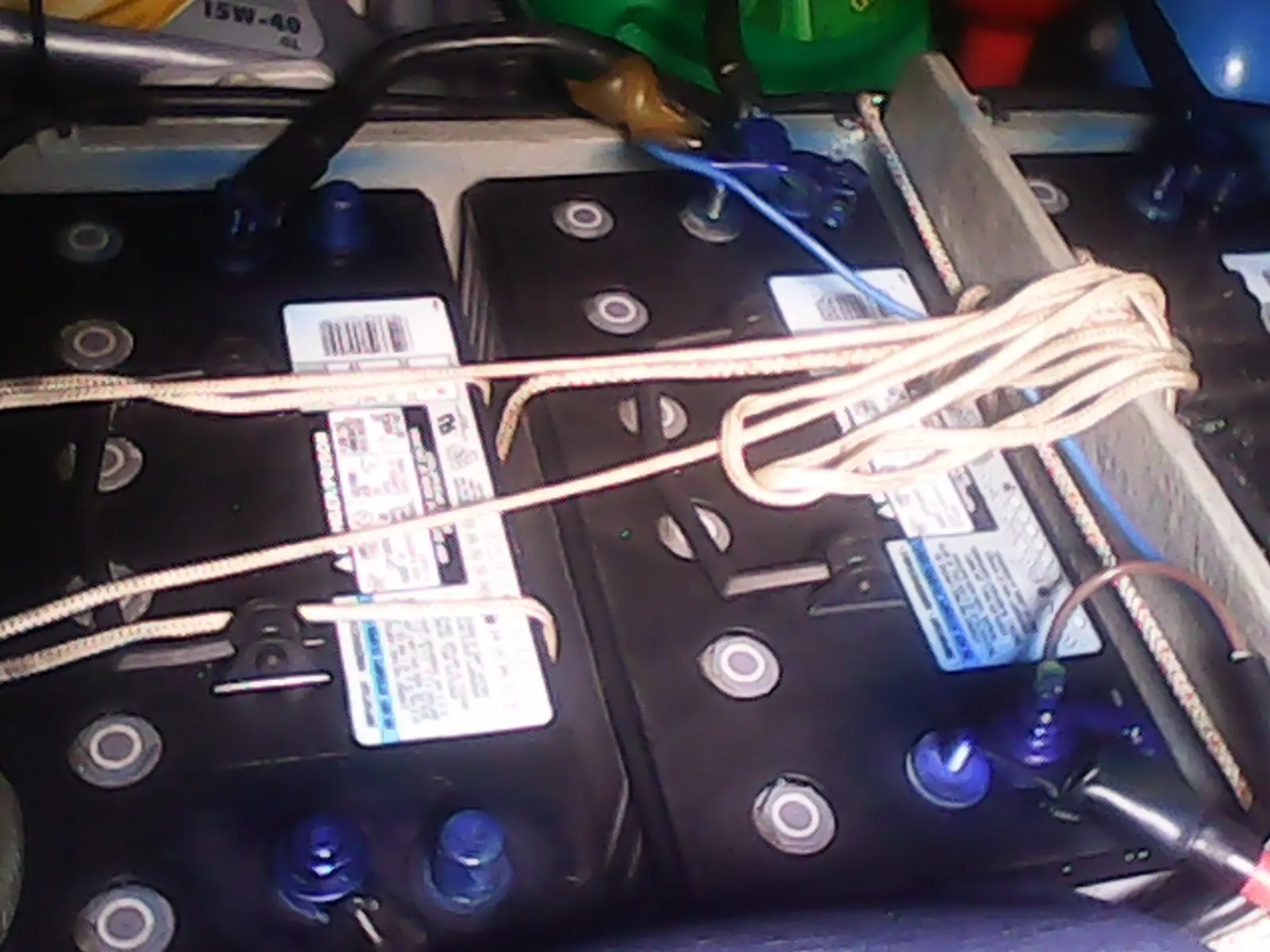
- Visual inspection: Check for terminal corrosion, cracked cable insulation, or swelling or leakage of the battery case.
- Terminal cleaning and tightness: Clean off corrosion, torque terminals to the manufacturer's spec and coat them with protective grease.
- Water level on flooded batteries: Top up with distilled water only, always keeping the plates covered.
- Ventilation check: Make sure the battery compartment, especially for flooded batteries, is ventilated to allow gas to escape.
- Battery monitor calibration: If you have a shunt-based battery monitor, periodically let it fully synchronise on a full charge.
- Load testing: At the start of the season, have a load test or internal-resistance measurement done on any suspect batteries.
Storage and winterizing
Even though winters are mild around Bodrum, an extended period of disuse is the riskiest time for a boat's battery bank. Disconnect the loads, connect the batteries to a float/tickle charger if possible, or at least check and fully charge them every 4–6 weeks. We cover the whole winterizing process in winterizing: preparing your yacht's electrical system for winter.
Terminal corrosion and connection quality
Terminal corrosion is one of the most common issues in a boat's electrical system. Salt and humidity in the marine air trigger a galvanic reaction between lead terminals and copper cable lugs, building up a white or bluish-green crystalline layer. Though it looks harmless, it raises resistance, causes voltage drop, heating and, over time, loosened connections. A terminal that feels noticeably hot to the touch while the engine is running or the inverter is under full load is a sign of serious corrosion or a loose connection and should be inspected immediately.
A terminal brush and diluted baking-soda solution are enough for cleaning; afterwards, dry the terminals and coat them with anti-corrosion grease or spray. ABYC standards define minimum safety requirements for battery connections and wiring, and are a useful reference for this kind of maintenance practice. Hydraulically crimped cable lugs give a far more reliable result than soldered or poorly crimped connections.
Battery testing methods
Visual inspection and voltage measurement tell you only so much about a battery's real condition; as a battery ages, rising internal resistance doesn't always show up immediately in open-circuit voltage. Three methods you can apply on board:
- Resting voltage measurement: The simplest method, but gives limited information about actual capacity or internal resistance.
- Load test: A controlled load is applied and the voltage drop over a set time is measured; effective at revealing weak cells.
- Internal resistance/conductance testing: Done with a dedicated tester, it helps detect ageing trends early and is especially valuable for fleet operators.
For a suspect battery bank, having at least one of these tests done at the start and end of the season significantly reduces the risk of an unexpected battery failure mid-season.
Bank sizing and balance
Maintenance isn't only about protecting existing batteries — correct bank sizing directly affects battery life too. A bank that is repeatedly discharged far beyond daily consumption keeps the batteries in the deep-discharge zone and quickly wears down cycle life. Correctly calculating your daily energy needs is the first step to sizing the bank, and therefore battery life, correctly; we cover this in detail in our daily energy consumption (Ah) calculation guide.
Common mistakes
- Mixing batteries of different ages or capacities in the same bank.
- Charging a gel battery with an AGM/flooded profile.
- Leaving a battery in a partial state of charge for long periods, especially in winter.
- Ignoring terminal corrosion, which means both increased resistance and spark risk.
- Continuing charge cycles on a flooded battery without checking water levels.
Battery maintenance doesn't require expensive equipment, but it does require discipline. Applied consistently — correct charge voltage, regular visual inspection and proper storage — a battery bank can far exceed its typical lifespan.
If a battery has reached the end of its life despite good care, see how to time and carry out a safe replacement in our article on boat battery replacement.
Battery maintenance and replacement with Aslan Yacht
From our workshop in Turgutreis we travel to marinas around the Bodrum peninsula to assess your battery bank's condition, run load tests and check the charging system. Learn more about our energy and battery systems service, or get in touch with us for your yacht's battery maintenance.
Frequently asked questions
How often should I check the water level in a flooded battery?
Check monthly during active use, and more often through heavy charge/discharge cycles. Top up with distilled water only, and always keep the plates covered.
Can AGM or gel batteries be damaged by cold in winter?
A fully charged battery tolerates freezing well, but a discharged battery can freeze and suffer permanent damage. During winter lay-up, leave the battery fully charged or recharge it periodically.
Can I mix batteries of different ages in the same bank?
It's not recommended. The older battery pulls charge current away from the newer one, and the bank's total capacity drops to the level of the weakest battery. When replacing a bank, renewing all cells at once, same brand and capacity, is the safest approach.