Boat battery replacement: when and how to do it
An ageing battery does not always announce itself. How to time a replacement by measuring, choose the right battery and change it safely.
Boat battery replacement usually comes up on the morning the engine will not crank, or on the first night at anchor when the fridge goes quiet. Yet a battery reaching the end of its life usually gives measurable signs weeks in advance. In this article we explain how we decide when a battery needs replacing, what we look for in the new one and the safe order in which we carry out the swap.
When should a battery be replaced?
You cannot decide on replacement from voltage alone. Resting voltage shows state of charge, not state of health. We look at these signs together:
- Loss of capacity: after a full charge, the battery runs down noticeably faster under the same load than it used to.
- Voltage collapsing under load: voltage drops sharply while cranking or running a heavy consumer and recovers when the load is removed.
- High internal resistance: internal resistance measured with a tester is clearly higher than that of a healthy battery of the same type and size.
- Physical signs: a swollen or cracked case, acid around the terminals or excessive heat during charging.
- Not holding charge: after a full charge and with loads disconnected, the voltage falls noticeably within a few days.
Some of these signs can actually come from the charging system rather than the battery. A wrong charge profile, too little charging time or a hidden drain give similar symptoms, so before replacing we also check charging and consumption; the maintenance side is covered in detail in our article on boat battery care.
Deciding by measurement: what each test tells you
| Test | How it is done | What it shows |
|---|---|---|
| Resting voltage | Multimeter after charge and load have been off for a few hours | State of charge (12 V lead-acid full ≈ 12.7 V) |
| Load test | Voltage drop watched under a controlled load | Ability to carry load, weak cell |
| Internal resistance / conductance | With a battery tester | Ageing trend |
| Capacity test | Discharge at known current after full charge, using a battery monitor | Real usable Ah |
| Visual check | Case, terminals, cables | Swelling, leaks, corrosion |
A capacity test gives the most reliable result but takes time; in the field we usually combine a load test with an internal resistance measurement. If one battery in a bank gives clearly different results from the others, the state of the whole bank is reassessed. Repeating measurements at the same temperature and state of charge keeps results comparable; the same battery can read differently on a cold morning and a hot afternoon.
Choosing the right new battery
The new battery should be chosen for the boat's needs today, not by copying the old label. A fridge, inverter or watermaker added over the years may have left the old bank undersized. We look at:
- Duty: a starter battery delivers high current (CCA) for a short time; a house battery must withstand deep discharge cycles. Choosing the same type for both is usually a compromise.
- Capacity: daily consumption is calculated in Ah and the bank is sized to the usable capacity of the chemistry. The method is in our guide to calculating daily energy consumption.
- Chemistry: the choice between flooded, AGM and gel depends on mounting position, ventilation and the charge profiles your chargers support.
- Physical fit: case size, terminal type and the hold-down arrangement must suit the existing compartment.
- The lithium option: LiFePO4 offers more usable capacity and lower weight, but every charging source must be adapted. We explain the process in our lithium conversion guide.
Step-by-step safe battery replacement
Swapping a battery looks simple, but the wrong order can cause sparks, short circuits and damage to electronics. This is the sequence we follow:
- Switch off every charging source: shore power, charger, inverter, solar controller and engine must all be off.
- Turn off the main switch and ventilate the battery compartment; hydrogen may have collected after charging lead-acid batteries.
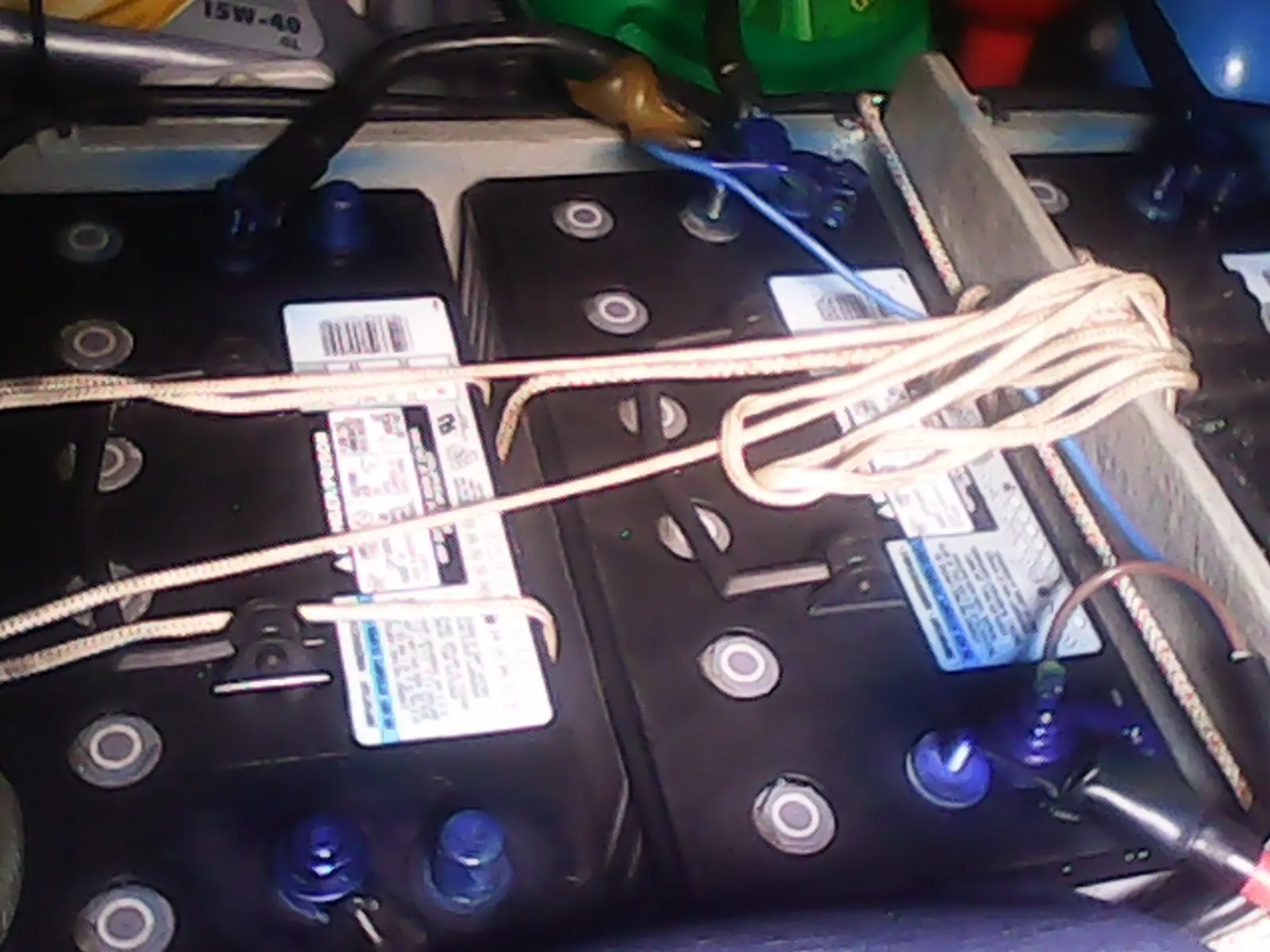
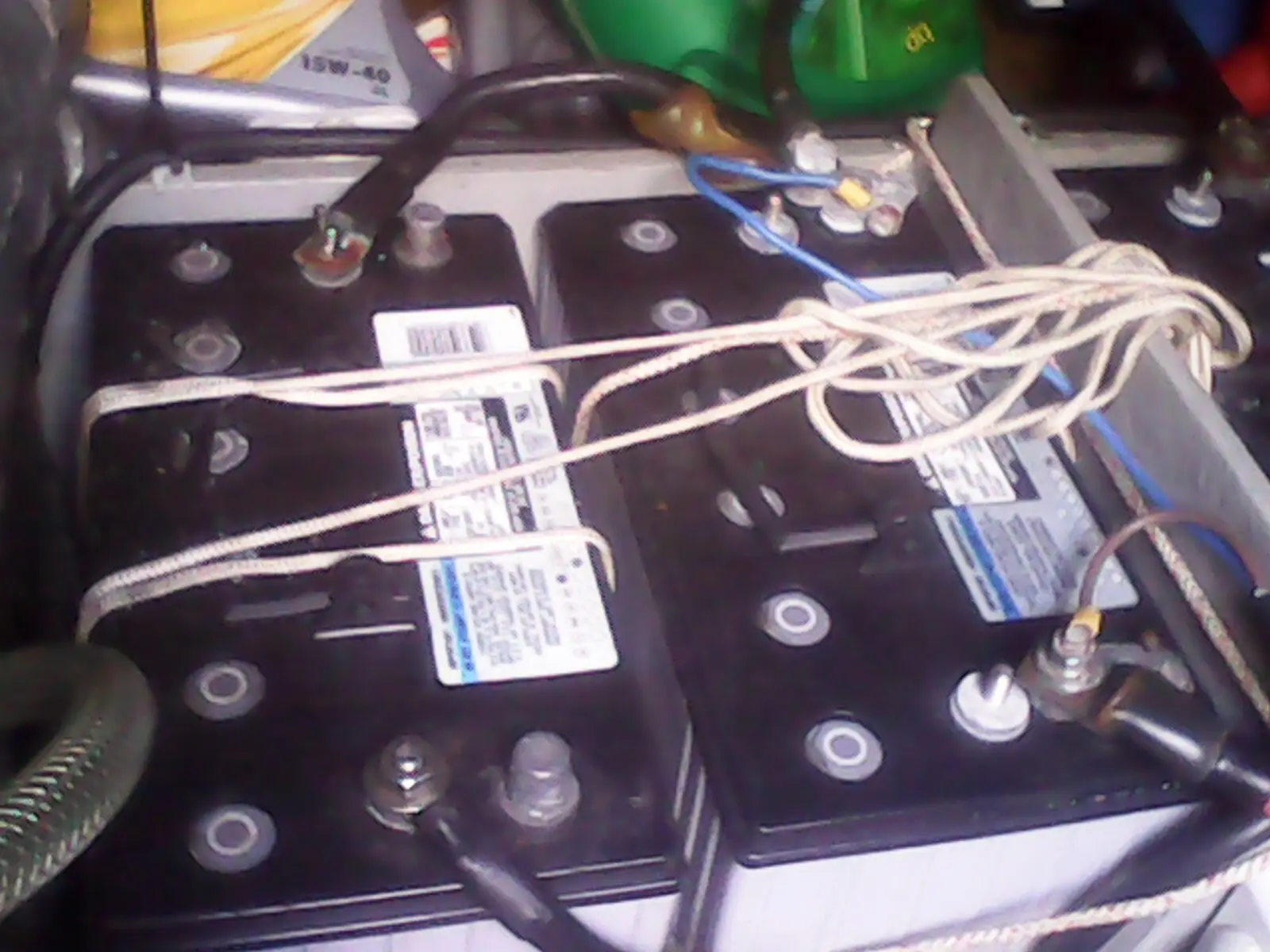
- Label and photograph the cables: essential where several batteries are wired in series or parallel.
- Remove the negative cable first, then the positive. That way, a spanner touching the hull or engine cannot cause a short.
- Inspect lugs and cables: oxidised, overheated or poorly crimped lugs are replaced, and the cable size is checked against the new bank's current.
- Secure the new batteries: they must not move under way or when heeled.
- Connect the positive first, then the negative, and tighten nuts to the manufacturer's torque. Protect the terminals with an anti-corrosion product.
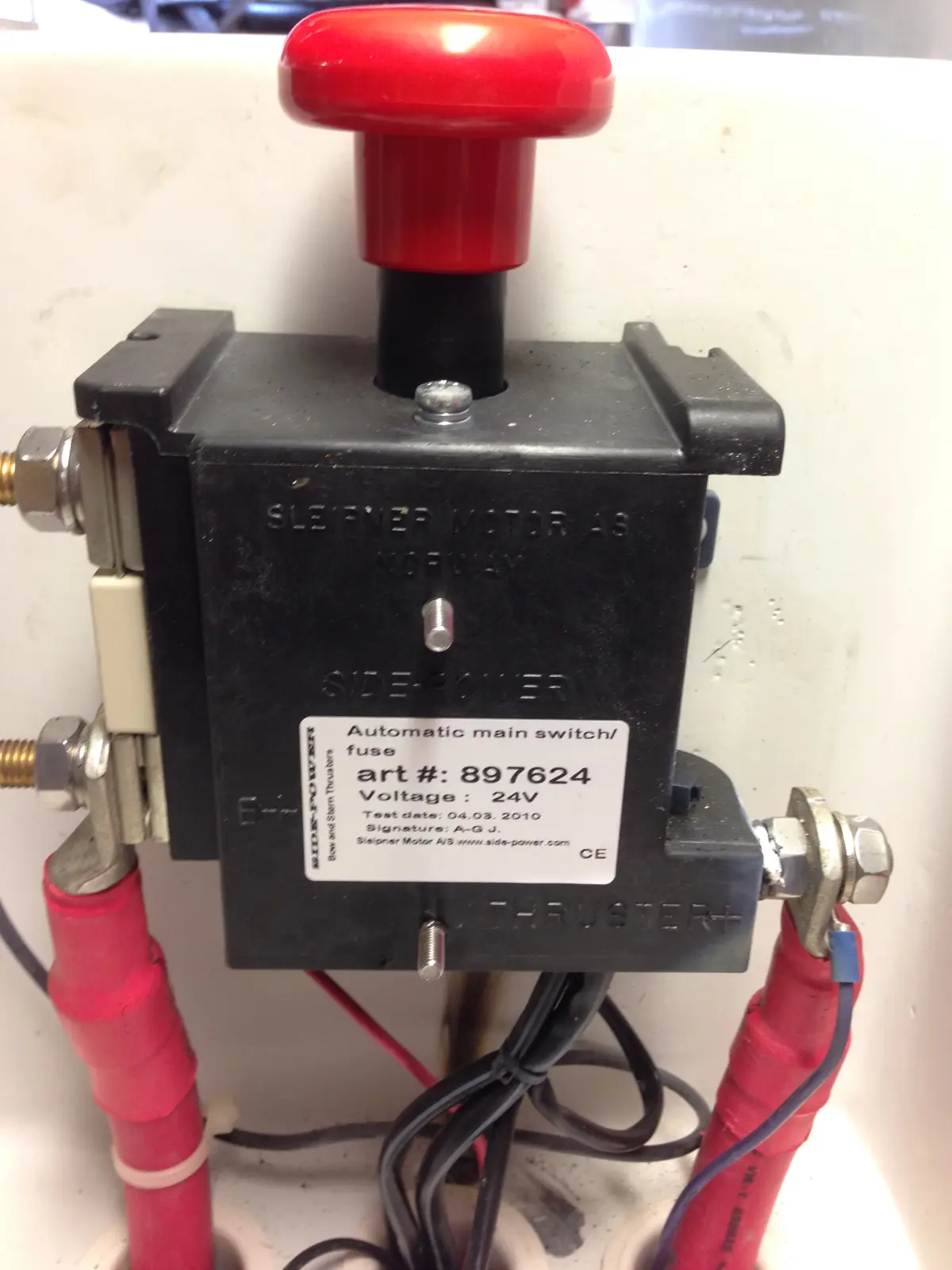
- Check the main fuse: if capacity has increased, the main fuse and its interrupt capacity are reassessed; details in our article on fuse selection.
- Update charge profiles: the charger, alternator regulator or DC-DC charger and solar controller are set for the new battery type.
- Reset the battery monitor: enter the new capacity and synchronise at full charge.
Making the most of the opportunity
A battery replacement is one of the best moments to review the energy system. The compartment is open and the cables are off, so a few extra checks prevent future faults:
- Confirm the starter battery is separate from the house bank and that the engine will start even if the house bank is flat; if not, consider a battery isolator or a DC-DC charger.
- Check the compartment's ventilation, the hold-down straps and the distance from bilge water.
- Remove unfused additions wired straight to the bank, or reconnect them through a proper fuse.
- If there is no shunt-based battery monitor, add one; seeing real consumption makes it easier to predict the next replacement.
The first days after the swap
Watching the new bank closely in its first days catches installation mistakes early. Check that voltage at full charge matches the profile, that connections are not getting warm and that the battery monitor shows realistic values. Charging current with the engine running should also be at the expected level; for the alternator side, see our article on alternators and external regulators.
Common mistakes
- Renewing only one battery in a bank.
- Continuing to charge a gel battery on an AGM or flooded profile.
- Connecting old, oxidised lugs to new batteries.
- Not reviewing the main fuse and cable size after a capacity increase.
- Leaving the old capacity value in the battery monitor.
- Disposing of old batteries without following hazardous waste rules.
Battery replacement with Aslan Yacht
From our workshop in Turgutreis we visit marinas and boatyards across the Bodrum peninsula to measure your battery bank and, when replacement is needed, choose the right type and capacity and commission it together with cables, fuses and charge settings. See our energy and battery systems page for details, or book a battery test through our contact page.
Frequently asked questions
Is it enough to replace one battery in the bank?
Usually not. When new and old batteries are connected in parallel, current is shared unevenly and the new battery ages early too. Renewing the whole bank with batteries of the same type, capacity and production batch is the soundest approach.
Can I fit a lithium battery instead of lead-acid?
Yes, but that is a system conversion rather than a battery swap. The charger, alternator, solar charge controller and BMS compatibility must be handled together.
What should be done with the old batteries?
Lead-acid batteries are hazardous waste; they must not go in the bin and should be handed to licensed recycling points or the retailer.