COLREG Navigation Light Rules and LED Conversion Guide
Choosing the right navigation lights under COLREG Annex I by boat length, visibility arcs and ranges, and what to watch for converting halogen fixtures to approved LEDs.
A boat's navigation lights are its first "identity card" at night: a universal light language that tells other vessels which way it's heading, roughly how big it is, and sometimes what it's doing. COLREG's (International Regulations for Preventing Collisions at Sea) provisions on navigation lights are precise and vary by boat length; the wrong colour, insufficient visibility range, or an incorrect mounting angle creates both a safety and a compliance problem. This guide covers the practical essentials of the rules through to converting fixtures to LED, based on what we see in the field.
COLREG Annex I: the basic light types
COLREG Annex I defines different light combinations depending on the vessel's type and activity. For a vessel under power, the basic lights are:
- Sidelights: green to starboard, red to port, each visible through 112.5° on its own side, from ahead.
- Masthead light: a white light visible through 225° over the forward arc; mandatory while under power.
- Sternlight: a white light visible through 135° over the aft arc.
- Sailing lights: a vessel under sail alone does not show a masthead light; instead, sidelights and a sternlight apply, sometimes supplemented at the masthead by an optional red-over-green two-colour light on certain lengths.
Visibility range by boat length
COLREG sets the minimum visibility range for lights based on boat length. The categories most often encountered in the field:
| Boat length | Masthead light | Sidelight | Sternlight |
|---|---|---|---|
| < 12 m | 2 nautical miles | 1 nautical mile | 2 nautical miles |
| 12–20 m | 3 nautical miles | 2 nautical miles | 2 nautical miles |
| 20–50 m | 5 nautical miles | 2 nautical miles | 2 nautical miles |
| ≥ 50 m | 6 nautical miles | 3 nautical miles | 3 nautical miles |
This table is a general summary; consult IMO's official COLREG page for exact article numbers and exceptions. When choosing a fixture, make sure the manufacturer's stated visibility range meets or exceeds the minimum required for your boat's length.
Why convert to LED?
Classic halogen and incandescent navigation lights are known for low efficiency and short bulb life. The concrete benefits of an LED conversion:
- Lower consumption: a halogen masthead light draws 10–25 W, while an equivalent LED unit typically achieves the same visibility range at 2–5 W. On long night passages, this makes a noticeable difference in the load on the battery bank.
- Longer life: LED sources can run for tens of thousands of hours, whereas halogen bulbs frequently need replacing due to vibration and heat.
- Less heat: internal fogging of the lens and yellowing of a plastic housing over time are heat-related issues that LED largely eliminates.
- Lower risk of sudden failure: quality LED fixtures include internal voltage regulation that keeps light output stable as battery voltage swings between roughly 11.5 and 14.5 V.
Choosing the right LED light: a certified fixture, not just a bulb
The most common mistake in the field is fitting an LED bulb compatible with the existing halogen housing and considering the job done. COLREG approval (for example under USCG 33 CFR 183 or the equivalent national authority) is a holistic certification that tests the light source and optical housing together. Swapping only the bulb can:
- narrow or distort the beam arc,
- shift the colour temperature and hence the perceived colour,
- drop the visibility range below the manufacturer's stated figure.
For a reliable conversion, it's best to move to a complete, COLREG/USCG-approved LED navigation light fixture. Manufacturers specialising in this field, such as Lopolight, offer certified LED light ranges for motor yachts and sailboats; make sure the product you choose comes with a Certificate of Compliance.
Mounting height and visibility arc checks
Choosing the right product isn't enough — the installation must also meet the rules:
- The masthead light must sit at least 1 metre above the sidelights (some boat lengths apply different minimums).
- The visibility arc must not be interrupted by obstructions such as the hull, a funnel or an antenna. After mounting, walk around the boat and confirm the light shows unbroken through its stated arc from every angle.
- Sidelights must sit at a symmetric height and correct position relative to the boat's centreline, or other vessels may misread your heading.
Wiring and electrical reliability
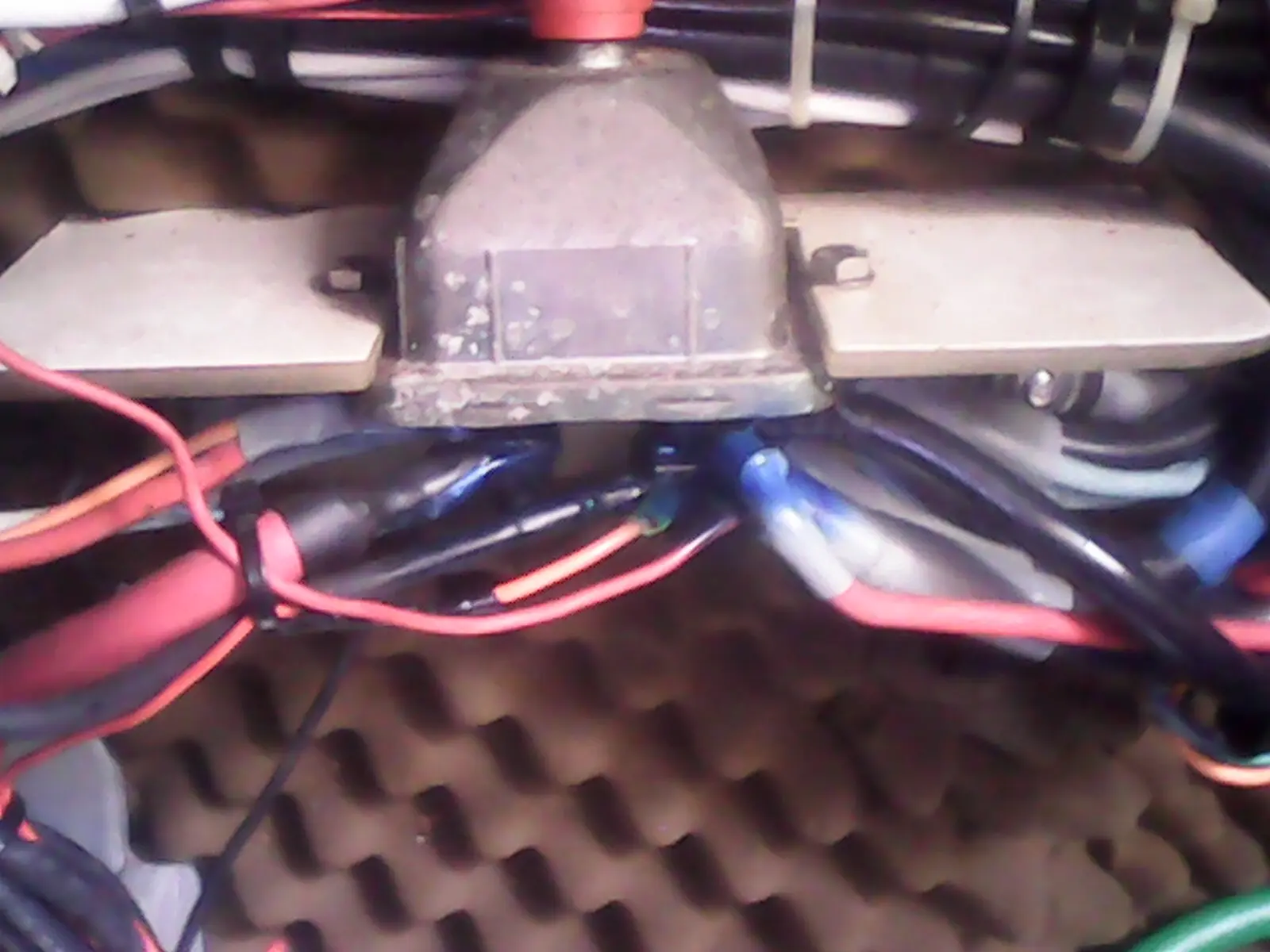
Navigation lights form a safety-critical circuit and need to be resilient against electrical failure:
- Fuse each light separately, so a single blown fuse doesn't take out every light at once.
- Use tinned marine-grade copper cable and corrosion-resistant connectors. Calculate voltage drop on the long cable runs to the bow and stern using the method in our marine cable selection guide.
- Fit an indicator or fault warning on the light panel. Being able to spot which light has gone out from the wheelhouse matters at night.
- Use watertight cable glands at masthead fixtures, with an IP rating of at least IP66.
Anchor lights and vessels at rest
Navigation lights aren't only for vessels underway. COLREG also requires an anchored vessel to show a white anchor light under certain conditions — typically a 360° light, visible from every direction, mounted at a height that depends on boat length. Smaller boats often use a single LED anchor light at the masthead, while larger vessels may need separate forward and aft lights. Forgetting this light on a yacht anchored outside a marina is a risk both for safety and for compliance with local regulations; plenty of boats anchor overnight in the popular coves of the Bodrum peninsula during the summer months.
Relationship to interior and underwater lighting
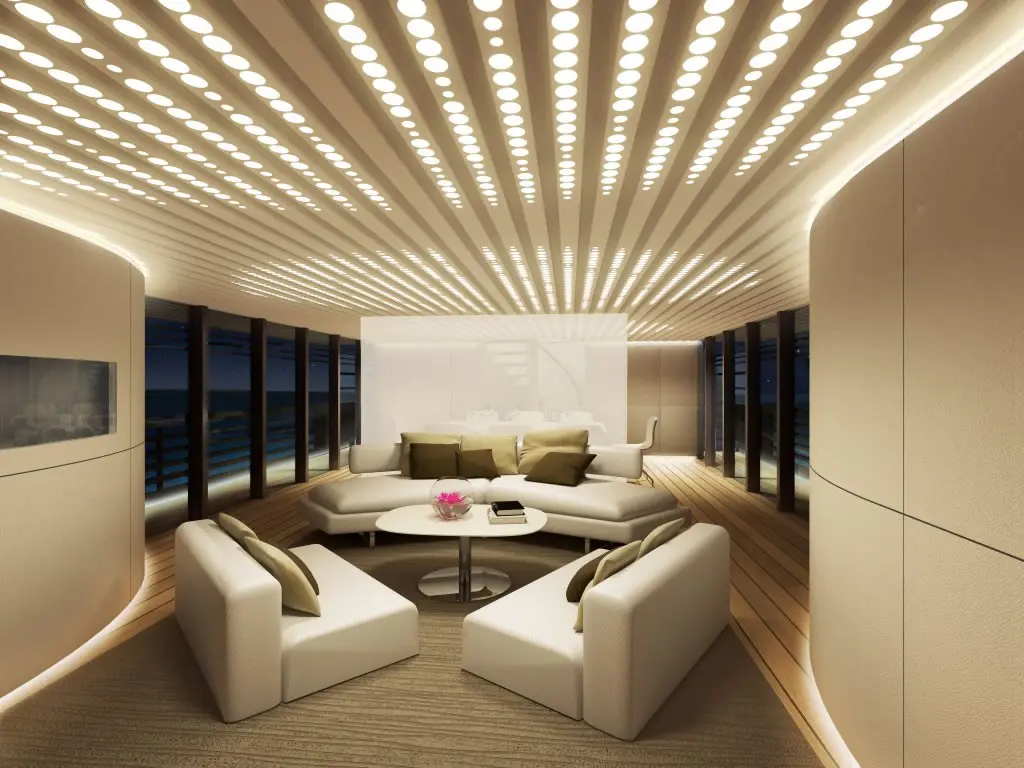
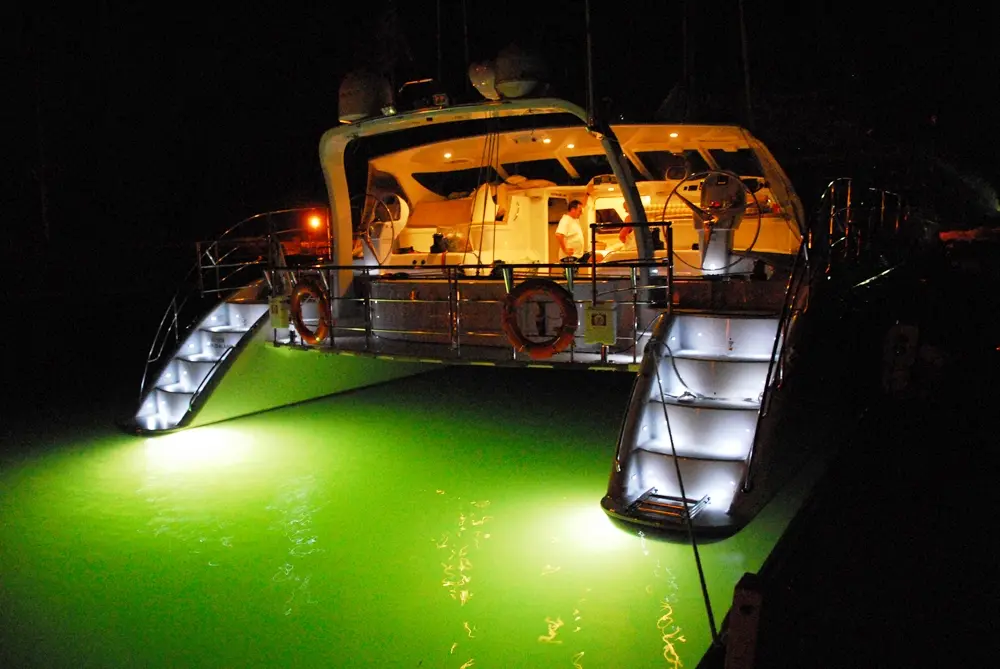
Navigation lights shouldn't be planned in isolation from the boat's other exterior lighting systems. In the wheelhouse, the red interior lighting that preserves night vision should complement the brightness of the navigation lights; we cover this in detail in our yacht interior LED lighting guide. Decorative lighting under the deck and on the transom should never be confused with navigation lights, and care must be taken that lights not defined under COLREG don't mislead other vessels' interpretation of your heading while underway.
Work with Aslan Yacht on navigation light conversion
From our workshop in Turgutreis to marinas across the Bodrum peninsula, we select COLREG-approved LED navigation lights matched to your boat's length and type, check mounting height and visibility arcs on site, and rewire to marine standards. Learn more about our yacht lighting service or get in touch to plan an assessment.
Frequently asked questions
What colours are used for navigation lights, and what do they mean?
Green marks the starboard sidelight, red the port sidelight, white the masthead (bow) light and/or the sternlight aft. These colours form a universal language other boats use to read your heading and course.
Can I just replace a halogen navigation light bulb with an LED bulb?
It isn't recommended. COLREG approval is a holistic certification that tests the fixture and light source together; swapping only the bulb can invalidate the certified visibility arc, colour or range. It's better to replace the whole unit with a COLREG/USCG-approved, complete LED navigation light.
Are separate sidelights mandatory on boats under 12 metres?
COLREG allows certain lights to be combined on boats under 12 metres — for example, the sidelights and masthead light can be combined into a qualifying tri-colour light. The exact rule set still depends on the boat's type, length and activity, so when in doubt, consult COLREG Annex I and the fixture manufacturer's declaration of conformity.