Pre-charter season yacht electrical checklist
On a charter yacht, a fault affects not just comfort but the guests' week and the operator's reputation. The electrical checks we carry out before the season and at guest changeovers.
A pre-charter yacht electrical check calls for a different discipline from the season opening of a privately used boat. On a charter yacht, guests spend a whole week on board; air conditioning, the watermaker, the galley and cabin consumers run together all day, and a fault affects not just comfort but the operator's reputation. In this article we share the electrical checks we carry out before the season and at guest changeovers for motor yachts, gulets and sailing yachts chartering out of Bodrum.
Why electrics matter more on a charter yacht
On a private boat a fault can wait until tomorrow; during a charter week the guests' programme cannot. The usage profile is also different:
- Air conditioners run for long hours, often all at once.
- The watermaker must produce steadily every day.
- Guests charge more devices and use more sockets in the cabins.
- The crew has a very short window between guest changeovers.
So charter preparation adds capacity, redundancy and fast check routines on top of the usual season opening. Charter boats out of Bodrum usually start in late spring and stay busy into autumn, with few empty days for planned maintenance in between; that is why most of the preparation should be finished before the season, while the boat is still ashore or empty in the marina. The general season opening steps are in our season opening electrical checklist.
Before the season: capacity and redundancy
Before the season starts, measure whether the system can really carry the charter load:
- Load profile: is the generator and shore connection enough when air conditioning, watermaker, water heater and galley run together? The load list is drawn up from measurements.
- Battery bank: a capacity test is carried out, and the Ah needed for the hours spent at night without the generator is calculated.
- Charging sources: are the inverter/charger, alternator and any solar panels set to profiles that suit the battery chemistry?
- Generator: servicing is completed before the season; the seawater impeller, filters and belts are renewed.
- Redundancy: to make sure a single fault cannot leave the boat without power, check that the starting battery is separate and that critical circuits (bilge, navigation lights, VHF) can be supplied independently of the main switch.
Guest comfort: air conditioning, watermaker and cabins
Most guest complaints come from three systems:
- Air conditioning: the seawater strainer, pump impeller and air filters are cleaned, and every cabin unit is tested under load. Details in our article on boat air conditioning maintenance.
- Watermaker: membrane performance, pre-filters and the salinity sensor are checked, and daily output is compared with the number of guests. For membrane care see our article on watermaker membrane maintenance.
- Cabins: sockets and USB outlets, reading lights, cabin toilet pumps and ventilation fans are tested one by one; loose sockets and warm connections are fixed.
Safety circuits
On a charter yacht, safety equipment must work at all times:
- Bilge pumps and alarms: each pump is tested in automatic and manual mode, and the high-water alarm is confirmed to be audible at the helm. Details in our article on bilge pumps and alarm systems.
- Navigation and anchor lights: every light is checked to work with an unobstructed arc; requirements are defined in Annex I of COLREG.
- Shore power and residual current protection: cable, plug and the test button are checked.
- Smoke and gas detectors: tested, with new batteries.
- VHF and DSC: MMSI and GPS connection are confirmed.
A 20-minute checklist for guest changeovers
A short routine the crew can run between guests prevents most problems from surfacing mid-week:
| System | Check | Acceptance |
|---|---|---|
| Battery bank | State of charge and voltage on the monitor | Value suits the chemistry, reaches full charge |
| Charging | Charge current on shore power or generator | Expected current, no error codes |
| Air conditioning | Cooling and seawater discharge in every cabin | Normal flow, no alarms |
| Watermaker | Output, pressure and salinity | Values consistent with previous records |
| Bilge | Lift-the-float test | Pump and alarm work |
| Cabins | Sockets, lights, toilet pump | All working, no heat |
| Lights | Navigation and anchor lights | All on |
| Log | Alarm history and anything unusual | Recorded, reported to service if needed |
Crew briefing
Even the best-prepared system causes trouble if the crew does not use it correctly. We recommend a short briefing with the captain and crew at the start of the season:
- Where the main switches, the shore power inlet and emergency stops are
- The correct order for changing over between generator, shore power and inverter
- Starting air conditioners one after another rather than all at once
- Not running the watermaker inside the marina or in murky water
- Whom to call, and with what information, when an alarm sounds
This briefing stops a wrong move during a guest week from turning into a fault, and ensures small problems reach the service team with the right information.
Mid-season check
In a busy charter season, a half-day check in July or early August makes the second half easier. Connections are scanned under load with a thermal camera, generator and air conditioning filters are renewed, battery capacity is measured again and watermaker performance is compared with the start-of-season values.
Spares and documentation
During a charter week, a missing part can turn a simple fault into a problem lasting days. We recommend keeping on board:
- Spares for every fuse type on the boat
- Seawater pump impellers for the air conditioning and generator
- Watermaker pre-filter cartridges
- Critical relays and the most-used lamps or LED drivers
- Some lugs, heat-shrink tubing and cable ties
An up-to-date wiring diagram, fuse list and equipment manuals on board also speed up the crew's and the service team's work. If the boat has remote monitoring, make sure alarms go to both the captain and the operator; we cover the options in our article on remote boat monitoring.
Gulets and large charter boats
On gulets and large charter boats, generator, air conditioning and galley loads are usually close to those of a motor yacht, while long cable runs and many cabins multiply the failure points. Checking cabin by cabin before the season and keeping each cabin's circuit list up to date saves time all season.
Charter preparation with Aslan Yacht
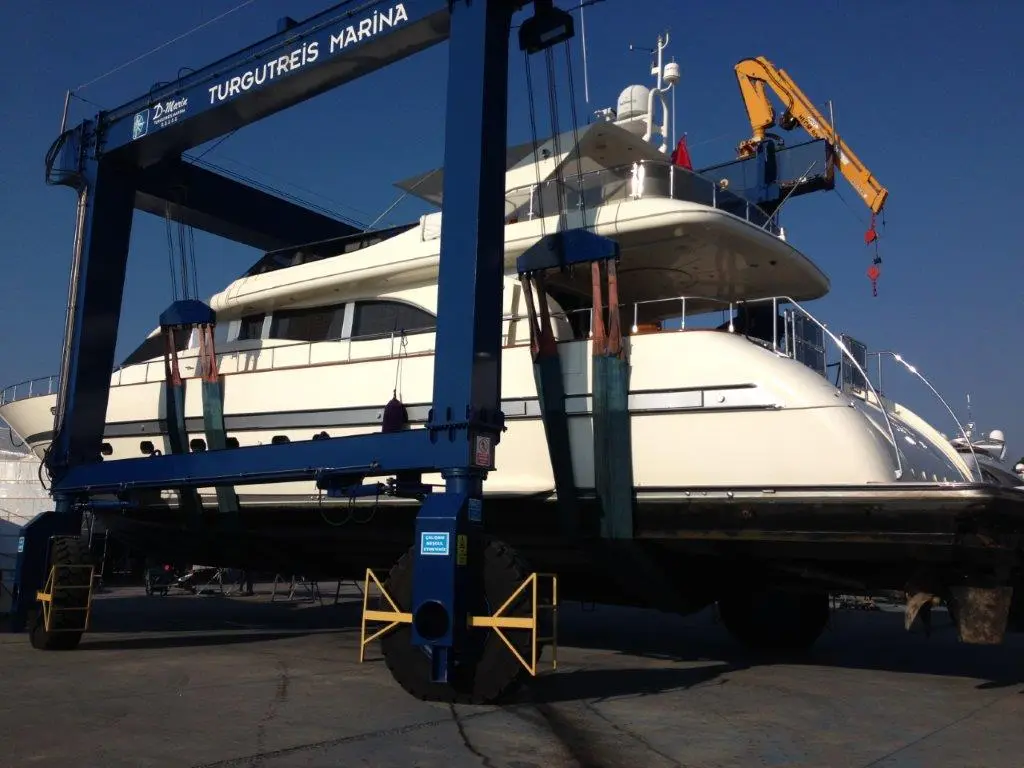
From our workshop in Turgutreis we visit marinas and boatyards across the Bodrum peninsula to measure charter boats' energy, air conditioning, watermaker and safety circuits before the season and report our findings. For planned checks timed around guest changeovers during the season, reach us through our contact page. See our yacht electrical and watermaker pages for our scope.
Frequently asked questions
Is a charter yacht's electrical check different from a normal season opening?
The basic checks are the same, but loads on a charter yacht are heavier and continuous; air conditioning, the watermaker and guest cabin consumers run together all week. Capacity, redundancy and quick checks between guests therefore come to the fore.
What should be checked at a guest changeover?
Battery and charge state, air conditioning and watermaker operation, bilge pumps and alarms, cabin sockets and lighting, navigation lights and, where fitted, remote monitoring alarms, using a short list.
Which spare parts should be kept on board?
Spares for every fuse type on board, seawater pump impellers, watermaker pre-filters, critical relays, some lugs and heat-shrink, and the most-used lamps or LED drivers are a good start.