Season commissioning electrical checklist for your yacht
A few measurements before the first engine start after winter prevent most mid-season failures. This is the commissioning electrical checklist we use in the field.
A season commissioning electrical checklist is the most reliable way to go through a yacht systematically after winter, before the first passage. Battery banks that have stood for months, connectors oxidised by humidity and equipment removed and refitted during winter maintenance can fail in the first week of the season because of one small oversight. Below we share the sequence, measurements and acceptance criteria we apply every spring in Bodrum.
Why a systematic check?
Everyone who touches the boat in winter changes something: the mechanic moves a cable, the painter removes a sensor, breakers are switched off during winterizing. Pressing the starter in spring on the assumption that "everything is as it was last year" catches none of these changes.
A systematic check rests on two things: the right order and records. First the jobs that must be done ashore, then the DC system, then the AC system, and finally safety and navigation systems. If you took notes going into winter, as described in our winterizing guide, comparing the same points against the same values in spring brings problems to light quickly.
The situations we meet most often in spring are predictable: a starter battery completely drained by a parasitic load, a shore power plug with blackened pins, a bilge float switch stuck all winter, a navigation light that has taken in water. None of these are complex faults, but when they appear on the first trip they send the boat back to port.
Before launch: jobs to do ashore
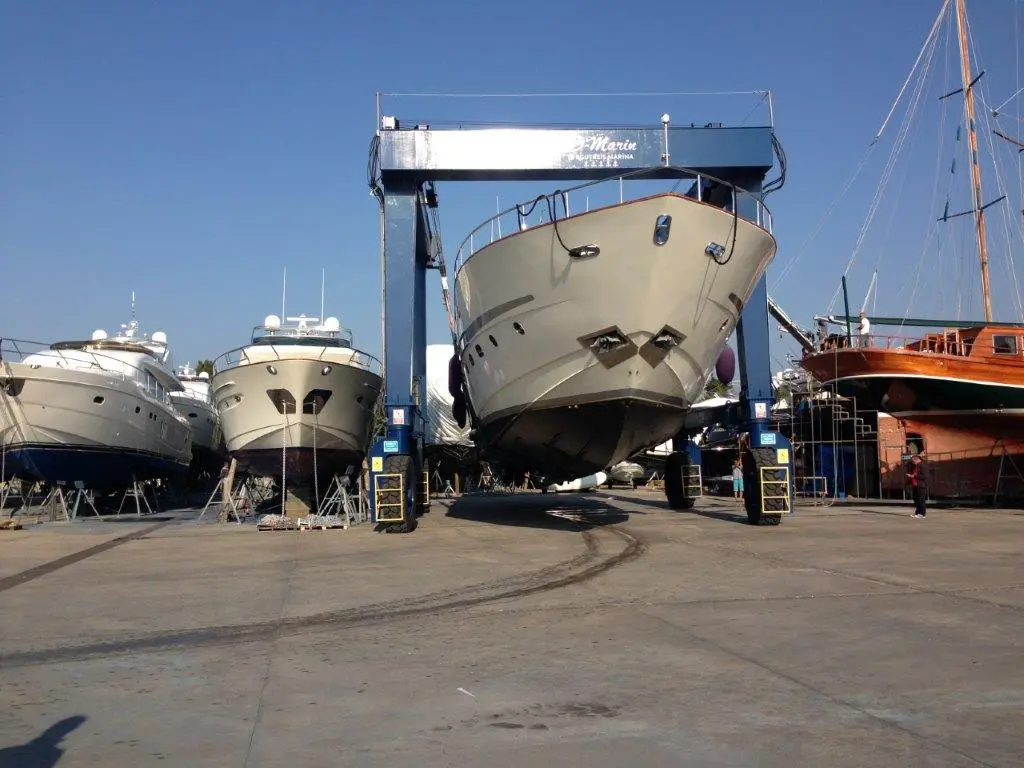
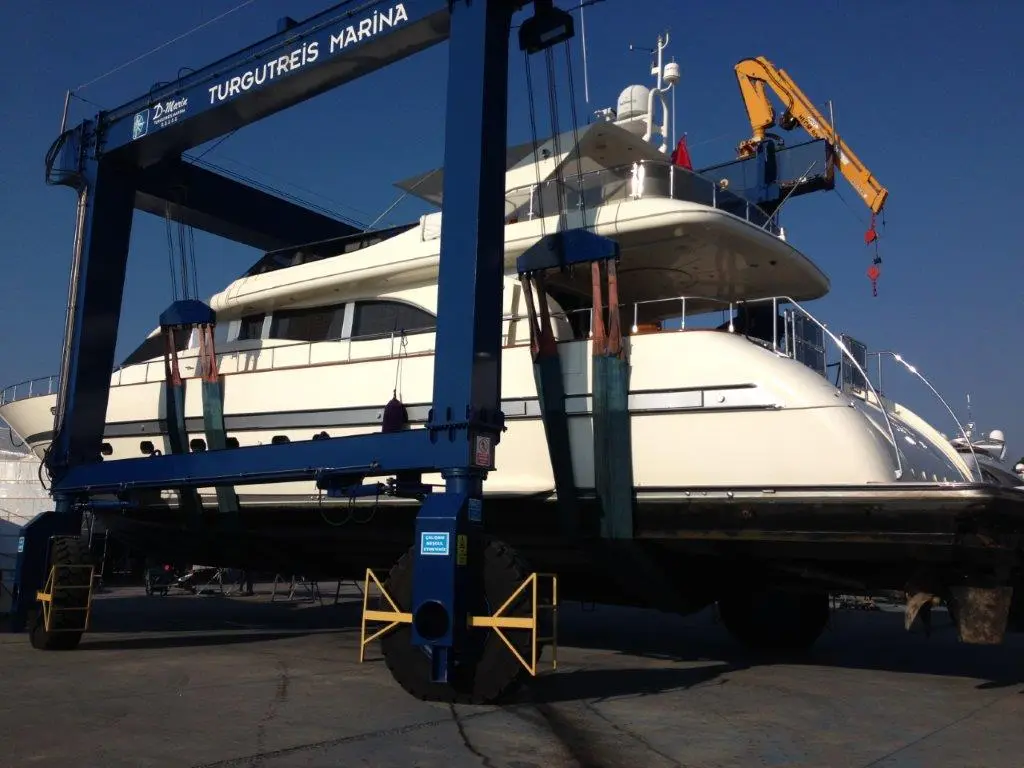
While the boat is in the travel lift slings or on the hard, some checks are far easier:
- Anodes: assess the wear rate; if they are disappearing unusually fast, find the cause rather than just replacing the anode.
- Bonding continuity: check the resistance between the anode and the shaft, sail drive, bow thruster tunnel and seacocks with a low-resistance meter; readings should be below one ohm.
- Bow thruster: propeller, shear pin and anode; any oxidation on the motor terminals.
- Underwater lights and depth/log sensors: cable entries, seals and through-hulls.
- Trim tabs and interceptors: movement, cable connections and the condition of cables entering the hull.
A problem found at this stage can usually be solved the same day. If the same problem is discovered after launching, it often means hauling out again, with another travel lift fee and lost days. That is why we recommend reserving at least one working day ashore for electrical checks when you plan your launch date.
Battery bank and charging system
The DC system is the heart of the boat, and it is also the longest part of commissioning.
- Measure resting voltage. A fully charged 12 V lead-acid battery reads about 12.7 V; around 12.4 V means half charge. On LiFePO4 batteries the resting voltage is only a rough guide to state of charge; rely on BMS or battery monitor data.
- Test capacity. Voltage alone is not a health indicator. A load test or a controlled discharge tracked with a battery monitor reveals the real capacity.
- Check terminals. Clean off oxidation, torque nuts to the manufacturer's value, and inspect fuse and busbar connections.
- Verify charge profiles. Make sure the charger, inverter/charger, MPPT and DC-DC chargers are set for the battery chemistry. For LiFePO4 on 12 V systems, absorption is typically 14.2–14.4 V.
- Measure alternator output. With the engine running, measure charge voltage at the battery terminals and, if possible, charge current; check belt tension and alternator connections.
If one battery in a bank is weak, replacing only that one rarely works well: when new and old batteries are paralleled, charge and discharge are shared unevenly and the new battery ages early too. It is healthier to assess the bank as a whole and renew it together if needed.
Shore power and the AC system
On the AC side the margin for error is small; 230 V is a serious hazard to both equipment and people. ABYC standards, and ISO 13297 in Europe, define double-pole protection at the shore inlet, residual current protection and polarity checking as core safety elements; at commissioning each of them must be working.
- Shore power cable and plug: replace them if pins are blackened or the cable is crushed or cracked. We cover marina connection rules in detail in our shore power article.
- Polarity and breakers: check the reverse polarity indicator on the panel; test the inlet breaker and residual current protection with the test button.
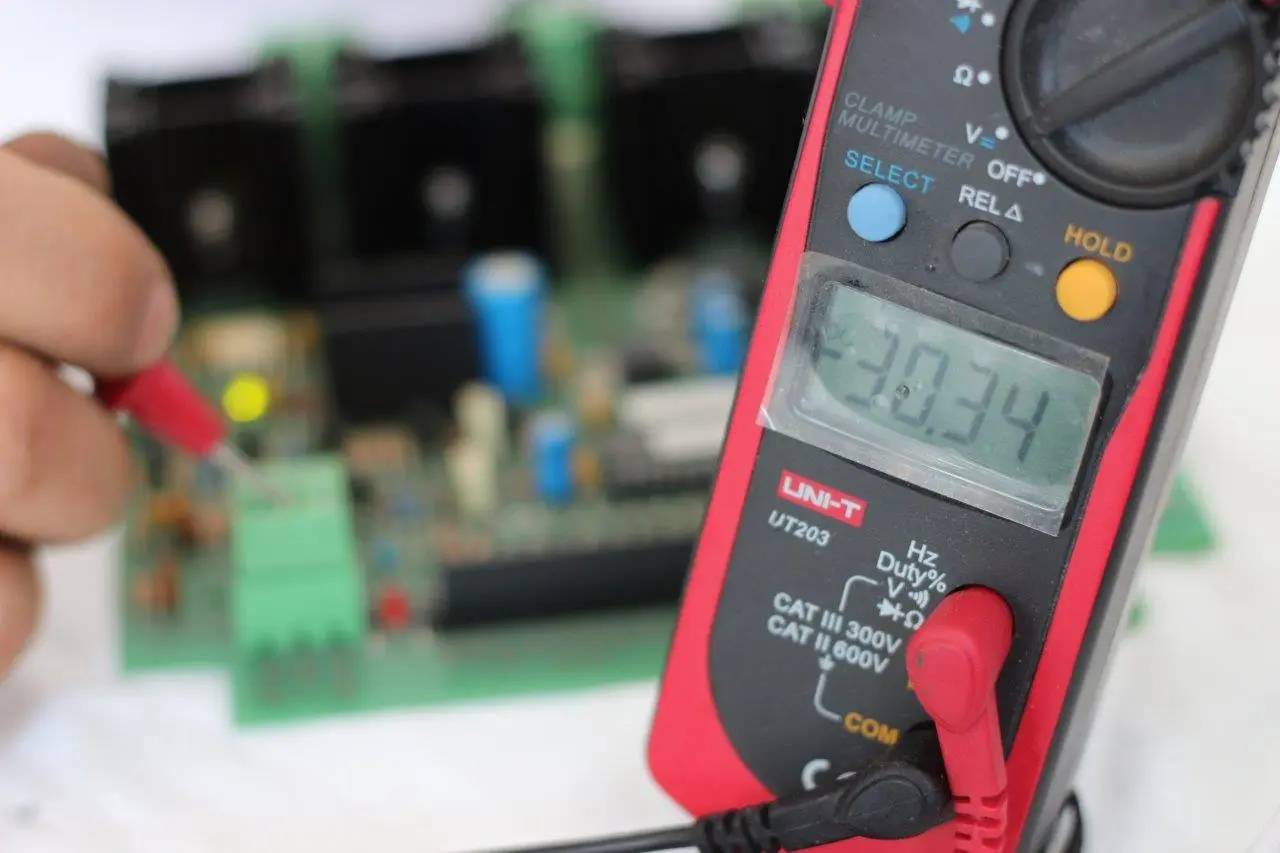
- Leakage current measurement: with the boat on shore power and all loads running, measure the leakage current on the earth conductor with a clamp meter. If you get an unexpected reading, do not start the season before finding the source; see our article on detecting leakage current for the method.
- Generator and inverter changeover: test that source selection between shore power, generator and inverter is interlocked, so two sources can never be connected at the same time.
- Thermal check under load: with air conditioning, water heater and watermaker running together, look for hot spots on the panel and connections with a thermal camera.
Safety and navigation systems
A fault in this group is a safety issue, not a comfort issue:
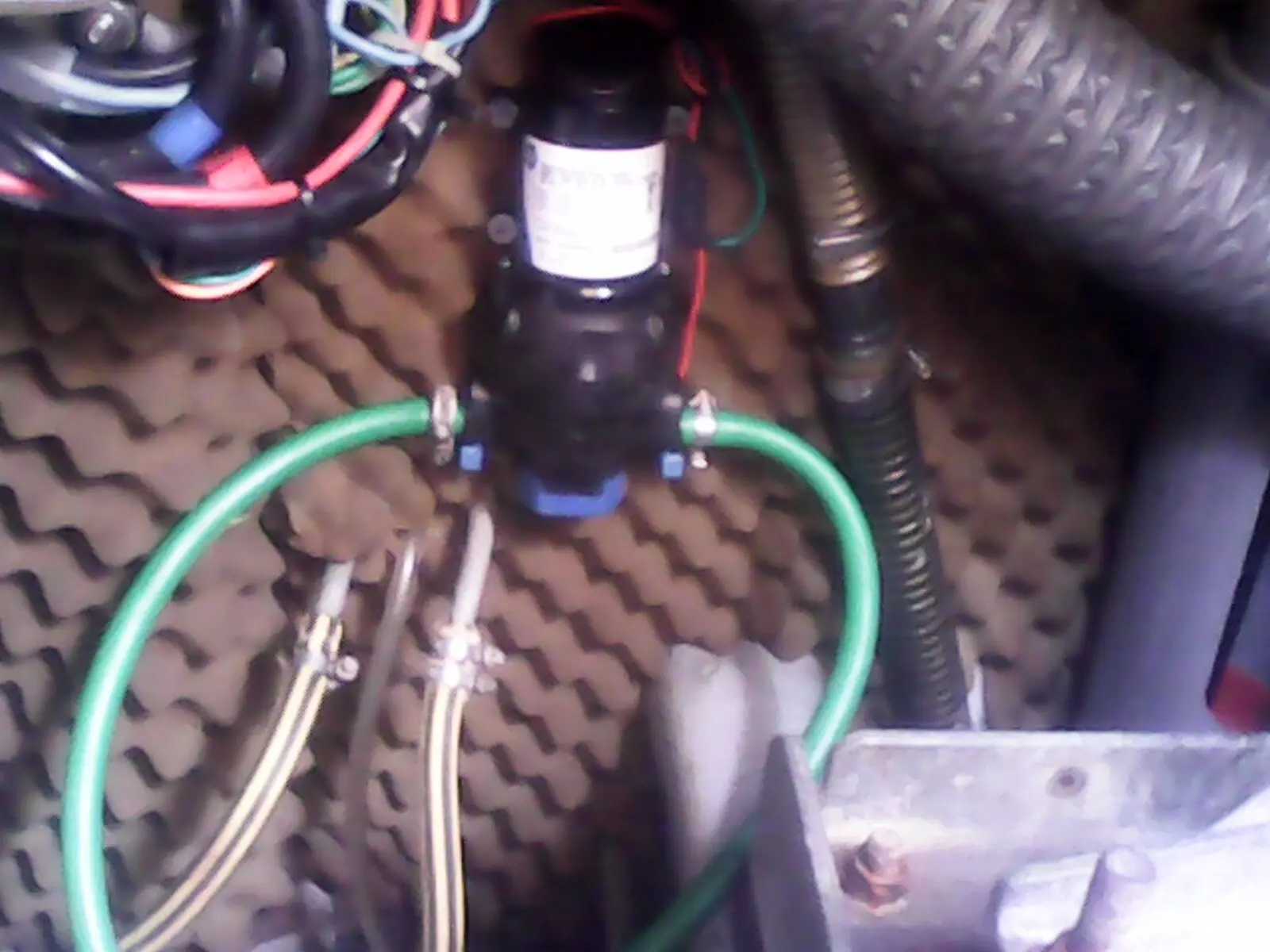
- Bilge pumps: test the automatic and manual mode of each pump separately; lift the float switch by hand and confirm the alarm sounds. For details, read our article on bilge pumps and alarm systems.
- Navigation lights: check that each light works, shows the correct sector and has a clean lens. Visibility and sector requirements are defined in Annex I of COLREG. For LED conversions choose approved lights such as Lopolight; more in our article on navigation lights.
- VHF and DSC: check that the MMSI is registered correctly, GPS data reaches the radio and the antenna connection is sound.
- Electronics: confirm that the chartplotter, autopilot and sensors work, software updates are installed and every device appears on the NMEA 2000 network.
- Smoke and gas detectors: test them with their test buttons and replace batteries.
- Windlass and bow thruster: run each briefly under load and measure the voltage at the motor terminal. On a 12 V system a marked voltage drop during operation points to a weak battery, a loose connection or undersized cable. Our article on windlass faults helps with control and motor problems.
The commissioning checklist on one page
| System | Check | Acceptance criterion |
|---|---|---|
| Anodes and bonding | Visual check, resistance measurement | Sufficient anode, bonding resistance below one ohm |
| Battery bank | Resting voltage, capacity test | Voltage suits chemistry, capacity as expected |
| Terminals | Cleaning, torque | No oxide, manufacturer's torque applied |
| Charging system | Profiles and alternator output | Settings match battery chemistry |
| Shore power | Cable, plug, polarity, RCD | No damage, test button works |
| AC source selection | Shore/generator/inverter changeover | Two sources cannot connect at once |
| Bilge | Auto/manual test, alarm | Every pump and alarm works |
| Navigation lights | Operation, sector, lens | Compliant with COLREG |
| VHF / DSC | MMSI, GPS data, antenna | DSC position correct |
| Thermal check | Scan under load | No distinct hot spot |
Commissioning with Aslan Yacht
Our Turgutreis team carries out commissioning electrical checks from this list in marinas and boatyards across the Bodrum peninsula and reports the findings together with the measured values. To book your slot before the start-of-season rush, contact us or explore our yacht electrical services.
Frequently asked questions
How long does a commissioning electrical check take?
It depends on the size of the boat, the number of systems and whether pre-winter records exist. On a boat with complete winterizing notes, the checks go much faster and more reliably.
Which electrical checks should be done before launching?
Anodes, bonding continuity, the bow thruster, cable entries of underwater lights and depth/log through-hulls should be checked while the boat is ashore; afloat they are difficult or impossible.
If the battery voltage looks normal, is the battery healthy?
No. Resting voltage only indicates state of charge. To know a battery's capacity you need a load test or a real discharge tracked with a battery monitor.