Boat air conditioning maintenance: seawater pump, refrigerant and filter
If your split or self-contained marine AC isn't cooling enough, the cause is usually simple: seawater flow, refrigerant level or a dirty filter. Here's the check order we use.
Unlike household split units, marine air conditioners reject heat into seawater rather than air, so most faults come from the seawater circuit rather than the compressor itself. In Bodrum, where summer temperatures regularly pass 30°C, an AC failure hits comfort immediately. This article covers how a boat air conditioner works, the faults we see most often, and what to check during routine maintenance.
How a boat air conditioner works
Yachts use two main architectures: self-contained units, each with its own compressor, condenser and seawater pump, and chilled-water (central) systems, where a single chiller feeds several fan-coil units through a piping loop. Both follow the same basic cycle:
- The compressor compresses the refrigerant (usually R410A), raising its temperature and pressure.
- The hot gas condenses to liquid as it passes through a seawater-cooled condenser.
- The liquid refrigerant expands suddenly through the expansion valve, cooling and absorbing heat from cabin air at the evaporator.
- The warmed seawater is discharged through a through-hull; on some installs this water also cools the exhaust.
- The thermostat stops the compressor once the setpoint is reached, while the fan keeps circulating air.
Every component in this cycle is a potential failure point: a blocked seawater side starves the condenser, a leak drops cooling capacity, and a dirty filter cuts airflow. Most of what we see during our climate control services falls into these three areas. The electrical supply side matters too: the compressor draws a high inrush current, and if it's fed through an inverter or generator, voltage fluctuation can trip the compressor's protection circuit and shut the AC down for a while.
Common faults and likely causes
| Symptom | Likely cause | First check |
|---|---|---|
| AC doesn't run at all | Blown fuse, low voltage, control board fault | Supply voltage and fuse condition |
| Compressor runs but doesn't cool | Refrigerant leak, blocked expansion valve | Pressure reading, refrigerant level |
| Weak airflow | Dirty filter, dusty evaporator, faulty fan motor | Filter cleaning, fan speed |
| No or weak flow at seawater discharge | Clogged strainer, air-locked pump, collapsed intake hose | Strainer basket, pump suction |
| Compressor short-cycles frequently | Dirty condenser, overloaded circuit, thermostat fault | Condenser cleaning, current measurement |
| Saltwater leaks, corrosion marks | Loose clamp, cracked hose, worn fitting | Visual inspection, clamp tightness |
Seawater pump and blockages
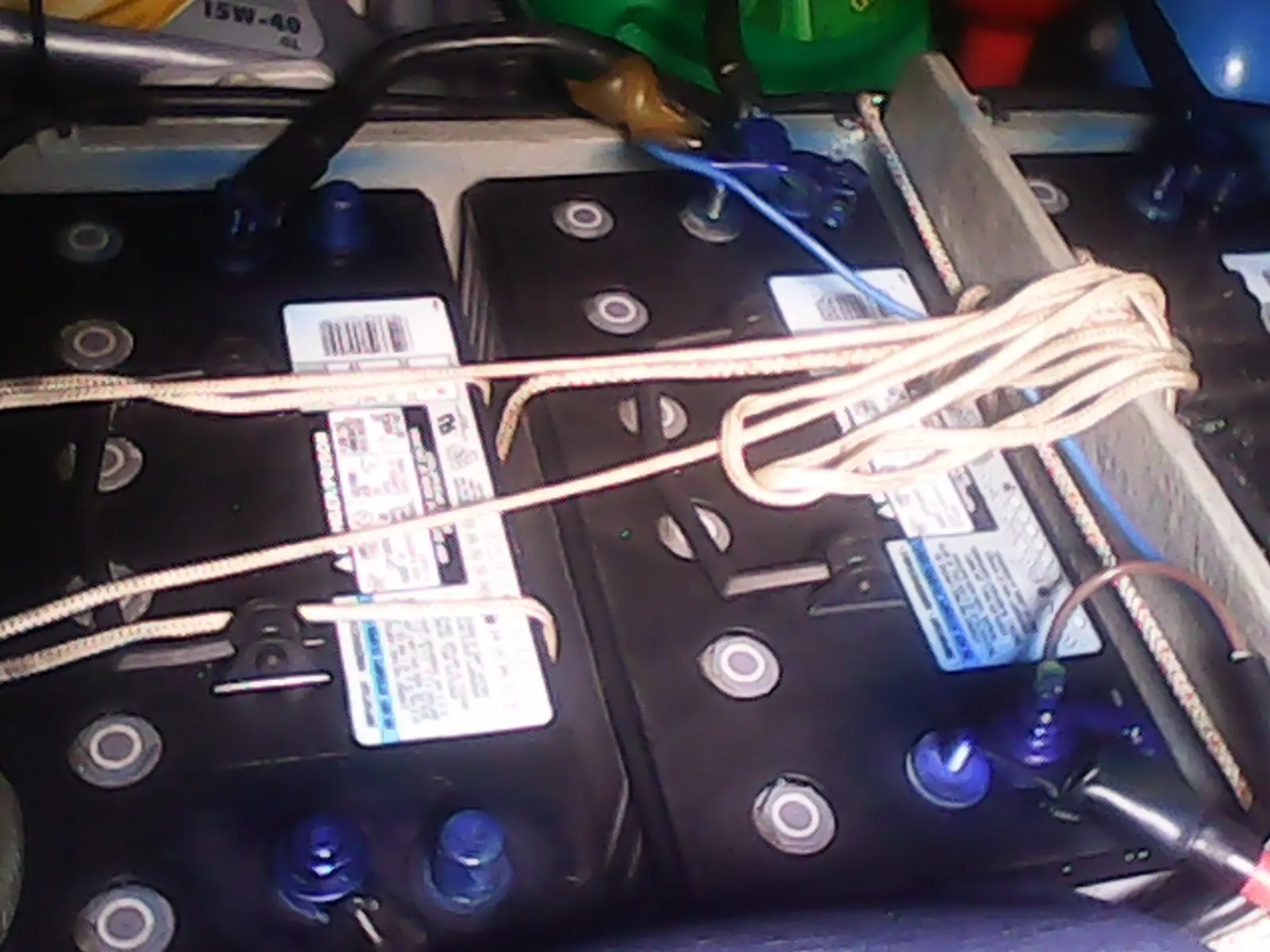
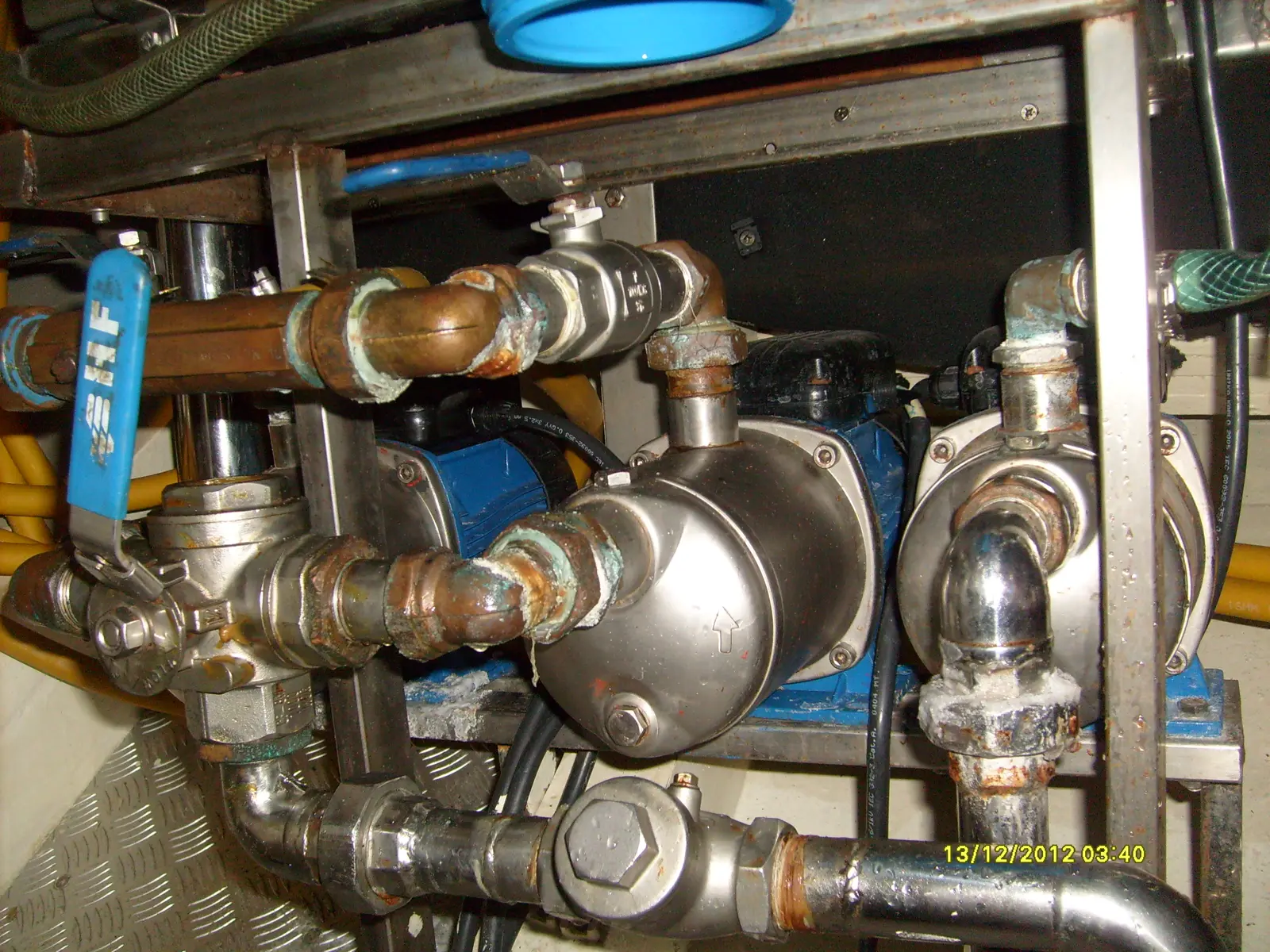
The seawater side is the most common source of trouble in marine AC systems. When the strainer basket clogs with sand, weed or debris, pump suction drops, the condenser can't be cooled sufficiently, and the unit "runs but doesn't cool." Air ingress at the pump housing produces a similar result: a loose fitting or cracked hose on the suction side causes cavitation and irregular flow. Confirm the seawater intake valve is fully open, the strainer basket is clean, and there's a steady discharge flow. Low voltage around the pump's electrical connections can also be a factor; if you suspect the battery side, our battery maintenance guide is a good starting point.
Refrigerant leaks and low pressure
Refrigerant circulates in a sealed loop and doesn't normally deplete on its own; a drop in level always points to a leak. Leaks usually appear at fittings, brazed joints, or copper tubing that has cracked from vibration. Pressure measurement and leak testing require a proper manifold set and a gas detector; running the compressor with low charge for long periods stresses it permanently and shortens its life. If you suspect low pressure, the safest move is to shut the unit down and call in a qualified technician.
Filter and airflow
The air filter in the fan-coil unit can clog with dust within a few weeks, especially in cabins where the AC runs continuously. A dirty filter reduces cooling capacity and can cause the evaporator coil to freeze; a frozen coil turns into a unit that runs but never cools. Removing and washing or replacing the filter regularly is the cheapest and most effective maintenance task on a boat AC.
Self-contained or central system?
Small and mid-size yachts typically use a separate self-contained unit per cabin; since each unit works independently, a fault in one doesn't affect the others, but each unit also has its own seawater pump and strainer, multiplying maintenance points. Larger motor yachts often use a single central chiller group that distributes chilled water to multiple fan-coil units through a piping loop; in this layout, a single seawater blockage affects the whole system, but maintenance is centralized and quicker to check. Dometic's marine air conditioner range includes examples of both architectures; which one suits your yacht depends on cabin count, power budget, and existing piping runs.
Seasonal AC maintenance checklist
Before splashing the boat, ideally at the start of the season, the following should be checked:
- Open the seawater intake valve, remove and clean the strainer basket.
- Check seawater pump suction and discharge flow.
- Inspect hose clamps, fittings and through-hull connections for tightness and corrosion.
- Remove and wash or replace air filters.
- Check the evaporator coil for icing or heavy buildup.
- Clean condenser fins if access allows (self-contained units).
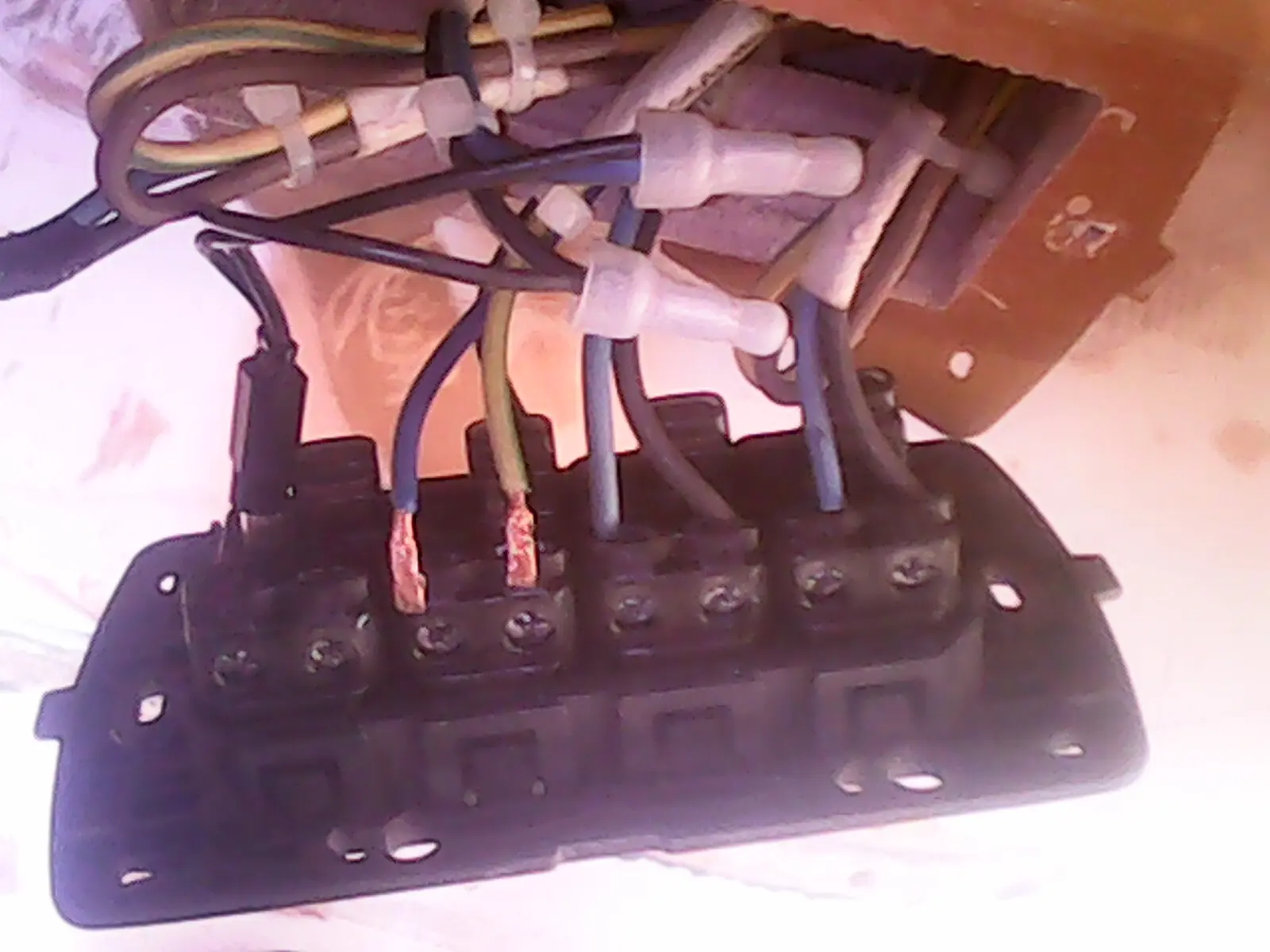
- Measure supply voltage under load, check the fuse and cable connections.
- Test whether the thermostat and control panel hold their settings.
- Confirm the condensate drain hose isn't blocked and slopes correctly.
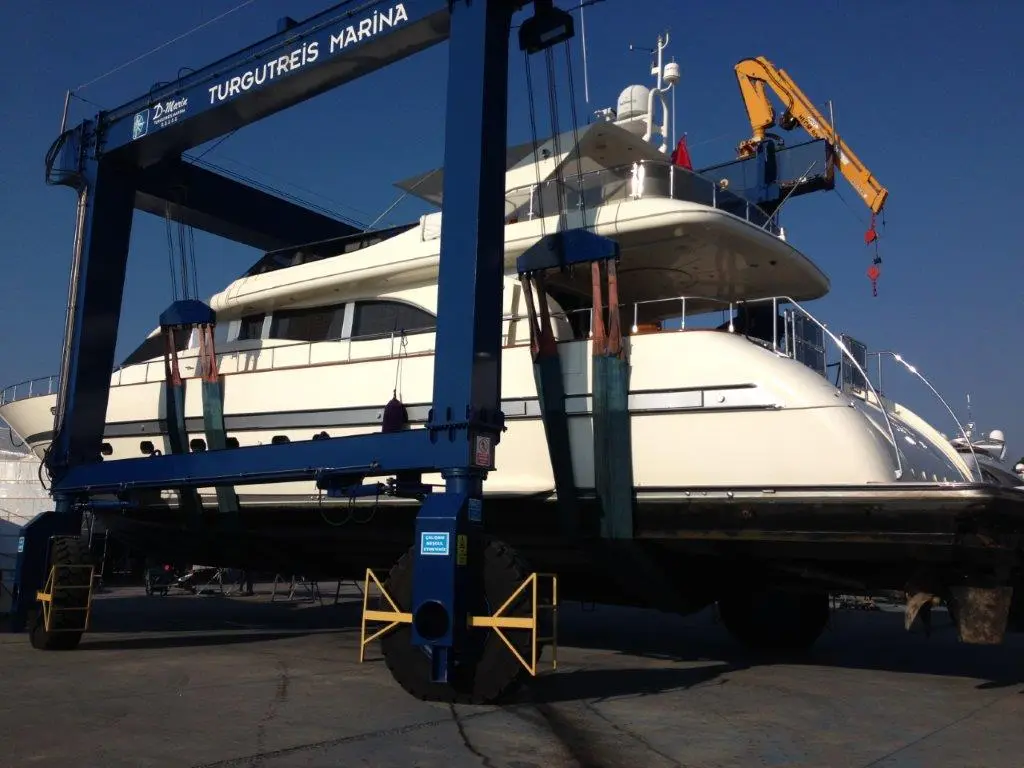
Most of this can be done on the same visit as the spring commissioning electrical checklist; accessing the seawater connections is much easier while the boat is still hauled out.
When to call a certified technician
Filter cleaning, strainer maintenance and voltage checks are things a knowledgeable captain can handle. But you'll need a certified technician when:
- You suspect a refrigerant leak (pressure testing and recharging require special tools and training),
- A compressor or control board fault is suspected,
- The seawater pump needs to be removed and rebuilt,
- The system needs a full recharge or piping replacement.
Before calling, note which symptom the AC shows, when it started, and the supply voltage — this shortens diagnostic time considerably. General principles for wiring, fuse sizing, and through-hull installations are covered in ABYC's standards list, and they apply to AC systems as well.
Work with Aslan Yacht on your boat's AC
We service, diagnose and install marine air conditioners at Turgutreis D-Marin, Yalıkavak Palmarina, Milta Bodrum Marina and the boatyards across the Bodrum peninsula. To have your AC checked before the season starts, reach us through our contact page; we cover all heating and cooling work under our climate and mechanical services.
Frequently asked questions
Is it normal for saltwater to drip from a boat AC?
Small sweating at fittings can come from condensation, but continuous dripping is usually a cracked hose clamp or a loose fitting; it should be checked right away since it leads quickly to corrosion.
The AC cools but not enough. What could be wrong?
The most common causes are a dirty air filter, a dusty condenser, low seawater flow, or a refrigerant leak. Filter and seawater flow are checked first, since a captain can easily inspect these without special tools.
Should I shut the seawater intake valve if the AC won't be used over winter?
Yes. Even if the boat stays in the water, close the seawater intake valve if the system won't be used for an extended period, and flush it with fresh water if possible; otherwise scale and sediment build up in the pump housing and strainer.