Hydraulic Swim Platform and Tender Crane Faults, Maintenance Tips
Platforms and cranes that launch tenders and water toys carry heavy loads. We cover the common faults, their causes and a safe maintenance routine.
Hydraulic swim platforms and tender cranes carry the heaviest loads of any moving equipment on a motor yacht. Tender and jet-ski weights running from a few hundred kilos into the tonnes, salt water, sensors that go from wet to dry constantly, and heavy use throughout the season put real strain on these systems. This article covers the faults we see most often on platforms and cranes, their causes, and the maintenance routine that prevents them.
Getting to know the systems: platform and crane
A hydraulic swim platform (tender platform) lowers the stern platform below the waterline so a tender or water toys can be floated on or off. Pantograph or vertical-track mechanisms are both common. Motion is usually driven by two or more hydraulic cylinders, kept in sync with a flow divider.
A tender crane is mounted on the flybridge or inside the garage and typically has these motions: slew (hydraulic motor and gearing), boom raise/lower (cylinder), telescopic extension on some models, and a winch. Every motion relies on load-holding valves and brakes to hold the weight securely.
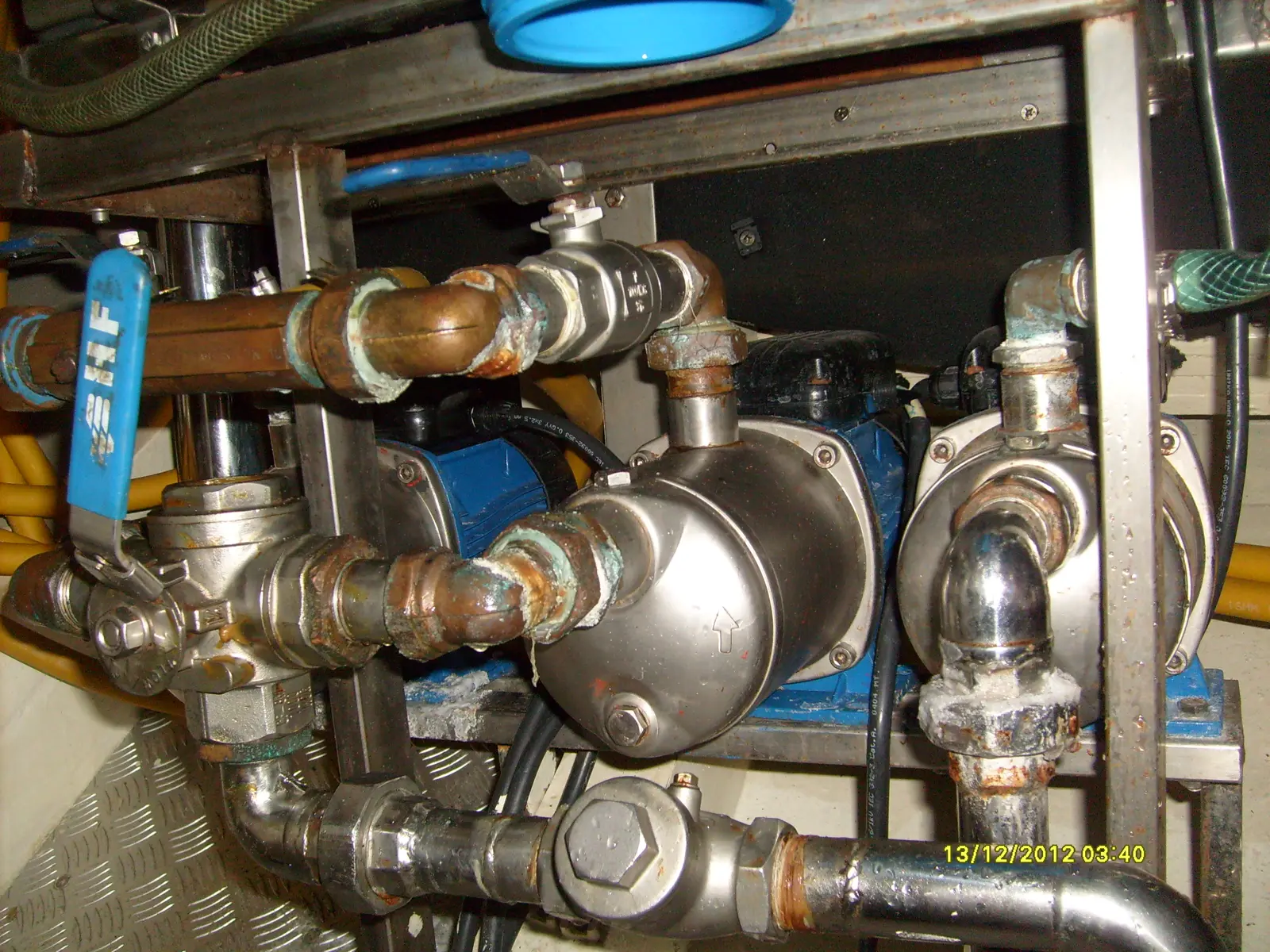
Both systems share common components: a hydraulic power unit or the central hydraulic system, solenoid or proportional valve blocks, limit sensors, control electronics, and wired or wireless remotes. Details differ between manufacturers such as Besenzoni and Idromar, but the working logic is the same. Besenzoni's platform lifting systems, for example, use electro-hydraulic units with a flow divider.
Common swim platform faults
Platform moves unevenly
One side running ahead of the other is the most common complaint. Causes are usually an internal seal leak in one of the cylinders, a worn flow divider, or air in the system. An uneven load twists the platform structure and accelerates wear at hinges and pins. If the problem persists after bleeding air, test the cylinders individually.
Platform drifts down slowly under load
A stopped platform slowly sinking under the tender's weight points to fouling in a check or load-holding valve, or an internal cylinder leak. Dirty hydraulic oil degrades these valve seats — which is exactly why oil cleanliness is tracked using ISO 4406 codes.
Platform won't lower fully or stalls midway
Faulty limit sensor signals, corrosion in connectors exposed to seawater, or a safety lock that fails to release are common causes. Check sensor inputs and control signals at the control box first, then move to the hydraulic side.
Platform won't lock at the top, or vibrates
The platform needs to sit firmly locked while underway. Worn locking pins or mechanical latches, or hydraulic pressure that has dropped over time so the platform doesn't fully seat, cause knocking and vibration in a seaway. This isn't just an annoyance — it can lead to fatigue cracks at hinge connections and hull mounting points. Check the locking mechanism's adjustment and whether the sensor correctly reports the "locked" signal every season.
Common tender crane faults
| Symptom | Likely cause | First check |
|---|---|---|
| Boom drifts down under load | Load-holding valve fouled/misadjusted, cylinder leak | Valve cleaning and adjustment, cylinder test |
| Slew motion jerky | Hydraulic motor wear, gear backlash, air | Gear and bearing check, bleed air |
| Winch won't hold the load | Brake pads, brake-release circuit | Winch brake and pilot line |
| Crane doesn't run at all | Fuse, e-stop, control supply | Voltage, relays, e-stop position |
| Movements very slow | Low voltage, pump wear, clogged filter | Motor voltage under load, filter differential pressure |
| Control lever unresponsive | Proportional valve driver, connector, cable | Driver output and cable continuity |
Safety comes first with crane faults: never lift a tender with a crane showing signs of a load-holding fault, and never let anyone stand under the crane. The safe working load (SWL) marked on the crane must never be exceeded — a wet, water-filled tender can weigh far more than expected.
Garage-mounted cranes also face a confined-space moisture problem. With the garage door closed, condensation builds up and the crane's valve block and connectors stay in a permanently damp environment. Ventilating the garage and checking electrical connections regularly reduces unexpected downtime. Flybridge cranes, by contrast, age faster in hose and cable sheathing from sun and UV; a cracked hose cover leaves the reinforcement wires inside exposed to corrosion and sudden bursting.
Electrical and corrosion: the invisible enemies
A fair share of platform and crane faults are electrical in origin. DC hydraulic units draw high current; weak connections create voltage drop, the motor slows, and solenoid coils fall below their pickup voltage. Diagnosing "the pump is dead" without measuring under load is a common mistake.
The stern platform carries the stainless and aluminium parts most exposed to water. Galvanic corrosion accelerates at dissimilar-metal contact points and grounding faults, weakening pins, bushings and mounting bolts over time. We cover the fundamentals in our galvanic corrosion and anodes article. Check the platform's anodes every time the boat is hauled out.
Sensors and cable entries need the same discipline. Inductive sensors and junction boxes mounted on the platform get fully submerged every time it's lowered. Tight cable glands, connectors with the correct IP-rated seals, and cable routed clear of chafe in moving sections are the foundation of long-term reliability. Tinned, marine-grade flexible cable on platform and crane circuits also matches the DC wiring principles in ISO 10133. Temporary splices made to extend a cable after a fault are often the source of the next one; where a joint is unavoidable, use a sealed, heat-shrink, adhesive-lined connector.
Seasonal maintenance checklist
The core checks we run at season opening and closing:
- Visual inspection: Scratches and pitting on cylinder rods, cracks and chafe on hoses, leaks at fittings.
- Hydraulic oil: Check level, colour and odour; if water or foam is present, change the oil, investigate the cause and replace the filter.
- Mechanical connections: Play in pins, bushings and hinges; grease per manufacturer recommendation.
- Sensors and connectors: Test limit sensors, clean connectors and check their sealing.
- Electrical measurements: Motor terminal voltage while the hydraulic unit runs, and heat at connection points.
- Load test: Cycle the platform and crane empty first, then progressively loaded; watch for drift once stopped.
- Safety functions: Test the e-stop, limit switches and control lockouts.
We recommend folding these checks into our season-opening checklist alongside the boat's other systems. The same hydraulic principles apply to gangways too — we cover that separately in our hydraulic gangway maintenance article.
Platform and crane service with Aslan Yacht
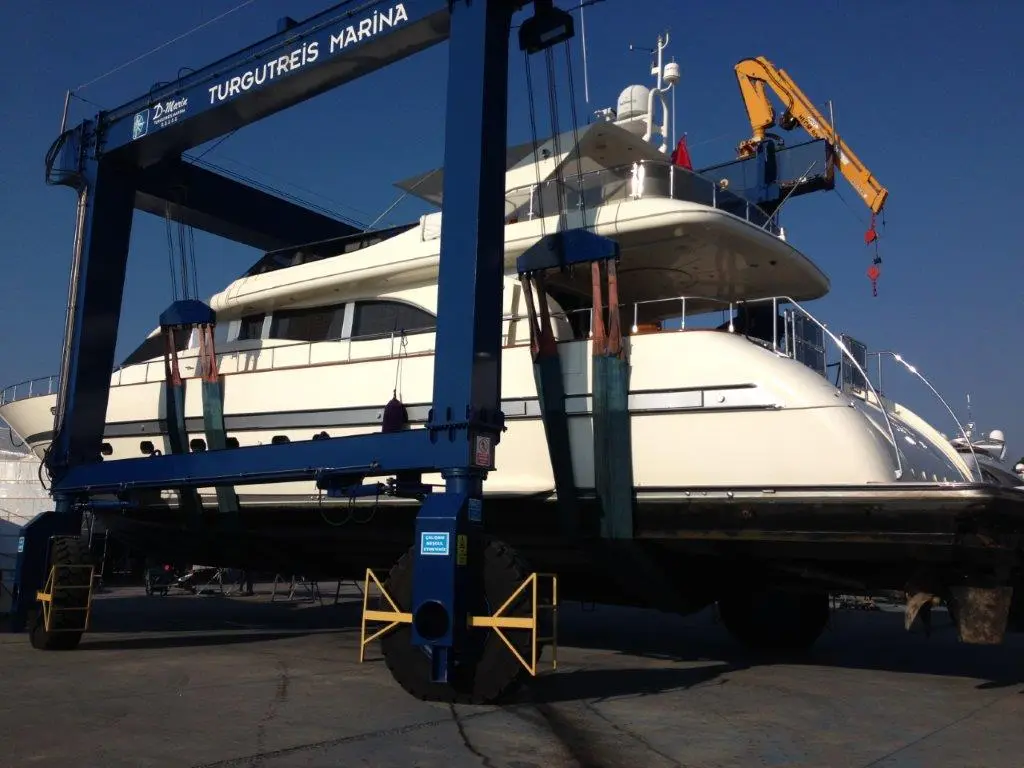
From our workshop in Turgutreis we travel to marinas and boatyards across the Bodrum peninsula to diagnose faults and carry out hydraulic and electrical repairs on swim platforms, tender cranes and gangways. Particularly for Besenzoni and Idromar systems, take a look at our hydraulic systems service or get in touch with us about your boat.
Frequently asked questions
Why does my swim platform lift and lower unevenly on one side?
On twin-cylinder platforms, a flow divider normally keeps the two sides in sync. An internal leak in one cylinder, a worn flow divider, or air in the system will make the motion uneven — and that stresses the structure mechanically, so it shouldn't be left unaddressed.
Is it dangerous if the tender crane slowly lowers under load?
Yes, treat it as a safety warning. It usually means the counterbalance valve is fouled or a cylinder seal is leaking; until the cause is fixed, no one should stand under the crane and it shouldn't lift heavy loads.
Can a platform and a crane share the same hydraulic unit?
On many yachts a central hydraulic unit feeds the gangway, platform and crane together. In that case the unit's flow rate, pressure setting and oil cleanliness affect every piece of equipment, and a fault in one can show symptoms in the others.