Used Yacht Electrical Survey: A Pre-Purchase Checklist
As important as the hull and engines, yet often rushed: the electrical system. Here is what to check, step by step, before you buy a used yacht.
When buying a used yacht, the care given to the hull, engines and teak deck is rarely given to the electrical system. Yet a well-performed used yacht electrical survey lets you see the failures, fire risks and costly switchboard rebuild waiting for you in the first season before you sign. In this article we share the checklist we use in the field, system by system.
Why the electrical survey deserves its own attention
General survey reports are built around hull integrity, machinery and safety equipment. On the electrical side, the surveyor usually looks at the panel, flips a few breakers and, if nothing is visibly wrong, notes "operational". But most electrical faults are invisible: a loose battery terminal, an inverter cable of the wrong cross-section or a shore power socket that has started to overheat only show up with measurement and testing under load.
Boats that have gained lithium (LiFePO4) batteries, large inverter-chargers, stabilisers and watermakers in recent years may have outgrown their original design. Every addition affects the main distribution, fuse coordination and charging sources. Carrying out the survey against international references, namely the ABYC standards (especially E-11) and ISO 13297, turns the result from personal opinion into something measurable.
Preparation: documents, diagrams and questions to ask
Before visiting the boat, ask the seller or broker for:
- An up-to-date wiring diagram (DC and AC single-line diagrams)
- Installation date, type and capacity (Ah) of the batteries
- Invoices for recent refits or electrical modifications, and who carried them out
- Generator running hours and service records
- Whether the boat wintered ashore or afloat, and whether it was left plugged into shore power
If there is no diagram, that is a finding in itself: every future fault diagnosis will take longer. It is also good practice to verify on site the serial numbers and production dates of equipment the seller describes as "all new".
DC system: battery bank, charging and distribution
The DC system is the boat's nervous system, and this is where the longest part of the inspection takes place.
Battery bank
- Date and type: Read the date codes on the batteries. Batteries of different ages or types in the same bank are a serious warning sign.
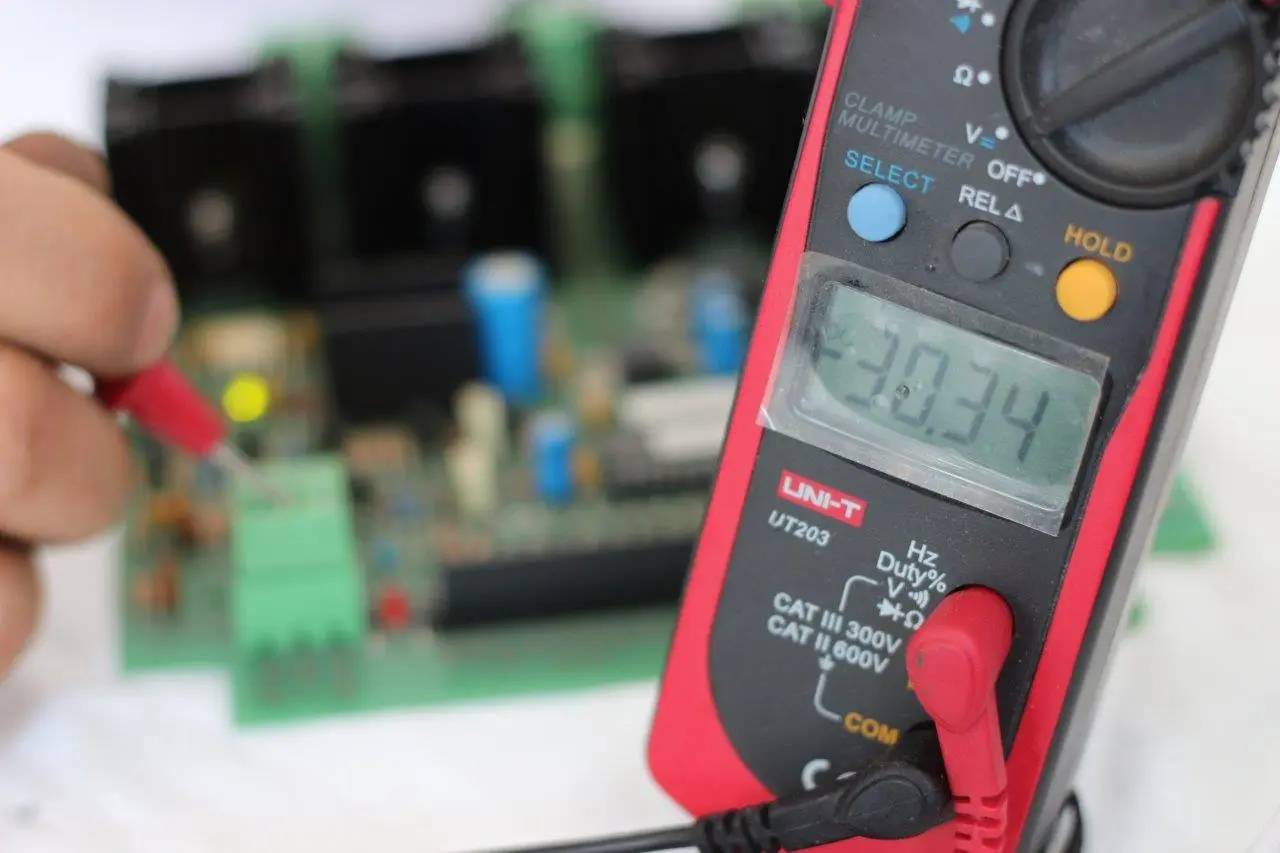
- Condition test: A fully charged 12 V lead-acid battery rested off charge for at least a few hours shows roughly 12.7 V. Voltage alone is not enough; back it up with a load or conductance test.
- Lithium systems: Review the BMS logs, check cell balance and confirm the charging sources (charger, alternator, MPPT) are set to a LiFePO4 profile. For 12 V, absorption voltage is typically 14.2–14.4 V. See our guide to switching to lithium batteries for details.
Cabling and protection
- Are there heat marks, melted insulation or oxidised lugs on the main battery cables?
- Are the lugs crimped with the correct tool, or simply soldered and left?
- Is every positive conductor protected by a fuse close to the battery? Are ANL, MRBF or Class T fuses present, and do their ratings match the cable cross-section?
- Is the cable marine grade (tinned, fine-stranded), or has solid-core household cable been used?
A thermal camera scan under load reveals loose connections and overloaded conductors within minutes.
AC system: shore power, generator and inverter
Faults on the AC side can harm both equipment and people, so they deserve even closer attention.
- Shore power inlet: Look for darkening, melting or corrosion on the socket and plug. Check the cable's cross-section and length. Our article on shore power connections covers the principles of safe use.
- Polarity and residual current protection: Does the polarity indicator work? Is there a residual current device (RCD/ELCI) at the main AC inlet, and does its test button actually trip it?
- Generator: Cold start, frequency and voltage stability under load, raw-water exhaust flow and running hours. Never judge a generator without running it at half load or more for a while.
- Inverter-charger: Model and settings, particularly the transfer relay and neutral-earth bonding logic. On units such as Victron Energy, the settings and error history can be read with a laptop or app.
- Source selection: Does the changeover between shore power, generator and inverter physically prevent two sources from being connected at the same time?
Leakage current, bonding and corrosion
The traces of a boat's electrical history are often visible below the waterline. If it is ashore, wear on the propeller, shaft, anodes and underwater fittings tells a story; anodes that disappear too quickly may point to leakage current or poor isolation.
- With all loads off, measure DC leakage on the battery negative with a clamp meter.
- Inspect the bonding system and its connections.
- Is there a galvanic isolator or isolation transformer? If not, budget for one if the boat will be permanently plugged in at a marina.
These topics deserve their own articles: we cover them in detail in leakage current detection and grounding and galvanic corrosion and isolation transformers.
Quick checklist
| Area | What to check | Warning sign |
|---|---|---|
| Battery bank | Date code, type, load test | Mixed ages/types, swelling, high internal resistance |
| Main DC distribution | Fuses, main switch, lugs | Heat marks, unfused cable, household cable |
| Charging sources | Charger, alternator, MPPT settings | Charge profile not matching battery type |
| Shore power | Socket, plug, RCD, polarity | Darkening, test button not working |
| Generator | V/Hz under load, hours, service | Unstable frequency, missing records |
| Inverter | Settings, error log, transfer | Neutral-earth fault, overheating |
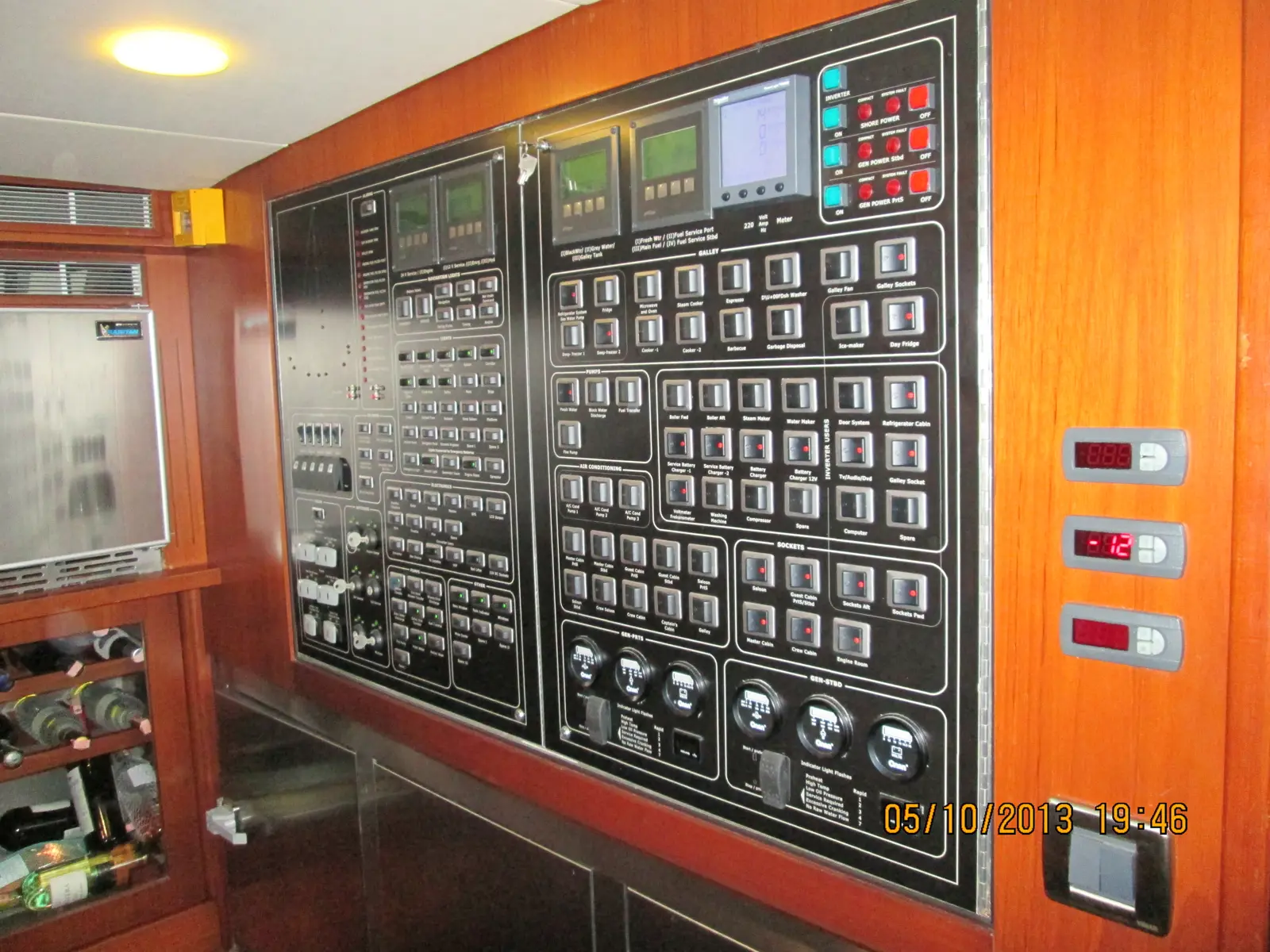
| Switchboard | Labelling, added circuits, cable routing | Messy "added later" circuits |
| Electronics | NMEA 2000 network, firmware | Missing terminator, persistent fault codes |
| Underwater | Anodes, shaft, fittings | Fast-depleting anodes, pink bronze |
We recommend using this table in the report with a photo and measured value for every finding.
From findings to negotiation and beyond
Sorting the survey report into three groups makes the decision easier:
- Safety-critical: Unfused main cables, overheated AC connections, a non-functioning RCD. These should be fixed before handover.
- Needed in the short term: An exhausted battery bank, incompatible charge profiles, a worn shore power cable.
- Plannable upgrades: Drawing up diagrams, labelling, rebuilding an old switchboard or modernising the energy system.
When discussing price with the seller, getting repair quotes for items in the first two groups gives you a far stronger basis than a vague "there are electrical problems".
Work with Aslan Yacht for a safe purchase
From our workshop in Turgutreis, we travel to marinas and boatyards across the Bodrum peninsula to carry out pre-purchase electrical surveys, reporting findings with measured values and photos. For work needed after the purchase, take a look at our yacht electrical services, or get in touch to book a survey.
Frequently asked questions
Is a general condition survey enough for the electrical system?
A general survey focuses on the hull, machinery and safety equipment, and the electrical part is often limited to a visual check. On boats with lithium batteries, inverters or complex switchboards, a separate electrical survey makes good sense.
How long does an electrical survey take?
It depends on the size of the boat, the complexity of the systems and whether shore power and the generator can be tested. On a mid-size motor yacht, measurements, tests and reporting usually fill a working day.
Can electrical defects found in the survey be used in negotiation?
Yes. When defects are documented with photos and measured values, they show the scope of repair in concrete terms and give you a solid basis for negotiating the price or asking the seller to fix them.