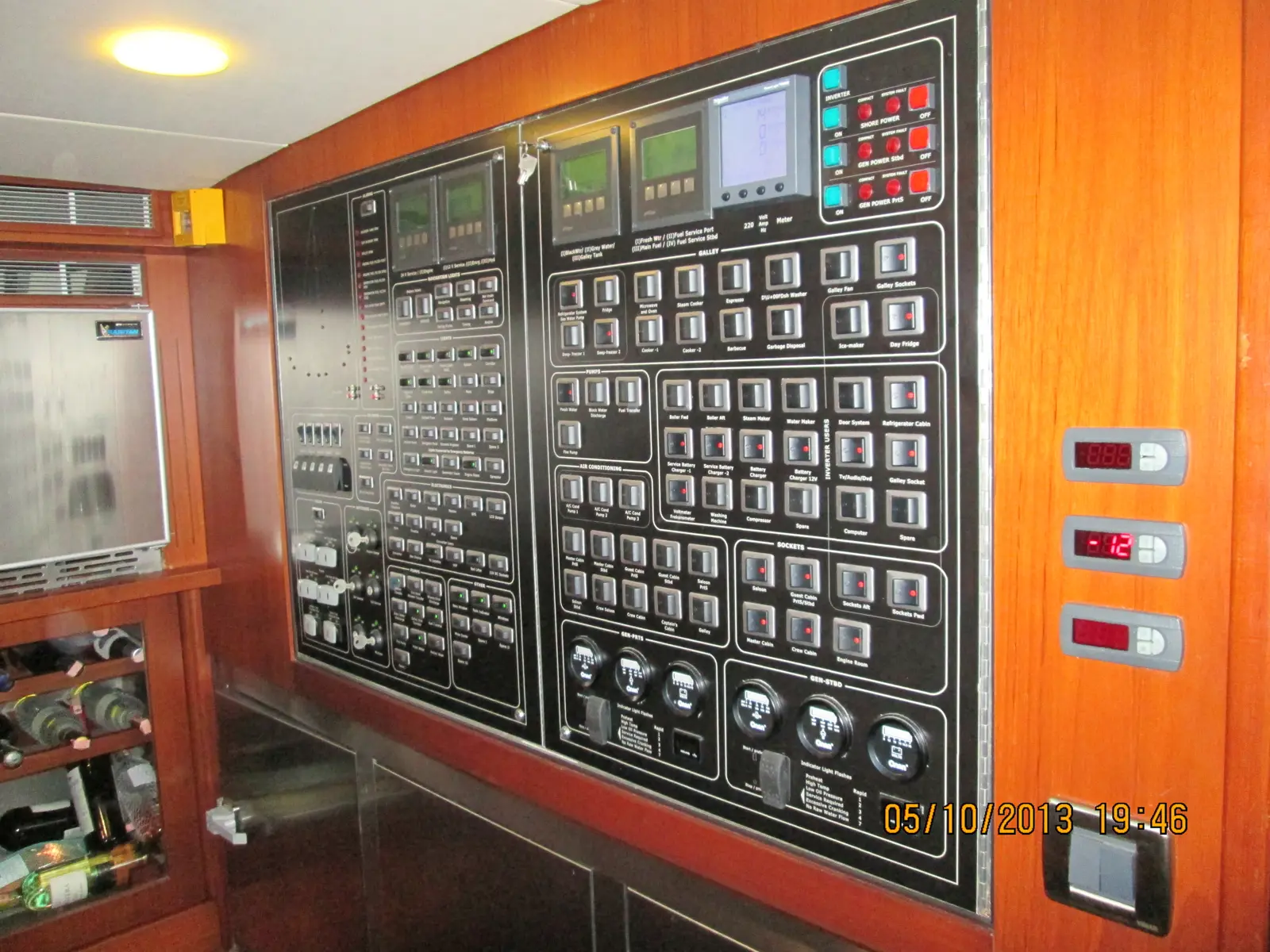
A yacht's electrical system is tied directly to safe navigation, comfort on board and fire risk. From our workshop in Turgutreis, Aslan Yacht provides AC and DC electrical services for motor yachts, sailing yachts, gulets and catamarans across the Bodrum peninsula. We measure first and decide second: instead of swapping parts on a hunch, we locate the source of a fault with a multimeter, clamp meter and insulation tester.
Motor yacht and sailing yacht boat electrical service
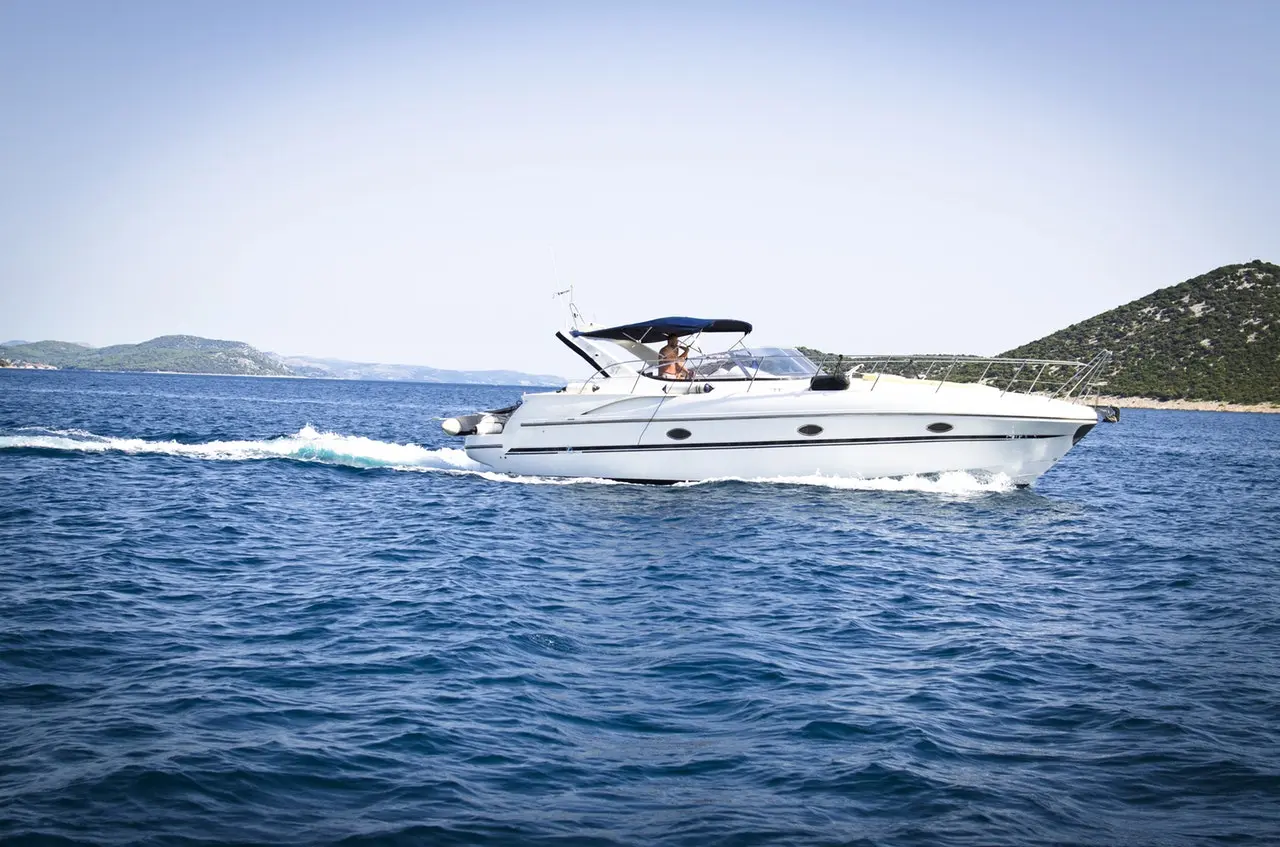
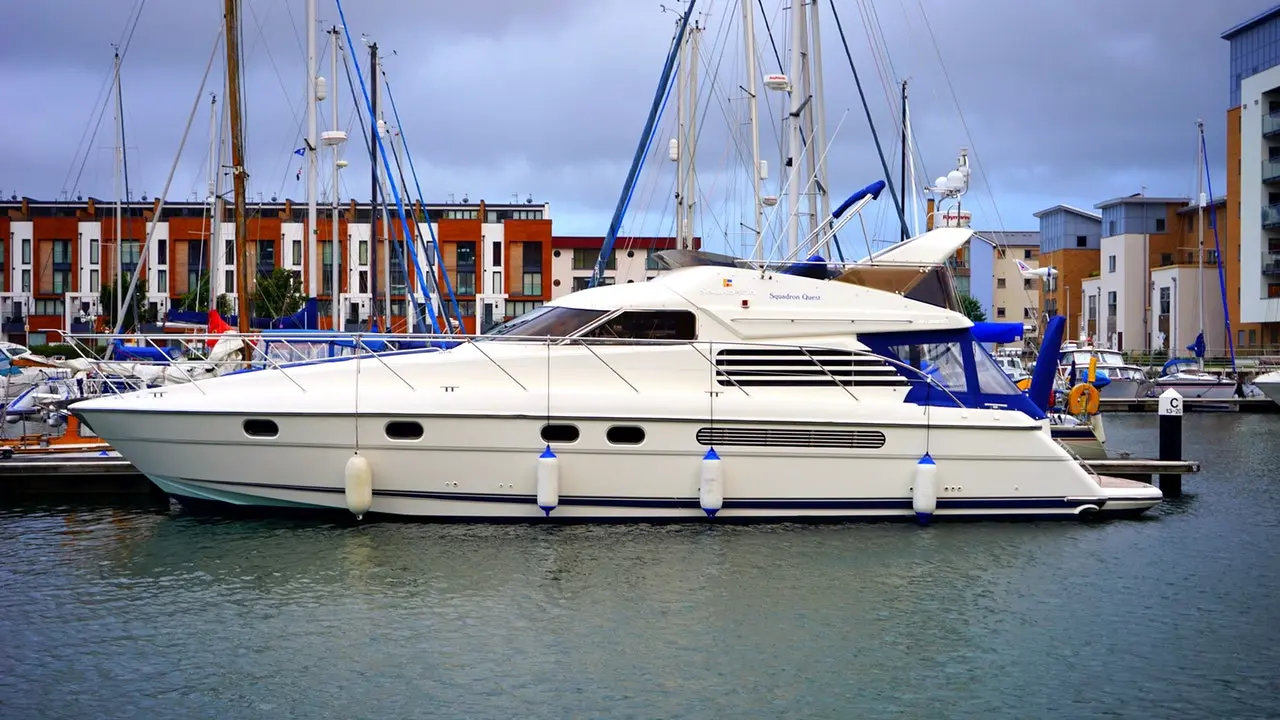
Whether it is yacht electrical or boat electrical work, motor yachts and sailing yachts get the same measure-first discipline. On the vessels we serve in Bodrum and Turgutreis, the electrical installation is closely tied to navigation equipment and mechanical systems. That is why we always assess the wiring together with energy and battery systems and hydraulic systems.
What we do
Our scope runs from replacing a single fuse to rebuilding an entire distribution panel:
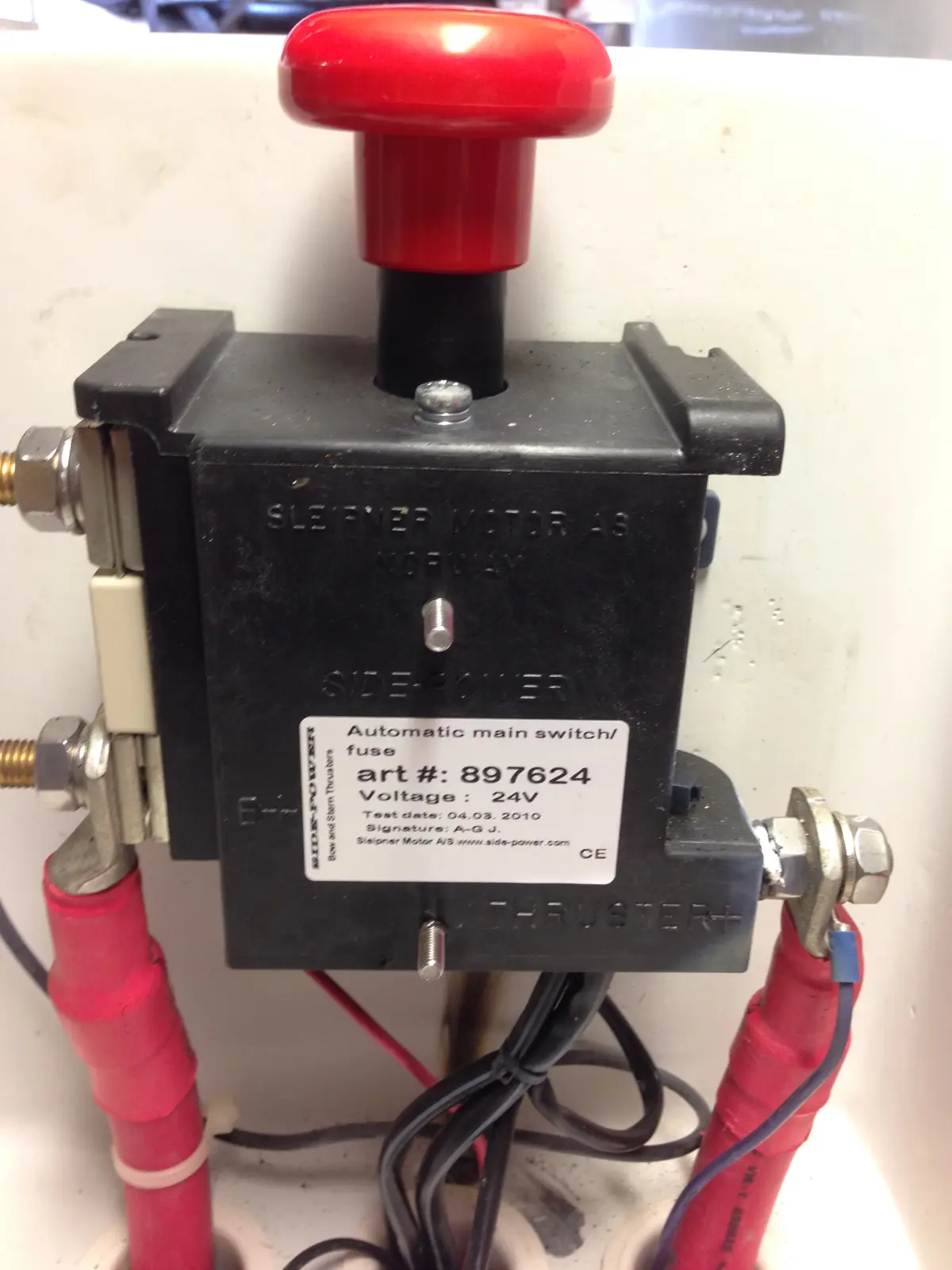
- DC systems: battery switches, main fuses, busbars, DC distribution panels, 12/24 V consumer circuits and rewiring.
- AC systems: shore power inlet, source selection (shore / generator / inverter), 230 V and 400 V distribution, sockets and RCD protection.
- Shore power safety: 16 A, 32 A and 63 A connections, polarity checks, isolation transformers and galvanic isolators.
- Switchboard refits: removing old panels and rebuilding them with a circuit list, labelling and a drawn diagram.
- High-current loads: windlass, bow and stern thrusters, electric cranes and winch circuits.
- Safety circuits: bilge pumps, float switches, alarm and fire-detection supplies.
- Surveys: electrical condition reports before buying a used yacht.
When sizing cable we calculate voltage drop as well as ampacity: 3% for navigation and critical circuits, 10% for others. The method is explained in our article on marine cable selection and voltage drop.
Typical faults we solve
- The RCD, or the marina pedestal's earth leakage protection, trips when shore power is connected.
- The windlass or thruster stalls under load even though the batteries read full (voltage drop, oxidised lugs, loose connections).
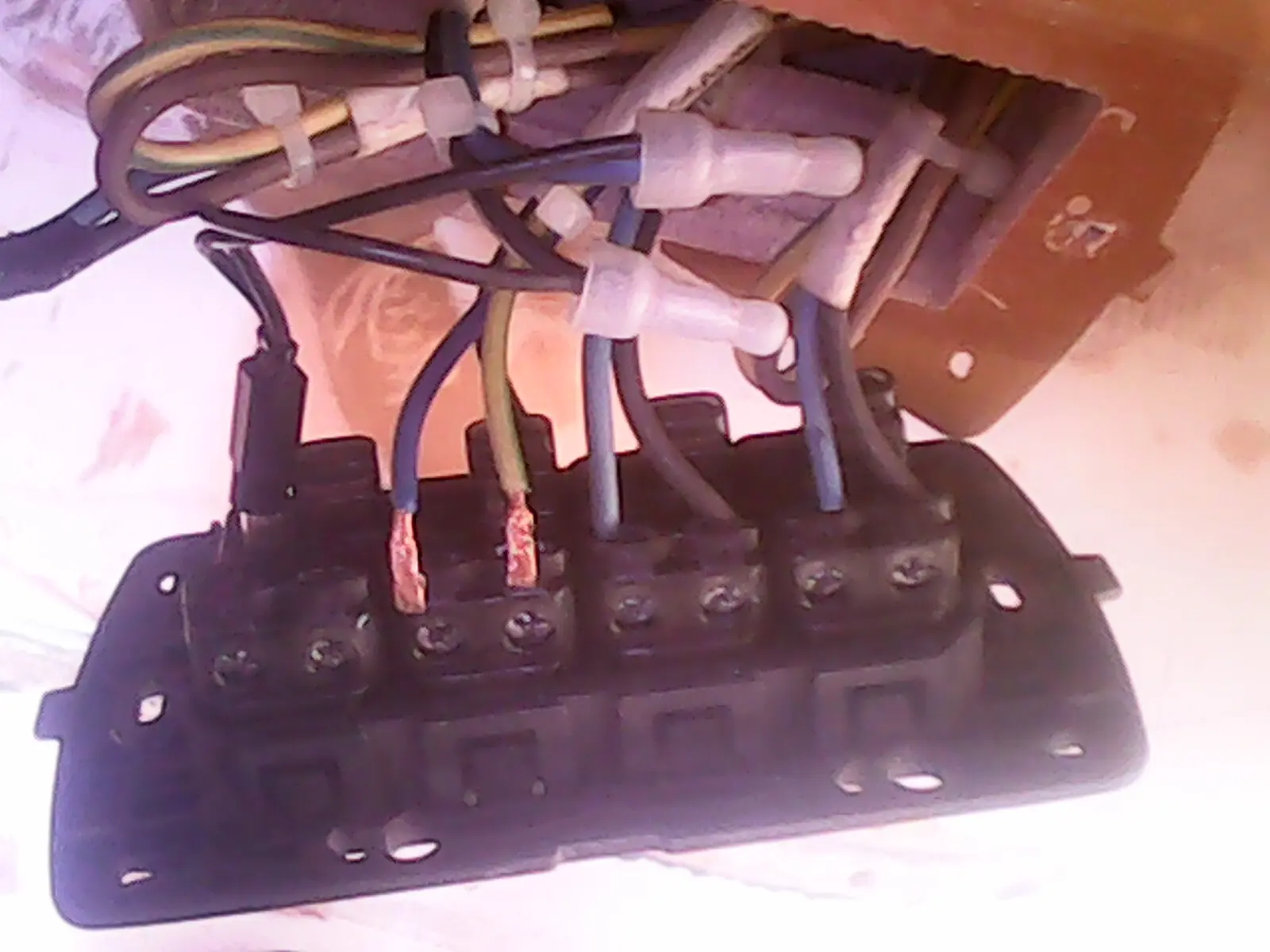
- Busbars, lugs and fuse holders that run hot and discolour.
- Unexplained battery drain: hidden parasitic loads while the boat sits in the marina.
- Anodes wasting faster than expected and corrosion on metal fittings.
- Circuits added over the years without documentation or fuses.
Our approach to earth leakage is described step by step in finding earth leakage on board.
Safety, protection and documentation
Most electrical fires on boats start with a loose connection, a wrongly rated fuse or a cable whose insulation has chafed through and overheated. That is why every job follows the same principles:
- Every positive conductor is protected as close to the source as practical by a fuse or breaker rated for the cable's ampacity.
- Lithium and large battery banks get Class T or MRBF fuses able to interrupt the available short-circuit current.
- On the AC side the shore inlet is isolated by a double-pole breaker, and the link between protective earth and DC negative is managed with a galvanic isolator.
- Cables are routed away from sharp edges and supported every 25–45 cm; no connections are made where bilge water can reach.
- Every modified circuit carries the same name on the panel and in the diagram.
A comparison of fuse types is in choosing fuses and circuit breakers, and fire prevention is covered in electrical fire risks on boats. A documented installation lets the next captain or technician find a fault in minutes and protects the yacht's resale value.
Our process on board
- Listen and inspect: we ask the captain or owner when and under what conditions the fault appears.
- Measure: voltage, current, insulation resistance and connection temperature, with load testing where needed.
- Report and recommend: findings, required materials and options are shared clearly before work begins.
- Carry out the work: tinned copper cable, crimped lugs, adhesive heat-shrink and correctly rated fuses. Every cable is labelled at both ends.
- Test and hand over: circuits are tested under load and an updated diagram and circuit list are handed over.
Equipment and brands we work with
On the energy side we work extensively with Victron Energy inverter/chargers, battery monitors and distribution products. Lopolight navigation lights and diesel cabin heater and air-conditioning circuits are regular parts of the installations we build. For new installations we follow the manufacturer's installation manual and the ABYC standards. For inverters, lithium batteries and charging, see our Energy and Battery Systems page.
Motor yachts vs sailing yachts
Motor yachts typically run 24 V DC plus 230 V or 400 V AC backed by a generator. With high loads such as air conditioning, galley, water heaters and hydraulic power packs, source selection, phase balance and shore power capacity matter. See Motor Yacht Electrical.
Sailing yachts mostly have 12 V DC systems with limited battery capacity. Cables running through the mast, deck glands and a damp environment are the most common sources of faults, and energy efficiency shapes every decision. See Sailing Yacht Electrical. We compare both in motor yacht vs sailing yacht electrical needs.
We explain what to look for when hiring a service team in Bodrum in our article on choosing a boat electrician, and the most common marina problems in shore power problems in Yalıkavak and Turgutreis.
Service area
Our workshop is in Turgutreis. We work on board at Turgutreis D-Marin, Yalıkavak Palmarina, Milta Bodrum Marina, Gümüşlük bay and the boatyards around the peninsula. Planning pre-season checks early saves time when the yards get busy; our season commissioning checklist helps with that. Winter lay-up is the best time for switchboard refits, rewiring and shore power upgrades, since the boat is not in use and work can proceed without interruption. To report a fault or arrange an inspection, reach us through our contact page.